Sell Inherited House In Chicago: Sell Fast, Keep More Cash
Need to sell an inherited house in Chicago? Learn probate timelines, tax implications, and how cash buyers help you close in days without repairs or showings.

Senior Contributor, NestCash··11 min read

You just lost someone you loved. The last thing you expected was to also inherit a complicated real estate decision. But here you are, trying to figure out how to sell an inherited house in Chicago while managing grief, family dynamics, and a property you may never have planned to own. Whether the home is a Pilsen two-flat, a Beverly bungalow, or a Wicker Park greystone, the process can feel overwhelming fast. The good news is that you have real options, and this guide walks you through every one of them clearly and honestly so you can make the choice that actually works for your life.
What to Do When You Inherit a House in Chicago
First, take a breath. You don’t have to do everything at once, and getting the sequence right matters more than moving fast right out of the gate.
The immediate priority is understanding what you actually own and what legal steps come next. Start by locating the will, any trust documents, and the existing deed. If the property was held in a living trust, the transfer may happen without court involvement at all. If not, you’re likely heading into Illinois probate, which we’ll cover in depth in the next section.
A few practical steps to tackle in the first week or two:
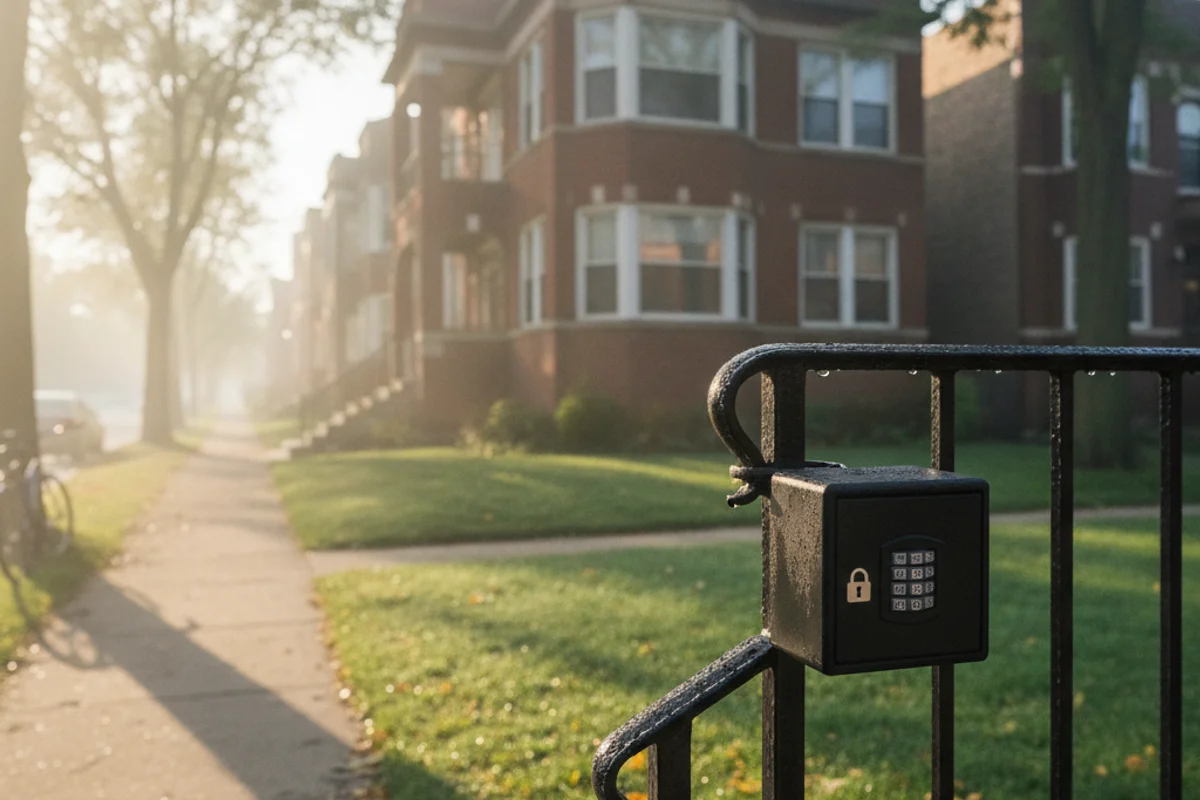
- Secure the property. Change the locks, forward the mail, and make sure the utilities stay on to prevent pipes from freezing. Chicago winters are brutal, and a frozen pipe in a vacant property can cause tens of thousands of dollars in water damage before anyone notices.
- Notify the insurance company. Vacant homes require a different kind of coverage. Standard homeowner’s policies often lapse or exclude damage when a property sits empty for more than 30 to 60 days. Call the insurer immediately and ask about a vacancy endorsement.
- Get a property condition assessment. You’ll want to know the current state of the home and its approximate market value before making any decisions. Chicago’s median home price sits around $411,000, but values vary widely by neighborhood. A Bridgeport bungalow and a Lincoln Square condo can differ dramatically even at similar square footage.
- Check for outstanding debt. Mortgages, property tax liens, or HOA dues don’t disappear when the owner passes. They transfer with the property and become your responsibility as the heir. Pull the title report early so there are no surprises at closing.
Once those basics are handled, you’ll have a much clearer picture of what you’re dealing with, and you can think through your next steps without the fog of unknown variables hanging over you.

Get Your Free Cash Offer Today
No fees. No repairs. Close in as little as 7 days.
Related Video
Understanding Illinois Probate and Inherited Property
Probate is the legal process that validates a will and formally transfers assets to heirs. In Illinois, the probate process is handled through the Cook County Circuit Court for Chicago properties, and the timeline varies significantly depending on the complexity of the estate.
Here’s a rough breakdown of what to expect:
Simplified probate applies to smaller estates, generally under $100,000 in total assets. It’s faster and less expensive, sometimes wrapping up in a matter of weeks rather than months. For many families with modest estates, this is the path they’ll follow.
Formal probate is required for larger or more complex estates, including most Chicago real estate because of the property values involved. This process typically takes 9 to 12 months, sometimes longer if heirs disagree, if the estate has significant outstanding debts, or if the will is contested. During that time, an executor or administrator is appointed by the court to manage the estate’s assets.
One question heirs ask constantly: can you sell the property while probate is still open? The answer is yes, but it comes with real conditions. You’ll need court approval for the sale, the purchase price needs to be reasonable relative to market value, and the proceeds stay under court supervision until probate officially closes. Many traditional buyers won’t touch a property mid-probate because of the added complexity and uncertainty. Chicago cash home buyers, however, are often experienced with exactly this situation and can work alongside the probate timeline without getting spooked by the court process.
If the home was held in a revocable living trust, you can skip probate entirely. The successor trustee can transfer or sell the property without any court involvement at all. It’s well worth having an estate attorney review the documents to confirm which path applies to your specific situation before you take any action.
For a complete guide, read our resource on selling your house in Chicago.
The Hidden Costs of Keeping an Inherited Chicago Home
A lot of heirs assume holding onto the property for a while is the cautious, safe choice. In practice, every month you don’t sell costs you real money, and those costs add up faster than most people expect.
Here’s what you’re likely paying just to keep the lights on:
- Property taxes. Chicago and Cook County property taxes are among the highest in Illinois. Depending on the neighborhood, you could be looking at $4,000 to $8,000 per year, billed in two installments. You can check the current assessment and any outstanding tax bills through the Cook County Assessor’s Office. If taxes are delinquent, the clock on a tax sale is already running.
- Homeowner’s insurance. Vacant property insurance typically costs 25 to 50 percent more than a standard occupied-home policy. If you let standard coverage lapse, you’re exposed to liability for anything that happens on the property.
- Utilities. Heat alone in a Chicago winter can run $150 to $300 per month for an older home with poor insulation or an aging furnace. Keeping utilities active is non-negotiable if you want to protect the property from cold-weather damage.
- Maintenance and repairs. Gutters, lawn care, and snow removal don’t pause while you decide what to do. Chicago city ordinance actually requires property owners to clear sidewalks within a set timeframe after snowfall or face fines. If you’re not local, you’re hiring someone every time it snows.
- HOA fees. If the property is a condo in Lincoln Square or a townhouse in Bridgeport, monthly HOA dues continue regardless of whether anyone is living there. Some HOAs also have the authority to place liens on the property for unpaid dues.
For out-of-state heirs managing a Chicago property remotely, these costs come with an extra layer of stress and logistical complexity. You can’t just drive by to check on things after a windstorm. You’re coordinating vendors over the phone, paying invoices sight unseen, and hoping nothing goes seriously wrong before you can make a final decision. If financial pressure is building, it’s worth knowing that holding a distressed inherited property isn’t the only alternative to a difficult outcome. Our guide on avoiding foreclosure and selling fast in Chicago covers options that apply to inherited homes facing financial strain as well.

Find Out What Your Home Is Worth
Get a no-obligation cash offer in 24 hours.
Should You Renovate an Inherited Chicago House Before Selling?
This is the question almost every heir asks at some point. The math usually doesn’t work out the way people hope.
Renovation costs in older Chicago homes are genuinely unpredictable. You might open a wall in a Bridgeport bungalow and find knob-and-tube wiring that needs full replacement to pass inspection. You might start addressing a musty smell in a basement and discover a drainage issue that’s been quietly developing for fifteen years. What feels like a $15,000 cosmetic refresh can spiral into $60,000 or more once you account for code compliance, city permits, and unexpected structural problems. The city of Chicago has strict building codes, and any permitted renovation work opens the door to additional required upgrades.
Compare your realistic options side by side before committing to either path:
| Renovate, Then List | Sell As-Is for Cash | |
|---|---|---|
| Timeline | 3 to 6 months renovation plus 50 days on market | 7 to 21 days total |
| Upfront costs | $20,000 to $80,000 or more | $0 |
| Showings required | Yes, multiple and ongoing | No |
| Inspection contingencies | Yes, buyers will negotiate after inspection | No |
| Profit certainty | Variable and market-dependent | Fixed offer upfront |
| Emotional burden | High, requires ongoing involvement | Low, clean break |
| Best for | Heirs with time, capital, and local access | Most inherited property situations |
Illinois also requires sellers to complete standard property disclosure forms, even in as-is transactions. You’re required to disclose known material defects, but you’re not required to fix them before selling. A cash buyer accepts the property in its current condition and factors that into their offer. That transparency actually protects you as a seller because it limits post-closing disputes. Chicago’s market sees roughly 42 percent of sales close as cash transactions, which means there’s a deep, active pool of cash home buyers in Illinois who specialize in exactly this kind of purchase and understand what inherited properties involve.
Tax Implications of Selling Inherited Property in Illinois
This is one of the most misunderstood parts of inheriting real estate, and it’s worth spending real time on because getting it wrong can cost you significantly.
Many heirs assume they’ll owe a massive capital gains bill based on what the original owner paid for the house decades ago. If grandma bought a South Shore bungalow in 1975 for $40,000 and it’s now worth $380,000, you’d think the gain is $340,000. That’s not how inherited property works.
The IRS stepped-up cost basis rule resets your cost basis to the property’s fair market value on the date of the original owner’s death. Using the example above, your starting basis is $380,000, not $40,000. If you sell the home shortly after inheriting it for $395,000, your taxable gain is only $15,000, not $355,000. The longer you hold the property after inheriting it, the more potential gain accumulates above that stepped-up basis.
A few additional tax points specific to Illinois:
- Illinois has no inheritance tax for direct heirs like children and spouses. More distant relatives may face different treatment, so confirm with an estate attorney.
- Federal estate tax only applies to estates above approximately $13.61 million (2024 threshold). The vast majority of families inheriting a single Chicago property won’t encounter this at all.
- Property tax proration at closing means you’ll owe a share of the current year’s property taxes up to the sale date. This is standard practice in Illinois real estate transactions and is typically handled as a credit to the buyer at closing.
If there are multiple heirs splitting proceeds, the tax treatment can get more complicated depending on how the estate is structured. Talk to a CPA who handles estate matters before you close, not after.
How to Sell Your Inherited Chicago Home Fast for Cash
If you’ve made it this far, you likely already sense that a cash sale is the path that fits your situation best. Here’s exactly how the process works so there are no surprises.
Step 1: Request an offer. Reach out to Chicago cash home buyers and share basic details about the property: address, approximate condition, and any known issues. You don’t need a formal appraisal, a cleaned-out house, or a completed inspection to get started. The buyer does the legwork.
Step 2: Get your cash offer. A reputable buyer will assess the property, sometimes with a brief walkthrough and sometimes based on available public data and photos, and provide a written offer within 24 to 48 hours. There’s no obligation to accept. You can get your cash offer and take the time you need to compare it against other options before making any commitment.
Step 3: Review and close. Once you accept, the buyer handles the paperwork, title search, and closing coordination. In Illinois, cash closings typically happen in 7 to 21 days. You choose the closing date. If you’re handling everything remotely, documents can be signed electronically or mailed for notarization. You do not need to be physically present in Chicago to close.
This matters enormously for out-of-state heirs. Managing a Chicago property from another state is logistically exhausting and financially draining. A cash sale cuts through all of that and gives you a defined endpoint. Chicago’s traditional market averages around 50 days on market for listed properties, and that’s before you count the prep time, the showings, the negotiation back and forth after inspection, and the lender delays that can push a 30 to 45 day closing window out even further.
We work with families across Illinois, including in nearby Joliet and Naperville, so if the estate includes properties in multiple locations around the state, we can help coordinate those too. Our resources on selling fast in Decatur and Elgin address comparable circumstances for heirs dealing with inherited properties throughout Illinois.
Selling an inherited home is never a purely financial decision. There’s history in those walls. There are decades of memories attached to the neighborhood, the backyard, the kitchen where someone you loved made Sunday dinners for thirty years. A cash sale doesn’t erase any of that. What it does is give you a clean, fast resolution so you can focus on grieving, on family, and on the parts of this process that actually matter.
When you’re ready to take the next step, sell house in Illinois is a straightforward path forward. And for Chicago specifically, you have an active market and an experienced community of buyers who understand inherited properties and can help you close this chapter on your own terms.
We also help homeowners in Chicago dealing with divorce, foreclosure, and selling as-is situations.

Ready to Sell? Let's Talk.
Get your cash offer now. No obligation, no hassle.

Lisa is a Senior Contributor at NestCash, writing expert content on real estate, homeownership, and market trends. She covers 12 states, with a focus on making real estate information practical, clear, and useful.