Quick Home Sale In Miami: Skip Repairs and Showings
Need a quick home sale in Miami? Get a fair cash offer without repairs or realtor fees. Most closings complete in 14 days. See how it works.

Founder, NestCash··11 min read
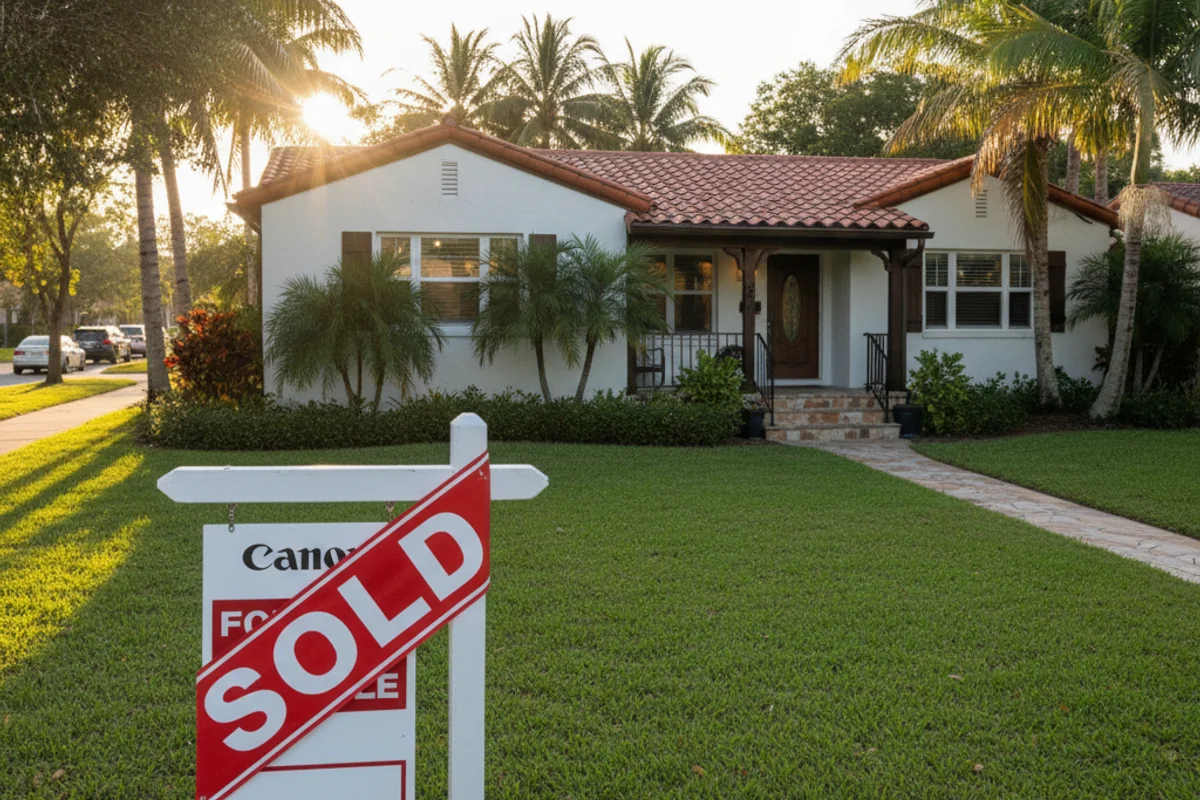
Here’s what most sellers get wrong about needing a quick home sale in Miami: they assume speed automatically means sacrifice. That taking a fast cash offer leaves serious money on the table compared to listing with a realtor. That traditional sales always net more even when you factor in months of carrying costs and thousands in fees.
The math tells a different story. When you add up agent commissions (typically 6% of Miami’s $675,000 median home price), repairs after inspection, carrying costs during the 107-day average market time, and staging expenses, that “higher” listing price shrinks fast. A well-structured cash sale often delivers comparable net proceeds with zero uncertainty and a closing timeline you control completely.
Let’s look at the actual numbers, the real process, and when selling fast in Miami protects rather than diminishes your equity.
”Selling Fast Means Getting Less”, True or False in Miami?
This myth survives because it contains a grain of truth wrapped in faulty logic. Yes, cash offers typically come in below full retail listing price. But that listing price isn’t what you actually receive after all costs.
Take a $675,000 home in Coral Way. Listed traditionally, you’ll pay roughly $40,500 in agent commissions. Add another $8,000 to $15,000 for repairs that buyers demand after inspection. Factor in four months of mortgage payments, insurance, property taxes, and utilities at approximately $4,500 monthly. That’s $18,000 in carrying costs while you wait for the right buyer.
Before you’ve closed, you’re already down $66,500 to $73,500 from that $675,000 price tag.
A cash offer might come in at $600,000 to $625,000. But you keep nearly all of it. No commission. No repair costs. No four months of expenses while the property sits. Many Miami cash home buyers cover closing costs, meaning your net proceeds often land within $20,000 of what you’d actually receive through traditional channels.
The bigger question isn’t which gross number looks higher. It’s which net number gives you the certainty and timeline you need for your specific situation.
Get Your Free Cash Offer Today
No fees. No repairs. Close in as little as 7 days.
Related Video
How Miami Cash Buyers Actually Price Homes
Professional cash buyers in Miami don’t pick numbers from thin air. They use a formula based on current market data, repair costs, and reasonable profit margins.
Here’s how the calculation typically works. Buyers start with after-repair value, what your home would sell for on the open market in excellent condition. They research recent sales of comparable homes in your neighborhood through the Miami-Dade County Property Appraiser records and MLS data.
Next comes repair estimation. Buyers evaluate your property condition and calculate what it would cost to bring it to retail-ready status. This includes structural issues, cosmetic updates, permit requirements, and Florida-specific concerns like hurricane shutters or roof certifications.
Finally, they subtract acquisition and holding costs. This includes their closing expenses, the months of carrying costs while they complete repairs, and their profit margin for taking on the project risk.
The resulting offer reflects real numbers, not arbitrary lowballing. You can verify the comparable sales they reference. You can get multiple estimates on repair costs. The formula is transparent for sellers who ask questions.
Different cash buyers offer different amounts because they have different business models and risk tolerances. Cash home buyers in Florida operate with varying overhead costs and profit requirements. This is why getting multiple offers makes sense before deciding.
When a Fast Miami Sale Protects Your Equity
Certain situations turn waiting into wealth destruction. Understanding when speed has measurable financial value helps you make better decisions about your Miami property.
Pre-foreclosure timelines matter tremendously. Florida’s judicial foreclosure process takes an average of 820 days, but once you receive notice, each passing month damages your credit further and reduces your options. Selling quickly through a cash transaction lets you exit with your credit mostly intact and potentially some proceeds after satisfying the lender. Waiting rarely improves your position when foreclosure looms.
Inherited properties bleed cash monthly. If you inherited a house in Little Havana or Liberty City that needs $40,000 in repairs, you’re spending roughly $2,000 monthly on insurance, taxes, and utilities for a property you don’t use. Six months of deliberation costs $12,000 plus the ongoing deterioration from an empty house in Miami’s humid climate. Selling fast eliminates this financial drain immediately.
Job relocations create double-expense situations. When you’ve already moved to your new city and you’re covering housing there while still paying your Miami mortgage, property taxes, and insurance, every month becomes painfully expensive. The financial pressure to accept whatever offer comes along grows weekly. Better to sell your house fast in Miami through a planned cash sale than eventually accept a desperate last-minute deal.
Major repairs that exceed your budget change the equation. If your home needs a new roof ($15,000 to $25,000 in Miami), AC replacement ($8,000), and hurricane-resistant windows ($12,000+), and you don’t have $40,000+ available, a cash buyer absorbs these costs. Listing without making repairs typically results in inspection contingencies where buyers demand the work anyway or negotiate massive price reductions. You end up in the same place but with months of additional carrying costs.
Miami’s insurance situation adds urgency. Hurricane risk and Florida’s property insurance crisis mean coverage is expensive and sometimes difficult to secure. If your policy is up for renewal and you’re facing huge premium increases on a house you’re planning to sell anyway, the cost of waiting becomes concrete and immediate.
Find Out What Your Home Is Worth
Get a no-obligation cash offer in 24 hours.
The Florida Closing Process: Why Cash Is Faster
Florida’s real estate closing process follows specific legal requirements, but cash transactions bypass the slowest components.
Traditional financed sales in Florida typically take 30 to 45 days to close according to standard purchase agreements. Here’s why it takes that long. After contract signing, buyers schedule inspections within 10 to 15 days. They send inspection reports to their lender, who then requires repairs or price adjustments. Meanwhile, the buyer’s lender orders appraisal, processes loan underwriting, verifies employment, and secures final approval.
Any hiccup extends the timeline. If the appraisal comes in low, renegotiation begins. If the buyer’s employment situation changes, financing falls through. If inspection reveals issues the seller won’t address, the deal collapses. According to Florida’s Department of Business and Professional Regulation, buyers can walk away during inspection contingency periods, leaving sellers back at square one after weeks off market.
Cash sales eliminate most of these delays. Without lender requirements, there’s no appraisal contingency, no underwriting delays, and no financing falling through three days before closing. The title company performs its title search, the buyer conducts their property evaluation, and closing happens on whatever date you choose.
Most cash home buyers in Florida can close in 14 to 21 days. Some can move faster if you need them to. Others are happy to delay closing 60 or 90 days if you need more time to relocate. The timeline flexibility works in your favor either way.
Florida’s disclosure requirements remain the same whether you sell traditionally or for cash. You must disclose known material defects, but Florida doesn’t mandate a comprehensive seller’s disclosure form like some states do. Most cash buyers purchase properties as-is, which means you’re not responsible for unknown issues that emerge later.
The legal simplicity of Florida cash transactions, combined with the absence of financing contingencies, creates the speed difference. It’s not magic or corner-cutting. It’s just fewer parties and fewer approval layers.
Real Miami Seller Experiences with Fast Cash Sales
Numbers tell part of the story. Real situations show how the process plays out for different types of Miami sellers.
The inherited property in Allapattah. Maria inherited her grandmother’s house but lived in Atlanta. The property needed substantial work, including electrical upgrades, plumbing repairs, and a roof replacement. Flying to Miami repeatedly to manage contractors wasn’t realistic with her job. She got a cash offer at $285,000 for a house that might list for $340,000 after $45,000 in repairs. After calculating agent fees ($20,400), repair costs, and eight months of carrying expenses ($16,000), the cash offer netted her more than the theoretical listing price. She closed in 18 days without making a single trip back to Miami.
The pre-foreclosure situation in Coconut Grove. David fell behind on payments after a medical emergency wiped out his savings. He owed $420,000 on a house worth approximately $480,000. Traditional listing would have taken months he didn’t have before foreclosure proceedings accelerated. A cash buyer offered $465,000, paid off the mortgage, covered all closing costs, and left him with $42,000 to restart. His credit took a hit from the late payments but avoided the devastating long-term impact of foreclosure.
The job relocation from Coral Way. Jennifer accepted a position in Seattle and needed to move within 30 days. She listed her Miami home traditionally but after three weeks had only one lowball offer that fell through during inspection. A cash buyer offered $615,000 on her $675,000 list price property. After accounting for the 6% commission she’d avoid ($40,500), the inspection repairs the first buyer demanded ($12,000), and three additional months of carrying costs she’d save ($13,500), the cash offer netted her $7,000 more than the failed traditional deal would have. She closed in 16 days and started her new job without the stress of managing a long-distance sale.
These aren’t cherry-picked success stories. They’re representative of situations where the math and timing of cash sales make practical sense. You can read similar comparisons in our breakdown of cash offer vs listing with realtor in Miami.
Get a Fast Miami Cash Offer: What to Do Next
Starting the process takes less effort than you probably expect. Here’s the straightforward path to get your Miami property evaluated and receive actual offers.
Request offers from multiple buyers. Don’t settle for a single option. Different buyers have different criteria and offer different amounts. Getting three to five offers lets you compare and negotiate from a position of knowledge. You can get your cash offer from reputable buyers who operate throughout South Florida including nearby markets in Fort Lauderdale and Cape Coral.
Provide accurate property information. Be honest about your home’s condition, the repairs you know it needs, and any title issues or liens. Transparency speeds the process because buyers can make informed initial offers without surprises during evaluation. You’re not required to make repairs, but you should disclose what you know needs attention.
Schedule property evaluations. Most cash buyers want to see the property in person before finalizing offers. This typically happens within a few days of your initial contact. The evaluation takes 20 to 30 minutes. Buyers look at structural components, mechanical systems, cosmetic condition, and neighborhood comparables.
Review written offers carefully. Legitimate buyers provide detailed written offers that specify the purchase price, closing date, what costs they cover, and any contingencies. You should see exactly what you’ll net after all deductions. If something seems unclear, ask questions before signing anything.
Choose your closing date. Once you accept an offer, you typically pick your preferred closing timeline. Need to close in two weeks? Most cash buyers can accommodate that. Need 60 days to find your next place? That usually works too. The flexibility is one of the primary advantages of working with quick home sale in Florida investors.
Work with the title company. The buyer typically orders title work through a reputable Florida title company. They’ll contact you to schedule signing and answer any questions about the closing documents. On closing day, you sign the paperwork, hand over the keys, and receive your proceeds.
The entire process from first contact to closing takes two to three weeks on average. Compare that to the 107-day average market time for traditionally listed Miami homes, plus the 30 to 45 days of closing timeline after you find a buyer.
Miami’s market offers legitimate options for sellers who need speed and certainty. With moderate inventory levels and a stable market trend, you’re not forced into bad decisions. But you are facing real carrying costs every month you delay, and those costs add up quickly on properties at Miami’s median price point.
Whether you’re dealing with an inherited property, a pre-foreclosure timeline, a job relocation, or simply a house that needs more work than you want to manage, the quick sale option deserves analysis beyond the surface-level assumptions. Run the actual numbers for your situation. Get multiple offers. Compare what you’d net through different paths.
The right decision depends on your timeline, your property’s condition, and your financial goals. But assuming that fast automatically means unfair doesn’t match what the numbers show for Miami sellers who do the complete calculation.
Similar market dynamics exist throughout Florida. Sellers in Jacksonville and Orlando face comparable decisions about traditional listings versus cash sales, each with their own local market considerations.
For more detailed comparisons of what traditional versus cash sales actually net sellers in different Florida markets, check out analyses for Fort Lauderdale and Cape Coral that break down the real math.
Your next step is simple. Request actual offers on your Miami property so you know exactly what you’d net through a quick sale. Compare that number to what you’d realistically receive after all costs through traditional listing. Then decide based on data rather than assumptions about what a quick home sale in Miami actually means for your situation.
NestCash works with Miami homeowners dealing with divorce, foreclosure, inherited properties, and homes that need to sell as-is every single day.
Ready to Sell? Let's Talk.
Get your cash offer now. No obligation, no hassle.

John is the Founder of NestCash and a leading voice in real estate investing and housing market strategy. With experience across 12 states, he helps buyers, sellers, and investors make smarter decisions using real-world insight and market data.