Sell House During Divorce In Miami: Sell Fast, Keep More Cash
Selling your house during divorce in Miami? Learn how to close in 7-14 days, split proceeds fairly, and avoid drawn-out conflict. Get your cash offer today.

COO & Correspondent, NestCash··12 min read
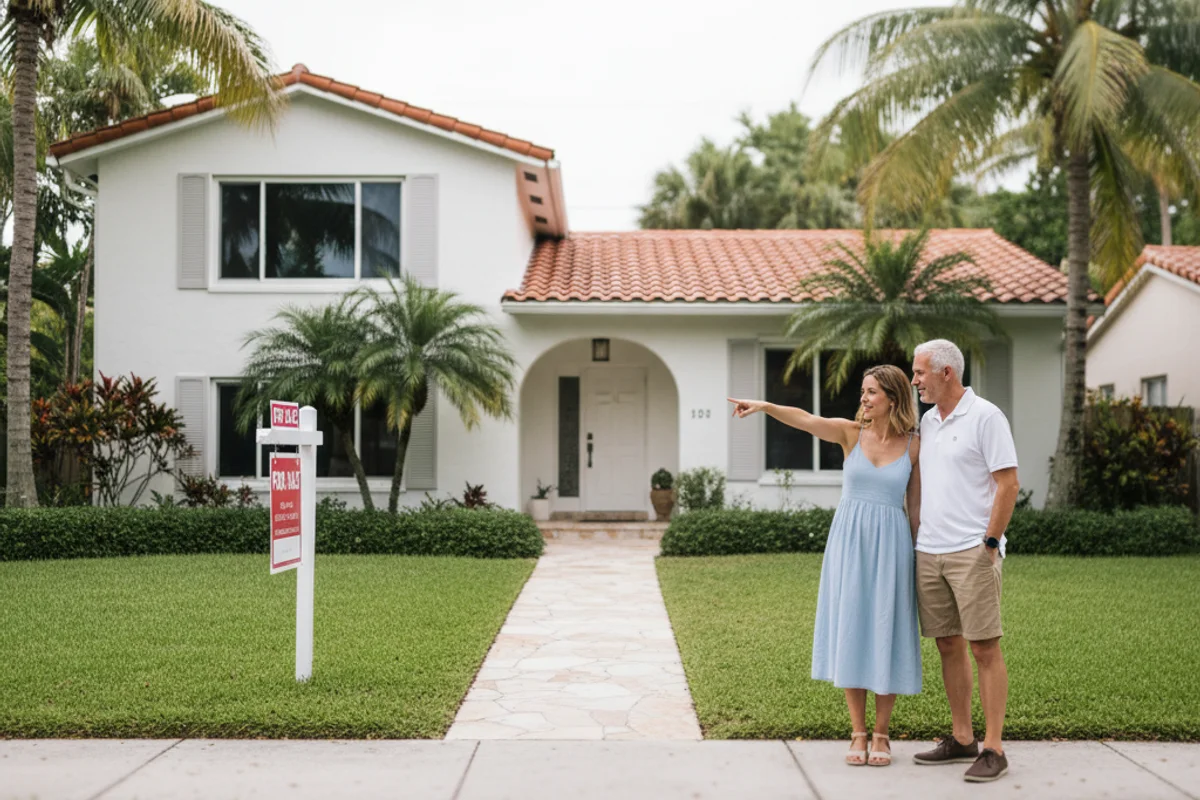
You and your spouse agreed it’s over. The house is the last thing holding you together, a $3,200 monthly reminder that you’re still financially entangled. When you need to sell your house during divorce in Miami, every extra month that property sits on the market is another month of shared mortgage payments, tense text messages about repairs, and delayed closure. The good news is you have options that don’t require 107 days of market exposure and constant coordination with someone you’re trying to separate from.
Let’s talk about how to sell fast, split the proceeds fairly, and move forward with your life.
Why Speed Matters When Selling During Divorce in Miami
Miami’s median home price sits at $675,000, which means your monthly mortgage payment probably ranges from $3,000 to $4,500 depending on your down payment and rate. Each month your house remains unsold costs both of you real money.
Traditional listings in Miami take an average of 107 days to close. That’s three and a half months of mortgage payments, property insurance, HOA fees if you’re in Brickell or Coral Gables, and utilities on a house neither of you may be living in. For a $675,000 home, those three months cost approximately $10,000 to $13,500 just in mortgage payments.
Here’s what most divorcing couples don’t calculate: the emotional tax. Every showing requires coordination. Every repair request becomes a negotiation. Every price reduction discussion reopens wounds. When both of you just want to move on, a quick home sale in Florida eliminates months of forced contact.
Speed also protects you from market shifts. Miami’s market is currently stable with moderate inventory, but conditions change. Waiting three months means gambling that interest rates won’t spike or that buyer demand won’t cool. A cash offer locks in your number today.
The financial reality is straightforward. If you can sell a house in Florida fast and avoid those extra months of carrying costs, you’ll net more actual cash in your pocket even if the offer is slightly below retail value.
For a complete guide, read our resource on selling during divorce in Miami.

Get Your Free Cash Offer Today
No fees. No repairs. Close in as little as 7 days.
Related Video
The Emotional Case for a Fast Miami Home Sale
Money matters, but let’s address what really keeps you up at night. You’re trying to start over while tied to someone through a property neither of you wants to deal with anymore.
Traditional listings require both spouses to agree on listing price, accept offers together, approve repair requests, and coordinate closing details. That’s dozens of decisions requiring mutual agreement during a time when agreeing on anything feels impossible. When you sell your house fast in Miami, you eliminate that friction.
Consider the practical realities in Miami neighborhoods. If your house is in Coconut Grove, every showing disrupts your life. If you’re in Kendall or Pinecrest with kids still in local schools, coordinating access while managing separate living situations becomes a logistics nightmare. Cash buyers often make offers sight-unseen or with minimal walk-throughs, cutting that hassle by 90%.
There’s also the matter of emotional closure. Psychologists who work with divorcing couples consistently note that finalizing property division helps both people move forward mentally. Keeping the house on the market for months extends the separation process and makes it harder to establish your new independent life.
A cash sale to reputable Miami cash home buyers typically closes in 7 to 14 days. That’s two weeks from accepting an offer to having a check you can split and deposit. Two weeks until the mortgage is paid off. Two weeks until neither of you has to text about the air conditioning repair or the lawn service.
The speed isn’t about taking a bad deal. It’s about valuing your peace of mind and your ability to move forward.
What Florida Law Requires Before You Can Sell
Florida follows equitable distribution for marital property, which is different from the community property rules in states like California or Texas. Equitable distribution means the court divides assets fairly based on specific factors, not necessarily equally.
If your house was purchased during the marriage, it’s marital property regardless of whose name appears on the deed. The court considers factors like length of marriage, each spouse’s economic circumstances, contributions to the marriage including homemaking, and more. The split doesn’t have to be 50/50, but it must be equitable.
You have three main paths forward under Florida law:
Mutual agreement: If you and your spouse can agree to sell and split proceeds, you can list or accept a cash offer without court involvement. This is the fastest path and the one most Miami couples pursue when relationships are amicable enough to cooperate on logistics.
Court order: If you can’t agree, either spouse can petition the court to force a sale. Judges generally prefer selling because it creates a clean break and prevents one spouse from being tied to property they can’t afford alone. Your attorney will file the appropriate motion, and the court will issue an order authorizing the sale and specifying how proceeds should be divided.
Buyout: One spouse can buy out the other’s equity interest and refinance the mortgage in their name only. This requires qualifying for a new loan based on one income, which isn’t realistic for many people given Miami’s high home values.
Florida also requires standard property disclosures when selling. According to Florida disclosure law, you must disclose known material defects. Both spouses should agree on what to disclose to avoid liability issues after closing. With cash buyers, disclosure requirements still apply, but as-is sales mean defects won’t kill your deal.
Traditional sales in Florida typically take 30 to 45 days to close after an offer is accepted. That timeline doesn’t include the weeks or months on market before you get an offer. Cash sales through cash home buyers in Florida skip financing contingencies and streamline the entire process.
One more legal consideration: if there’s a court order requiring the sale or specifying proceeds distribution, make sure your closing attorney has a copy. The title company will need to see that documentation before disbursing funds.

Find Out What Your Home Is Worth
Get a no-obligation cash offer in 24 hours.
Cash Buyers vs. Traditional Listing for Divorcing Miami Homeowners
Let’s compare the actual numbers and experience for a $675,000 home in Miami, which is the median price in this market.
Traditional listing costs and timeline:
You’ll pay 5-6% in realtor commissions, which is $33,750 to $40,500 on a $675,000 sale. Add another $2,000 to $4,000 for staging if your realtor recommends it, $500 to $1,500 for professional photos and marketing, and $800 to $2,000 for pre-listing repairs based on the home inspection.
Factor in 107 days average market time. With a $3,500 monthly mortgage, that’s three months of payments totaling $10,500. Add HOA fees if you’re in communities like Aventura or Key Biscayne, which average $400 to $600 monthly in Miami.
Cash sale numbers:
The real comparison:
That $20,000 to $30,000 difference buys you 93 days of freedom and eliminates countless stressful interactions. For many divorcing couples, that’s worth every penny. For a deeper breakdown of the math, check out this detailed analysis of cash offer vs listing with realtor in Miami.
We also work with sellers throughout Florida, including Fort Lauderdale and Orlando, so if you or someone you know owns property elsewhere in the state, the same speed benefits apply.
Handling the Mortgage When Both Names Are on the Loan
This is where divorcing couples get tripped up. Your divorce decree says one person is responsible for the mortgage going forward, so you assume that settles it. It doesn’t.
Mortgage lenders aren’t parties to your divorce. The loan contract you both signed remains in effect until the house is sold or refinanced. If your ex-spouse is ordered to pay the mortgage but stops making payments, the lender will come after both of you. Your credit gets damaged regardless of what the divorce paperwork says.
Here are your realistic options for handling joint mortgage liability:
Option 1: Sell the house and pay off the loan completely. This is the cleanest solution. Both of you walk away with no ongoing mortgage obligation, no shared liability, and no risk that the other person’s financial problems become yours. When you get your cash offer from a reputable buyer, the closing process includes paying off the existing mortgage from proceeds.
Option 2: One spouse refinances in their name only. This removes the other spouse from the loan and from the property title. The challenge is qualifying based on one income for a Miami mortgage on a $675,000 property. You’ll need strong income (usually $150,000+), good credit, and enough equity to refinance without mortgage insurance. Many people can’t meet these requirements post-divorce.
Option 3: One spouse keeps the house and assumes the loan. Some lenders offer loan assumption, where one spouse takes over the existing mortgage. This is rare and requires lender approval. The spouse assuming the loan must qualify based on their income alone, and not all loan types allow assumptions.
Option 4: Both names stay on the mortgage with one person making payments. This is risky and not recommended. If the paying spouse misses payments, both credit scores suffer. If they stop paying entirely, the other spouse has no legal control over the property but remains liable for the debt. This arrangement creates ongoing entanglement and risk.
The reality for most Miami couples: selling is the safest path. It eliminates joint liability completely, splits remaining equity, and allows both of you to start fresh financially.
One note about timing: if the house has increased significantly in value and you’re worried about capital gains tax implications, consult a tax professional. The IRS allows married couples filing jointly to exclude up to $500,000 in gains from the sale of a primary residence. Individual filers can exclude $250,000. Timing your sale relative to your divorce finalization date can affect your tax situation.
Your Step-by-Step Path to Closing in Miami
Let’s walk through exactly how this works, from decision to cashed check.
Step 1: Determine if you need court approval or mutual agreement. Talk to your family law attorney. If you have a separation agreement that addresses the house, review it carefully. If your divorce is already in court, ask your attorney if you need a judge’s order to sell or if mutual agreement is sufficient. Most Florida judges will authorize a sale when asked because it benefits both parties.
Step 2: Gather your property information. You’ll need your address, approximate payoff amount on the mortgage, property tax information, and a general sense of condition. Don’t stress about exact numbers yet. Cash buyers will handle most of the research.
Step 3: Contact cash buyers and request offers. Reach out to 2-3 reputable cash home buyers in Florida to compare offers. Legitimate buyers will ask about property condition, neighborhood, and your timeline. They’ll likely check public records for your home’s tax assessed value and recent comparable sales in neighborhoods like Doral, Westchester, or wherever your property is located.
Step 4: Review offers together. Even if you can barely stand to be in the same room, both of you should understand the offer terms. Look at the price, the timeline, any contingencies, and who pays closing costs. Most cash buyers cover all closing costs, which simplifies the math.
Step 5: Accept an offer and sign the purchase agreement. Both spouses will need to sign if both are on the deed. The purchase agreement will specify the closing date (usually 7-14 days out) and the terms.
Step 6: Coordinate with a closing attorney or title company. In Florida, most closings are handled by real estate attorneys or title companies. They’ll order a title search, prepare closing documents, and calculate the exact payoff amount for your mortgage. If there’s a court order governing the sale, provide a copy to the closing agent.
Step 7: Sign closing documents. You’ll both need to sign the deed and closing paperwork. Some title companies allow you to sign separately if scheduling together is difficult. Florida law requires you to appear in person or use a valid power of attorney for real estate transactions.
Step 8: Receive proceeds and split according to your agreement. The title company will wire funds to your bank account (or issue checks) after the mortgage is paid off and all closing costs are deducted. If your divorce decree or separation agreement specifies the split, the title company can disburse funds accordingly. Otherwise, the default is equal split unless you specify otherwise in writing.
The entire process from Step 3 to Step 8 typically takes 10 to 14 days with a cash buyer. There are no appraisals to wait for, no loan underwriting, and no buyer financing contingencies that might kill the deal.
One Miami-specific consideration: hurricane season runs June through November. If you’re selling during peak season and a storm threatens, cash buyers don’t require insurance inspections or lender-mandated wind mitigation reports. You can close quickly even when traditional buyers might pause their purchases due to weather concerns.
If you’re working with family law attorneys, let them know you’re pursuing a cash sale. They can coordinate with the closing agent to ensure all legal requirements are met and proceeds are distributed correctly. Most Florida family law attorneys are familiar with quick cash sales because they’re common in divorce situations.
For those concerned about making the wrong choice between listing traditionally or accepting a cash offer, the comparison articles for nearby markets might help. Take a look at how the numbers work in Fort Lauderdale for another South Florida perspective on when cash sales make sense.
You’re not stuck. You have clear options, the law provides a path forward, and the Miami market has active cash buyers ready to make offers on homes in every neighborhood from Little Havana to Palmetto Bay. The key is taking the first step: deciding to move forward and getting actual offers so you can make an informed choice based on real numbers, not assumptions.
When you’re ready to see what your Miami house could sell for, reach out and get your cash offer. You’ll know within 24-48 hours what a cash buyer will pay, with no obligation to accept. At minimum, you’ll have a concrete number to compare against traditional listing estimates. At best, you’ll have a path to closing in two weeks and finally moving forward with your life.
Divorce is hard enough without adding months of property stress to the equation. Take control of the one thing you can resolve quickly: the house.
We also help homeowners in Miami dealing with foreclosure, selling as-is, and inherited property situations.

Ready to Sell? Let's Talk.
Get your cash offer now. No obligation, no hassle.

Jackie is the COO and a Correspondent at NestCash, combining leadership with real estate reporting and market insight. She covers key trends across 12 states, helping ensure NestCash delivers clear, reliable guidance nationwide.