
Sell House During Divorce In Cincinnati: Get Cash Fast
Sell your house during divorce in Cincinnati with less conflict. Learn how cash sales split equity cleanly and close in as little as 7 days.

Senior Contributor, NestCash··12 min read
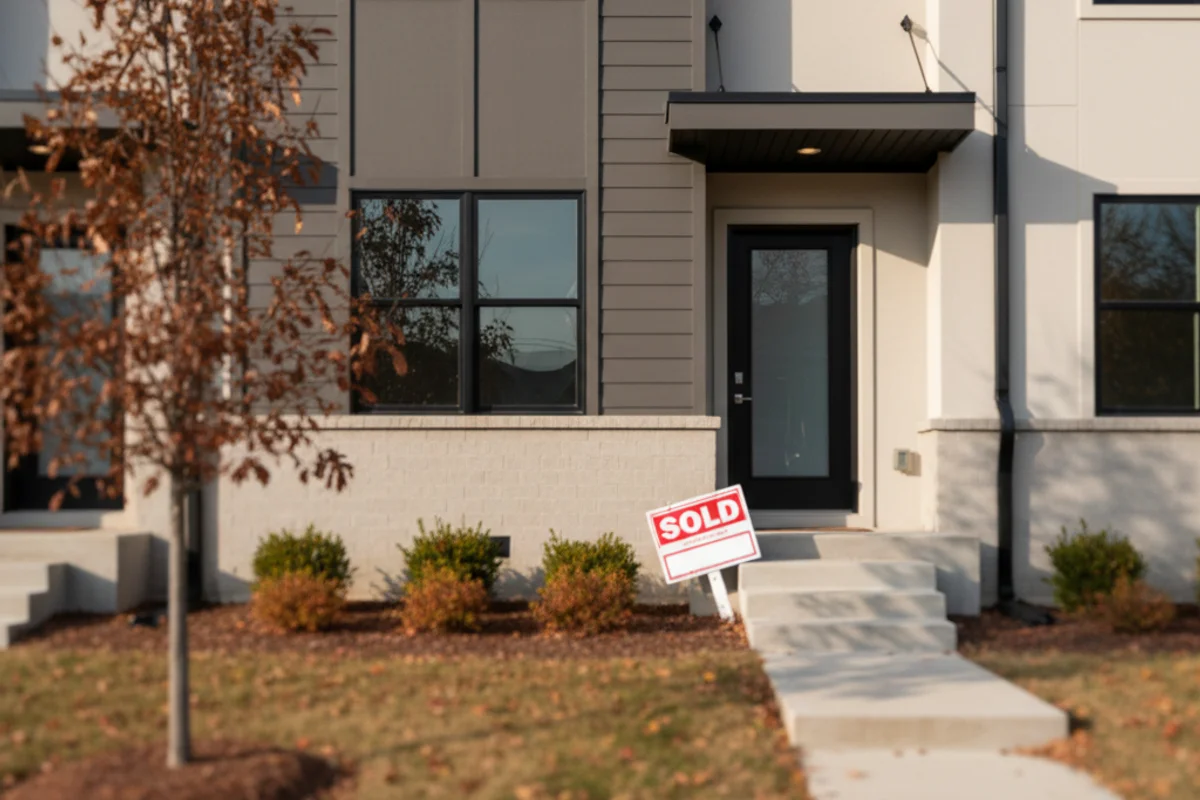
If you need to sell your house during divorce in Cincinnati, you’re not alone. The furniture is divided, the lawyers have the paperwork drafted, and the only thing left tying you together is the house in Hyde Park or Mount Lookout with both your names on a mortgage bill that arrives every month. You don’t have to drag the process out for months while emotions stay raw and finances stay tangled.
The good news is that selling fast doesn’t mean selling cheap. It means choosing the right method that aligns with your shared goal: closing this chapter cleanly and moving forward separately. Cincinnati’s real estate market offers multiple paths, but not all of them make sense when your priority is speed, certainty, and minimizing contact with an ex-spouse.
Why Speed Matters When Selling During Divorce in Cincinnati
Every month you own the house together costs money and extends contact. The mortgage payment, property taxes, homeowner’s insurance, utilities, and maintenance bills don’t pause while you negotiate. In Cincinnati, where the median home price sits at $265,000, carrying costs easily exceed $2,000 monthly when you factor in a typical mortgage payment plus expenses.
Here’s what delays actually cost. If you list traditionally and the house sits for the Cincinnati average of 40 days before accepting an offer, then another 30-45 days until closing, you’re looking at two to three months minimum. That’s $4,000 to $6,000 in carry costs, plus the stress of coordinating showings, repairs, and decisions with someone you’re trying to separate from.
Speed also protects both credit scores. If one spouse moves out and stops contributing to the mortgage, the remaining spouse faces a choice: cover the full payment alone or risk late payments that damage both credit reports. Joint mortgage liability doesn’t end when someone moves out. It only ends when the loan is paid off.
The emotional toll matters too. The longer the house remains unsold, the longer you’re forced into regular communication about mundane details like lawn care, furnace repairs, or showing schedules. Quick closings reduce friction.
For a complete guide, read our resource on selling during divorce in Cincinnati.

Get Your Free Cash Offer Today
No fees. No repairs. Close in as little as 7 days.
Related Video
The Emotional Case for a Fast Cincinnati Home Sale
Divorce is exhausting enough without the house becoming another battleground. Traditional sales require cooperation at every turn. You’ll need to agree on listing price, agent selection, which repair requests to accept, and how to stage the home. Every decision becomes a negotiation.
Compare that to working with Cincinnati cash home buyers who make a single offer based on current condition. You say yes or no. No staging, no repairs, no weekend open houses with strangers walking through your bedrooms. You can close in as little as seven to fourteen days and split the proceeds according to your divorce agreement or court order.
Cincinnati neighborhoods like Oakley, Columbia-Tusculum, and Northside have strong buyer demand, which helps in any market. But demand doesn’t eliminate the stress of traditional selling when you and your ex can’t agree on whether to replace the roof or accept a lower offer.
A fast sale also lets both of you plan your next steps. You’ll know exactly how much equity you’re walking away with and when you’ll have the cash to secure new housing. Uncertainty extends stress. Certainty, even at a slightly lower sale price, often provides more value than maximizing dollars while stretching the timeline.
One more thing: children notice. If kids are involved, they feel the tension of their parents managing the family home together while living apart. Closing the sale quickly helps everyone transition to the next phase rather than staying stuck in limbo.
What Ohio Law Requires Before You Can Sell
Ohio is an equitable distribution state, meaning marital property is divided fairly but not necessarily equally. The family court considers factors like each spouse’s income, contributions to the marriage, custody arrangements, and future earning capacity. Most divorcing couples settle property division through negotiation rather than letting a judge decide.
Before you can sell your house during a divorce in Cincinnati, both spouses must agree to the sale, or the court must order it. If you’re still negotiating and one spouse refuses to sell, you’ll need to petition the court for permission. This can delay the process by weeks or months depending on your county’s court calendar.
Ohio requires sellers to complete a Residential Property Disclosure Form for most home sales. You’ll need to disclose known issues with the roof, foundation, plumbing, electrical systems, and other major components. Both spouses should review and sign this document to avoid future liability if the buyer discovers undisclosed problems.
The state also recommends a home inspection for buyers, though it’s not legally required. Expect most traditional buyers to request one, which can lead to repair negotiations that require both spouses to agree on how to respond. Cash buyers typically waive inspections and buy the property as is, eliminating this step entirely.
One practical note: if your divorce decree specifies how to divide sale proceeds but hasn’t been finalized yet, your closing attorney will likely place the funds in escrow until the court issues the final order. This protects both parties and ensures the split happens according to legal requirements.

Find Out What Your Home Is Worth
Get a no-obligation cash offer in 24 hours.
Cash Buyers vs. Traditional Listing for Divorcing Cincinnati Homeowners
Let’s compare the two paths using real Cincinnati numbers. Traditional listing involves hiring an agent, preparing the home, waiting for buyers, and navigating negotiations. Cash sales involve requesting an offer, reviewing it, and choosing a closing date.
Traditional Listing:
- Agent commission: 5-6% of sale price (around $13,250 to $15,900 on a $265,000 home)
- Closing costs: 1-3% of sale price (seller’s portion)
- Average time on market: 40 days in Cincinnati
- Inspection repairs: typically $2,000 to $8,000 depending on home condition and age
- Appraisal contingency risk: deal can fall through if appraisal comes in low
- Total timeline: 70-85 days from listing to closing
Cash Sale:
- No agent commission
- Minimal closing costs (buyer often covers most fees)
- No repairs required
- No appraisal contingency
- Timeline: 7-14 days from accepted offer to closing
- Sale price typically 10-20% below market retail value
The math matters. If your $265,000 home needs a new roof ($8,000), updated HVAC ($6,000), and cosmetic updates to compete with renovated listings in Walnut Hills or East Walnut Hills, your net proceeds after commissions and repairs might be $230,000 to $235,000 through a traditional sale. A cash offer at 80-85% of value ($212,000 to $225,000) suddenly looks competitive when you factor in speed, certainty, and zero repair costs.
Cash offers work especially well when couples disagree about how much to invest in repairs or when neither spouse can afford to front the money for updates. You can sell a house in Ohio in any condition and split the proceeds without additional out-of-pocket expenses.
The certainty factor can’t be overstated. Traditional buyers back out for countless reasons: financing falls through, cold feet, inspection surprises, appraisal gaps. Cash buyers have funds ready and close on schedule. When you need to move forward with your life, certainty beats a slightly higher potential sale price.
Handling the Mortgage When Both Names Are on the Loan
Joint mortgage liability is one of the trickiest parts of divorce. Even if your divorce decree assigns the house and mortgage to one spouse, the lender isn’t bound by that court order. If the spouse keeping the home stops paying, the lender will pursue both borrowers and damage both credit scores.
Here are your options when both names are on the mortgage:
- Sell the home and pay off the loan: Cleanest option that eliminates shared debt and liability for both parties
- One spouse refinances in their name only: Requires qualifying income and credit, removes the other spouse from the loan, but may not be possible if income is insufficient
- One spouse assumes the loan: Some lenders allow qualified assumption, transferring full responsibility to one borrower
- Keep joint ownership temporarily: Risky option where one spouse stays in the home while both remain on the mortgage, creates ongoing liability for the spouse who moved out
- Sell to a cash buyer and close quickly: Fastest path to eliminating mortgage obligation, typically closes within two weeks
The refinance option sounds good in theory but often fails in practice. The spouse keeping the home needs to qualify for the full loan amount based on their individual income. In Cincinnati, where the typical mortgage on a median-priced home runs around $1,500 to $1,800 monthly, qualifying income needs to be roughly $65,000 to $75,000 annually. Many single incomes don’t support this.
The assumption option requires lender approval and isn’t available for all loan types. You’ll need to check with your specific lender about eligibility and requirements.
That’s why selling to cash home buyers in Ohio makes practical sense for so many divorcing couples. The mortgage gets paid off at closing, both names come off the loan, and you split whatever equity remains. No one is left holding debt they can’t afford or risking their credit score based on an ex-spouse’s payment habits.
Here’s a real scenario. Let’s say you bought your Cincinnati home in 2020 for $220,000 with a $200,000 mortgage at 3.5% interest. Your current balance is around $180,000. The home is now worth $265,000. You have $85,000 in equity to split. After a cash sale at $225,000 and minimal closing costs, you each walk away with roughly $20,000 to $22,500 for new housing. Clean, fast, and final.
Your Step-by-Step Path to Closing in Cincinnati
Ready to move forward? Here’s the practical sequence that gets you from decision to closed sale.
Step one: Get mutual agreement or court authorization. If you and your spouse both agree to sell, document it in writing. If one spouse objects, file a motion with the Hamilton County Court of Domestic Relations requesting permission to sell. Your family law attorney can handle this filing.
Step two: Determine current home value and mortgage balance. Check recent comparable sales in your specific Cincinnati neighborhood on Realtor.com or request a comparative market analysis from a local agent. Contact your lender for a current payoff quote that includes principal, interest, and any prepayment penalties.
Step three: Request cash offers. Contact local buyers who specialize in quick closings and divorce situations. You can get your cash offer within 24 hours typically, with no obligation. Compare multiple offers if you have time.
Step four: Review offers together or through attorneys. Decide whether the cash offer works for your situation or whether traditional listing makes more sense. Run the actual numbers including all costs and timeline considerations.
Step five: Accept an offer and set a closing date. Cash buyers will work around your schedule. You can often choose any closing date within a two-week window. Coordinate with both spouses’ moving plans.
Step six: Complete Ohio disclosure requirements. Fill out the Residential Property Disclosure Form honestly and completely. Both spouses should review and sign.
Step seven: Arrange for closing and proceeds distribution. Attend closing in Hamilton County, sign paperwork, and receive proceeds according to your divorce agreement. If the decree isn’t final, funds may be held in escrow until the court issues final orders.
Cincinnati’s title companies and closing attorneys handle divorce sales regularly. They’ll ensure proper documentation, lien releases, and distribution according to your legal agreement. The entire process from accepted offer to funding typically takes seven to fourteen days with cash buyers.
If you’re also dealing with financial pressure or risk of missed mortgage payments, the same strategies that help divorcing couples also apply to distressed situations. The principles of quick sale, minimal repairs, and certain closing translate across scenarios. We work with homeowners throughout Ohio and surrounding areas including Akron for those further north.
What about taxes? Most married couples filing jointly can exclude up to $500,000 in capital gains from selling their primary residence, as long as they’ve owned and lived in the home for two of the past five years. If you’re filing separately, each spouse can exclude up to $250,000. Check with a tax professional about your specific situation and timing, as the IRS home sale exclusion rules include nuances around divorce timing.
What if one spouse won’t cooperate? Ohio family courts can order the sale of marital property when spouses can’t agree. Your attorney files a motion, presents evidence about why selling serves both parties’ interests, and asks the court to authorize the transaction. This adds time but doesn’t prevent the sale from happening.
Do we both need to attend closing? Typically yes, since both names are on the deed. However, if one spouse genuinely cannot attend, you can arrange for power of attorney designation that allows the other spouse or an attorney to sign on their behalf. Your closing attorney will explain the requirements.
Cincinnati’s real estate market remains stable with moderate inventory levels and consistent buyer demand. About 25% of home sales in the area are cash transactions, meaning you’re not dealing with a niche market when you choose this path. Cash buyers are active in every neighborhood from Clifton to Mount Adams to West Price Hill.
The decision to sell isn’t easy. The house represents years of memories, good and bad. But when staying stuck means ongoing conflict, financial strain, and delayed healing, selling fast gives both people permission to move forward. You’ll have cash for deposits on new places, freedom from joint mortgage liability, and one less thing to negotiate about while lawyers finalize the rest.
If you’re ready to explore what a cash offer looks like for your specific Cincinnati property and situation, you can request an offer today with no obligation. The timeline, the simplicity, and the clean split of proceeds might be exactly what you need right now.
For more details, see our guide on selling quickly in Cincinnati.
Cincinnati homeowners may also want to read about cash offer vs listing in Cincinnati.
We also help homeowners in Cincinnati dealing with foreclosure, selling as-is, and inherited property situations.

Ready to Sell? Let's Talk.
Get your cash offer now. No obligation, no hassle.

Lisa is a Senior Contributor at NestCash, writing expert content on real estate, homeownership, and market trends. She covers 12 states, with a focus on making real estate information practical, clear, and useful.