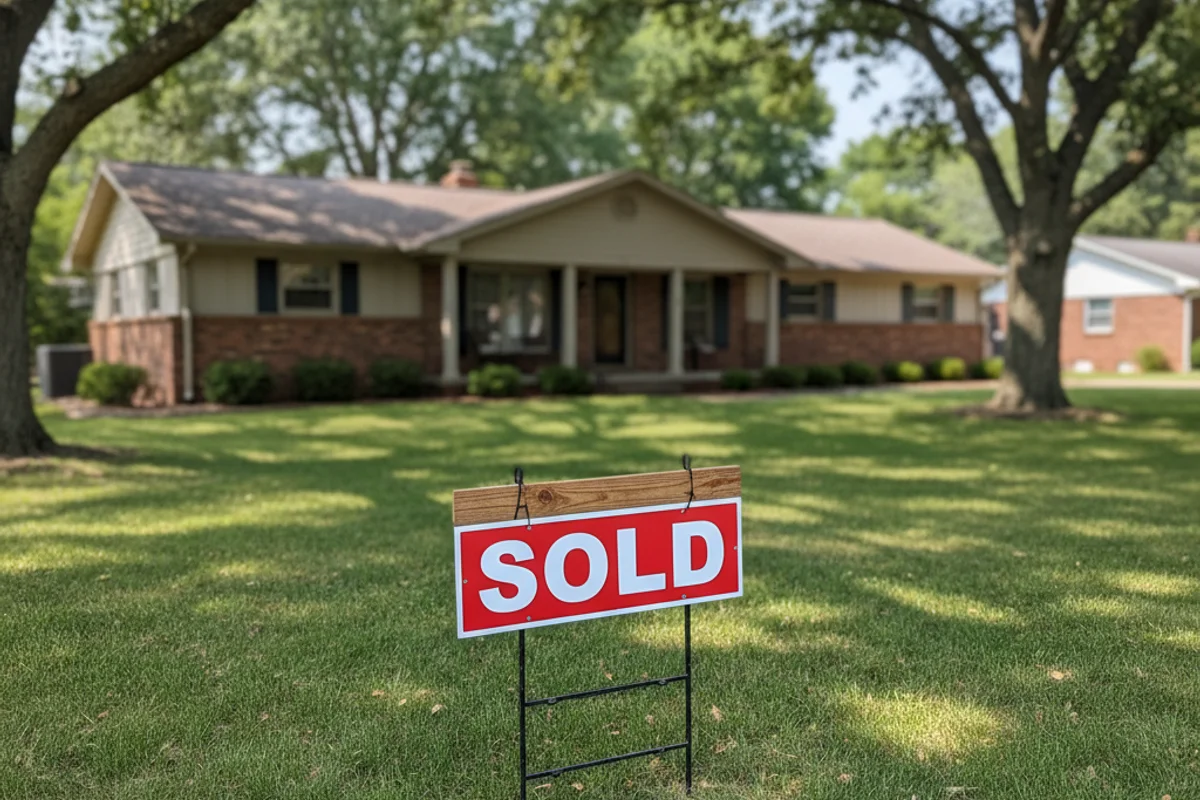
Sell House During Divorce in Dayton: Real Costs & Cash Option
Selling your house during divorce in Dayton? A slow sale costs $3,200+ in holding costs alone. See real numbers on cash vs. listing and get your offer today.

Senior Contributor, NestCash··14 min read
A drawn-out divorce home sale in Dayton costs $3,200 in holding expenses over 90 days. That number includes two months of mortgage payments on Dayton’s median $130,000 home (roughly $950 per month), utilities averaging $180 monthly, property taxes at $175 per month, and basic maintenance. Add agent commissions at 6% ($7,800) and you’re losing over $11,000 before you even split what’s left.
When you need to sell your house during divorce in Dayton, every month the property sits empty or half-occupied drains equity you could be dividing and moving forward with. The math gets worse if one spouse has already moved out and you’re covering duplicate housing costs. Traditional listings in Dayton average 62 days on market according to current local data, but divorce sales often take longer because decisions require two signatures, two schedules, and two sets of emotions.
The good news is you have options beyond the traditional listing route. Cash home buyers in Dayton can close in days instead of months, eliminating holding costs and reducing the time you need to coordinate with your ex. Let’s break down the real numbers so you can make an informed choice about what works for your situation.
The Real Cost of a Slow Dayton Divorce Home Sale
Most divorcing couples focus on the sale price and forget about the carrying costs piling up each month. Here’s what those delays actually cost on a typical Dayton home.
Your mortgage doesn’t care about your divorce timeline. On a $130,000 home with 20% down and a 7% interest rate, you’re paying around $690 monthly in principal and interest. Property taxes in Montgomery County add another $175 per month. Homeowner’s insurance runs about $85 monthly for the median Dayton property.
Then there are the utilities. Even if no one is living there full time, you can’t let the house freeze in winter or turn into a sweatbox in summer. Keeping basic utilities running costs $150 to $200 monthly. If the lawn isn’t mowed or snow isn’t cleared in neighborhoods like Oakwood or Kettering, the city can fine you and hurt your sale prospects.
Add it all up and you’re hemorrhaging $1,100 to $1,300 every month the house doesn’t sell. Over the 62-day average market time plus a 40-day closing, you’ll spend about $3,200 in pure holding costs. That’s equity evaporating while you wait.
Now layer in the transaction costs. Traditional agent commissions in Dayton run 5-6% of the sale price. On that $130,000 median home, you’re handing over $6,500 to $7,800 to agents before either of you sees a dollar. Closing costs add another 1-3% ($1,300 to $3,900) depending on negotiations.
But here’s what really hurts. Divorce sales typically take longer than the 62-day Dayton average. You’re coordinating showing schedules between two people who may not be speaking. Repair negotiations require dual approval. Price reductions need both signatures. Every delay costs another $1,200 per month.
If disagreements or scheduling conflicts push your sale timeline to 120 days instead of 62, you’ve just added $2,400 in holding costs. The total transaction expense can easily hit $12,000 to $14,000 before you split what remains.
Those are real dollars that could be going toward your fresh start, your kids’ expenses, or separate housing deposits.
For a complete guide, read our resource on selling during divorce in Dayton.

Get Your Free Cash Offer Today
No fees. No repairs. Close in as little as 7 days.
Cash Offer vs. Agent Listing: A Side-by-Side Dayton Breakdown
Let’s put actual Dayton numbers next to each other so you can see the true net difference.
Traditional agent listing on your $130,000 Dayton home:
Costs:
- Agent commission (6%): $7,800
- Closing costs (seller paid): $2,600
- Pre-listing repairs and staging: $2,500
- Holding costs for 90 days: $3,600
- Total costs: $16,500
- Net after costs: $113,500
- Each spouse receives: $56,750
- Timeline: 90-105 days
Cash offer scenario on the same property:
Costs:
- Agent commission: $0
- Closing costs (buyer pays): $0
- Repairs: $0
- Holding costs for 14 days: $560
- Total costs: $560
- Cash offer at 85-90% of value: $117,000
- Net after costs: $116,440
- Each spouse receives: $58,220
- Timeline: 7-14 days
You net $1,470 more per person with the cash sale, and you’re done in two weeks instead of three months. That’s three fewer months of coordinating with your ex, three fewer mortgage payments to stress over, and immediate liquidity to move forward.
The perception that cash buyers lowball doesn’t match reality when you account for actual costs. A cash offer at 90% of market value ($117,000) beats a full-price listing after commissions and repairs. In Dayton’s market, where 24% of sales are already cash transactions, this option makes financial sense for couples who need certainty and speed.
Cash sales also eliminate the risk of deals falling through. Traditional buyers in Ohio often include inspection and financing contingencies. When financing falls through or inspection reveals issues neither spouse wants to pay for, you’re back to square one. That happened to 15% of pending Dayton sales last year according to local MLS data.
The other advantage is simplicity for dividing proceeds. With a cash sale, you receive a single wire transfer split according to your agreement. No waiting for buyer financing, no last-minute renegotiations, no wondering if the deal will close.
You can see more about how this works throughout Ohio and specifically with Dayton cash home buyers who handle divorce situations regularly.
Ohio Property Division: What the Law Says About Splits
Ohio is an equitable distribution state, not a community property state. That legal distinction matters when you’re dividing your Dayton home.
Equitable distribution means the court aims for a fair split, not automatically 50-50. Fair depends on multiple factors outlined in Ohio Revised Code Section 3105.171. The court considers the duration of the marriage, assets and liabilities of each spouse, whether either spouse earned a professional degree during the marriage, and each spouse’s earning potential.
For most Dayton couples, the marital home is the biggest asset in play. If you bought the house during the marriage, it’s marital property subject to division. The court will consider who paid the down payment, who made mortgage payments, and whether one spouse brought the property into the marriage.
The good news is most divorcing couples negotiate their own split without court intervention. If you both agree on a 50-50 division of sale proceeds, the court will almost always approve it. If circumstances make another split more fair (one spouse paid the entire down payment with pre-marriage funds, for example), you can agree to that too.
What you cannot do is force a sale without either mutual agreement or a court order. If both names are on the deed, both signatures are required to sell. If your spouse refuses to cooperate, you’ll need to petition the court for an order of sale. This adds weeks or months to your timeline and legal fees to your costs.
The alternative is one spouse buying out the other’s interest. This keeps the home but requires refinancing the mortgage in one name and having enough cash or equity to buy the other spouse’s share. On a Dayton home with $50,000 in equity, that’s a $25,000 buyout for a 50-50 split.
Most Dayton couples going through divorce choose to sell rather than buy out. It’s cleaner, eliminates ongoing financial entanglement, and gives both people liquidity to restart independently. Working with professionals who understand the timeline pressures of divorce makes this process smoother. To sell your house fast in Dayton during a divorce, you need buyers who can work on your schedule, not theirs.

Find Out What Your Home Is Worth
Get a no-obligation cash offer in 24 hours.
Untangling a Joint Mortgage After Divorce in Ohio
You have several options to handle the joint mortgage:
Sell the home and pay off the mortgage completely: This is the cleanest break. Both names come off the loan when it’s satisfied at closing. You split whatever equity remains and move forward independently.
One spouse refinances in their name alone: This removes the other spouse from the mortgage, but requires qualifying for the full loan amount solo. With Dayton’s median home price at $130,000, you’d need income to support roughly a $690 monthly payment plus taxes and insurance.
One spouse assumes the existing mortgage: Some mortgages allow assumption, but the lender must approve the assuming spouse’s credit and income. This is rare with conventional mortgages but more common with FHA and VA loans.
Keep both names on the mortgage with a legal agreement: This is risky. If the spouse living there misses payments, both credit scores suffer. If you need to buy another home, that old mortgage payment counts against your qualification.
If you’re coordinating this in other Ohio markets, you can compare approaches with the cash offer vs listing process in Cincinnati or Columbus, where the timeline advantages are similar.
How Dayton Market Conditions Affect Your Divorce Sale
Dayton’s market sits in stable territory right now, which actually favors divorcing sellers who want certainty. The median home price has held steady around $130,000 over the past 18 months. Inventory levels are moderate, meaning you’re not competing with a flood of other listings but also not in a situation where any house sells instantly.
Average days on market at 62 suggests a balanced market. Homes priced right sell within two months, but overpriced properties linger. For a divorce sale, this means you need to price realistically from day one. You don’t have the luxury of testing the market high and reducing later. Every price reduction requires dual approval and adds weeks to your timeline.
Neighborhoods matter significantly in Dayton. Homes in Oakwood, Kettering, and Centerville move faster and command higher prices than properties in older sections of East Dayton or West Dayton. A well-maintained home in the Oregon District or St. Anne’s Hill attracts buyers faster than comparable square footage in areas with higher vacancy rates.
Dayton’s buyer pool skews toward affordability seekers and first-time buyers. These buyers often use FHA or conventional financing with tight lending standards. They’ll request inspections, appraisals, and repairs. That’s another reason cash offers appeal to divorce sellers. You’re not waiting for a 28-year-old couple’s mortgage approval or negotiating over a $1,200 roof repair that neither you nor your ex wants to handle.
The 24% cash sale percentage in Dayton is notably high compared to the national average of 18%. This means there’s an established market of cash home buyers in Ohio ready to purchase without financing contingencies. These buyers include local investors, flippers, and companies that specialize in quick closings for sellers who need certainty.
Seasonal patterns also affect Dayton sales. Spring and early summer (April through July) see the most buyer activity. Winter months slow considerably, especially December and January when weather and holidays limit showing activity. If your divorce timeline pushes the sale into late fall or winter, expect a longer marketing period with traditional listings.
Cash buyers operate year-round without seasonal slowdowns. They’re not waiting for better weather to tour homes with their families. They’re making purchase decisions based on numbers and timelines, not curb appeal and emotions. For a divorce sale happening in November or February, that consistency matters.
Starting Fresh: Your Next Steps After Selling
Once your Dayton home sells and you’ve split the proceeds, you’re facing practical decisions about what comes next. Most divorcing homeowners fall into one of three categories: renting temporarily, buying a smaller place, or moving in with family during transition.
Renting makes sense if your credit took hits during the divorce or if you need flexibility while life stabilizes. Dayton’s rental market offers decent options. A two-bedroom apartment in a safe neighborhood runs $800 to $1,100 monthly. That’s manageable on a single income while you rebuild savings and figure out your next permanent move.
If you’re ready to buy again, you’ll need your divorce decree finalized and proof the old mortgage is satisfied. Lenders want to see that joint obligation eliminated. They’ll also look at how the divorce affected your credit score and debt-to-income ratio. Give yourself three to six months after closing your divorce sale before applying for new financing. This buffer helps your credit recover and gives you time to save for another down payment.
Tax implications matter too. Under current IRS rules for home sales, you can exclude up to $250,000 in capital gains as a single filer if you lived in the home two of the past five years. Most Dayton sellers won’t approach that threshold given median prices, but if your home appreciated significantly or if you’re selling a higher-value property, consult a tax professional about your specific situation.
Dividing furniture and belongings is easier once you know where each person is landing. If you’re both downsizing into apartments, neither of you needs that oversized sectional sofa. Selling items you don’t need generates extra cash for moving expenses and deposits.
The emotional side of starting fresh takes longer than the financial logistics. Selling the marital home brings closure but also grief. Give yourself permission to feel both relief and loss. That’s normal. The house represented a chapter of your life that’s ending. What matters now is that you have liquidity and freedom to write the next chapter on your own terms.
If you’re ready to move forward, the process starts with understanding your actual options with real numbers attached. You can get your cash offer to see exactly what a fast sale nets you after costs. Compare that to what a traditional listing would yield. Run your own numbers based on your mortgage balance, needed repairs, and how long you can afford to wait.
You can also explore what a quick sale looks like in nearby Ohio markets. If you have connections to Cleveland, Toledo, or Akron, the process works similarly throughout the state. Ohio’s disclosure laws and equitable distribution rules apply statewide, though local market conditions vary.
Some couples worry that selling fast means settling for less. The math shows otherwise when you account for all costs. A cash offer at 88-90% of market value typically nets more than a full-price listing after commissions, repairs, and holding costs. You also gain certainty. No deals falling through at the last minute. No coordinating showings for months. No arguing about repair requests from picky buyers.
Working with a family law attorney throughout this process protects both spouses. They’ll review the purchase agreement, ensure the equity split matches your divorce agreement, and confirm the title company disburses funds correctly. Legal fees for this review typically run $500 to $1,200, a worthwhile investment to avoid disputes after closing.
The Montgomery County Auditor’s office maintains property records showing ownership, assessed value, and tax payment history. Pull your property record to verify exactly whose names appear on the deed. That determines who must sign the sale documents. If one spouse’s name is missing from the deed but both are on the mortgage, you’ll need legal guidance on how to proceed.
For disclosure requirements, Ohio law mandates completing the Residential Property Disclosure Form for any residential sale. You must disclose known defects, even in cash sales. Be honest about foundation issues, roof leaks, electrical problems, or plumbing concerns. Hiding defects can create legal liability after closing.
The practical reality is that every day your Dayton divorce drags on with an unsold house, you’re both losing money and peace of mind. The mortgage payment, the utilities, the coordination, and the conflict all continue. Selling fast and splitting proceeds ends that cycle. You both get liquidity to move forward. You eliminate the financial tie keeping you connected. You stop the cash drain of duplicate housing and ongoing holding costs.
That’s what matters when you need to sell a house in Ohio during a major life transition. Speed and certainty beat maximum price when the real cost includes your time, stress, and ability to restart your life. The numbers back this up. The emotions support it too. Getting unstuck starts with one decision: are you ready to move forward, or will you let the house keep you tied to the past for another few months?
If you’re ready, start by getting a clear picture of what your home is worth in today’s market and what a cash buyer would offer. Compare that to the traditional route. Run the math on holding costs. Then make the choice that works for your timeline and your financial situation. Both paths lead to the same place. One just gets you there three months faster with more money in your pocket and less conflict along the way.
Divorce is hard enough without your house making it harder. Sell it, split the proceeds fairly, and start fresh. Dayton’s market supports that approach, the numbers prove it works, and thousands of divorcing couples have already walked this path successfully. Your turn to move forward starts whenever you’re ready.
We also help homeowners in Dayton dealing with foreclosure, selling as-is, and inherited property situations.

Ready to Sell? Let's Talk.
Get your cash offer now. No obligation, no hassle.

Lisa is a Senior Contributor at NestCash, writing expert content on real estate, homeownership, and market trends. She covers 12 states, with a focus on making real estate information practical, clear, and useful.