Sell My House As Is In Raleigh: Zero Fees, Fair Offers
Raleigh homes sit 43 days on market. Sell your house as is in Raleigh with cash buyers and close in two weeks. Get your fair offer today.

COO & Correspondent, NestCash··11 min read
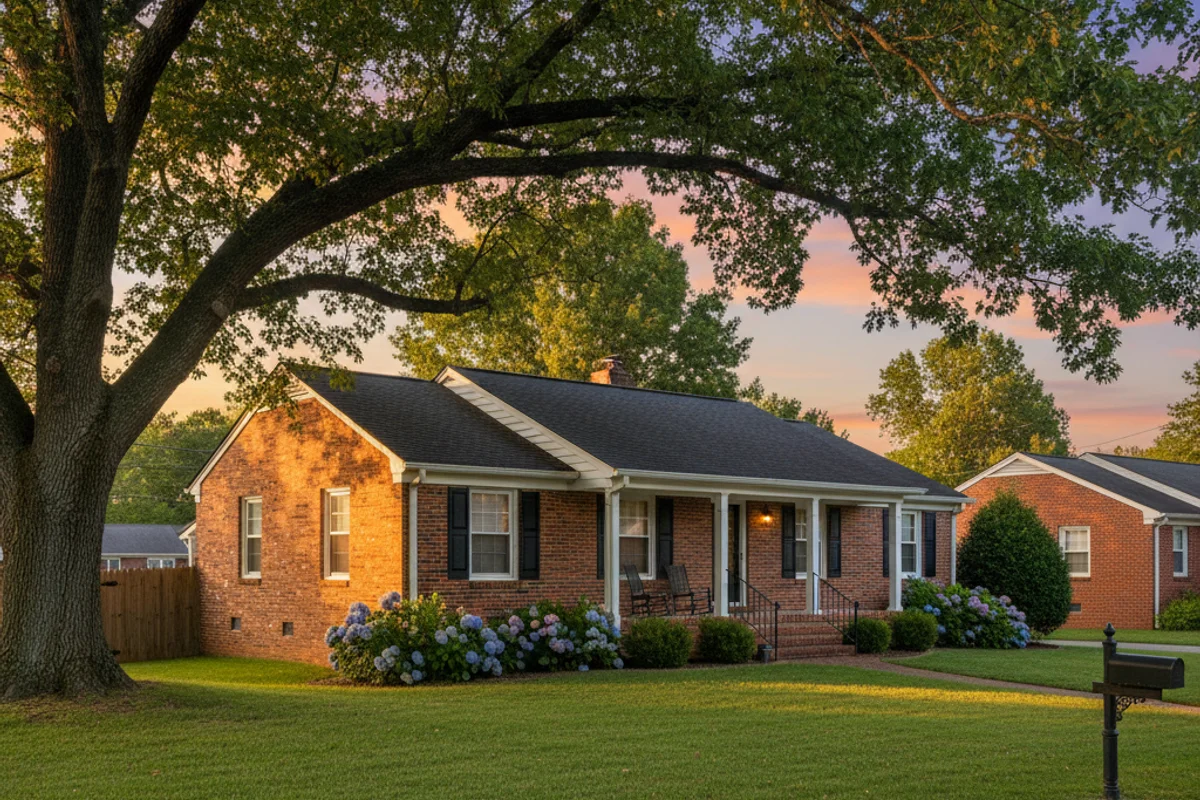
Raleigh homes averaged 43 days on market in early 2026, but that’s just the listing phase. Add another 30 to 45 days for buyer financing and inspections, and you’re looking at 10 to 12 weeks minimum. If you need to sell your house as is in Raleigh without that timeline, cash buyers offer a different path. About 21% of Raleigh sales close with cash, and that percentage climbs when properties need work.
The local market sits at a median price of $420,000 with moderate inventory. That sounds healthy until you’re holding a property that needs a new roof or foundation work. Traditional buyers in Raleigh expect move-in-ready homes, especially at current price points. When your house doesn’t fit that description, you have two options: invest thousands in repairs or work with Raleigh cash home buyers who purchase properties in any condition.
The Raleigh Market in 2026: What It Means for As-Is Sellers
Raleigh’s stable market creates specific opportunities for as-is sellers. The Research Triangle continues drawing new residents, keeping demand consistent. But buyer expectations have shifted. Most people shopping in the $400,000+ range want updated kitchens and bathrooms, not project homes.
This creates pricing gaps. Your home might appraise at $380,000 if it were updated, but traditional buyers offer $320,000 then ask for another $25,000 in repair credits after inspection. You’re stuck negotiating from a weak position, wondering if the next buyer will demand the same concessions.
Cash buyers approach this differently. They calculate repair costs upfront and make a single offer based on current condition. You’ll know exactly what you’re getting within 48 hours, not after weeks of inspection negotiations. The cash home buyers in North Carolina market has matured enough that multiple companies compete for inventory, which helps sellers get fair pricing.
Seasonal patterns matter less with cash sales. Traditional Raleigh listings slow down in November and December, but cash buyers operate year-round. If you need to close before the holidays or during summer when school’s out, timing works in your favor.
The current inventory level means your property won’t sit ignored, even with needed repairs. Cash buyers actively search for as-is opportunities because there aren’t enough on the market. When supply is moderate and 21% of buyers use cash, you’re working in a seller-friendly environment for distressed properties.
For a complete guide, read our resource on selling your house as is in Raleigh.
Get Your Free Cash Offer Today
No fees. No repairs. Close in as little as 7 days.
Neighborhoods Where As-Is Sales Close Fast in Raleigh
Southeast Raleigh sees consistent as-is activity. Homes built in the 1960s and 1970s near Garner Road often need electrical updates, roof replacement, or HVAC work. Cash buyers know these neighborhoods and price accordingly. You’re not explaining why your 50-year-old house needs work because buyers expect it.
East Raleigh around New Hope Road attracts investors looking for rental properties. These buyers care more about location and bones than cosmetic condition. If your property sits near NC State or has convenient highway access, cash offers come quickly regardless of interior updates needed.
North Raleigh’s older sections, particularly homes built before 1990 near Falls of Neuse, present interesting opportunities. These properties sit in desirable school districts but may have dated interiors or deferred maintenance. Traditional buyers want the location but not the renovation project. Cash buyers want both.
Downtown-adjacent neighborhoods like Oakwood and Mordecai contain beautiful older homes that sometimes overwhelm their owners with maintenance demands. Original hardwoods and craftsman details attract investors willing to handle the restoration work. As-is sales here often close faster than you’d expect because buyers recognize the value beneath the needed repairs.
West Raleigh near Centennial Campus sees less as-is activity because the housing stock is newer. If you own a property needing major work in this area, you might have fewer cash buyer options but also less competition from other as-is sellers.
The key is matching your property’s condition and location with buyer expectations. A house needing $40,000 in repairs in Southeast Raleigh prices differently than the same repair list in North Raleigh, and cash buyers adjust offers based on neighborhood-specific resale potential after renovations.
What Raleigh Cash Buyers Look for in As-Is Properties
Location drives everything. Cash buyers evaluate neighborhoods based on rental demand, resale potential, and renovation costs relative to the after-repair value. A house needing $50,000 in work makes sense in a neighborhood where renovated homes sell for $450,000. The same repair list doesn’t work if comps top out at $280,000.
Structural integrity matters more than cosmetics. Buyers expect outdated kitchens and bathrooms in as-is properties. They’re looking at foundations, roof condition, and major systems. A house with great bones but ugly wallpaper gets stronger offers than a cosmetically updated property with foundation cracks.
Permit history and title issues create pricing adjustments. If you’ve added unpermitted structures or have unclear property lines, cash buyers will still make offers but reduce them to cover legal costs and permit reconciliation. Being upfront about these issues speeds up the process and builds trust.
Property size and layout impact buyer interest. Three-bedroom, two-bath homes in the 1,400 to 2,000 square foot range sell fastest because they fit the broadest buyer pool after renovation. Unusual layouts or very small houses limit the resale market, which affects cash offers.
Zoning and lot characteristics sometimes matter more than the house itself. If you’re sitting on a large lot in an area being rezoned for higher density, cash buyers might be purchasing for the land value. The house condition becomes almost irrelevant in these situations.
Cash buyers also consider carrying costs. Property taxes in Wake County run higher than surrounding counties, and you can verify exact rates through the Wake County Tax Administration. Buyers calculate monthly holding costs during renovation. This doesn’t mean you get a bad offer, but it explains why buyers want to close quickly and start work immediately.
Find Out What Your Home Is Worth
Get a no-obligation cash offer in 24 hours.
How to Price an As-Is Home in Raleigh’s Current Market
Start with recent comps for renovated homes in your neighborhood. If similar updated properties sell for $420,000, that’s your ceiling. You’re working backward from there, not up from what you paid or what Zillow estimates.
Calculate obvious repair costs. Get rough contractor estimates for major items like roofing, HVAC, plumbing, or foundation work. Add 20% for unexpected issues that surface during renovation. If you identify $45,000 in needed repairs, assume buyers will budget $55,000.
Subtract renovation costs plus holding costs from your renovated value. If renovated homes sell for $420,000 and repairs run $55,000, you’re at $365,000 before accounting for carrying costs. Cash buyers will hold the property three to six months during renovation, paying taxes, insurance, and possibly HOA fees. In Raleigh, that’s roughly $2,500 to $5,000 monthly depending on the property.
Factor in buyer profit expectations. Investors need margins to justify the risk and effort. Most target 15% to 20% profit after all costs. This isn’t greed, it’s business economics that account for market risk, renovation delays, and financing costs.
Your realistic as-is value lands somewhere between 65% and 80% of the renovated price for properties needing significant work. Less work means higher percentages. If renovated comps hit $420,000 and you need moderate repairs, expect offers between $280,000 and $340,000 from cash buyers.
Compare this with traditional sale net proceeds. List at $380,000, pay 6% commission ($22,800), pay $3,000 in closing costs, give $25,000 in repair credits after inspection, and hold the property four months at $2,000 monthly. Your net drops to roughly $319,200. Suddenly that $320,000 cash offer looks competitive.
The comparison changes your decision framework. You’re not choosing between $420,000 and $320,000. You’re choosing between $320,000 now or $319,000 in four months after dealing with showings, negotiations, and inspection drama. Many sellers prefer the first option once they see the actual numbers.
Want to understand the math in more detail? Check out this comparison of cash offers versus listing with a realtor in Durham for real numbers from nearby markets.
The North Carolina Disclosure Checklist for As-Is Sales
North Carolina requires the Residential Property and Owners’ Association Disclosure Statement for most home sales. Selling as is doesn’t exempt you from disclosure requirements. You must reveal known material defects even if you’re not fixing them.
Material defects include structural issues, roof leaks, foundation problems, electrical hazards, plumbing issues, and environmental contamination. If you know your basement floods every spring or your electrical panel needs replacement, you’re legally required to disclose this information.
The disclosure form covers specific categories. You’ll answer questions about the roof, foundation, water intrusion, HVAC systems, plumbing, electrical, and past additions or renovations. Answer honestly. False disclosure creates legal liability that extends beyond closing.
You don’t have to conduct inspections to discover problems. The disclosure requirement covers known issues, not unknown ones. If you’ve never been in your crawl space and don’t know about foundation cracks, you’re not required to hire an inspector to find out. But if your neighbor mentioned foundation concerns or you’ve noticed cracking, you need to disclose that.
As-is language belongs in the purchase agreement, not the disclosure form. Your disclosure states facts about the property’s condition. The purchase contract specifies that you’re selling without repairs. These are separate documents serving different legal purposes.
Cash buyers typically don’t demand repairs regardless of what the disclosure reveals. They’re purchasing the property with full knowledge of its condition. The disclosure protects you legally while the as-is contract terms protect you from repair negotiations.
Working with experienced Raleigh cash home buyers simplifies this process. They’ll provide disclosure forms and explain exactly what you need to complete. Most have reviewed hundreds of disclosures and can clarify confusing questions specific to older Raleigh properties.
Closing Your Raleigh As-Is Sale: A Practical Timeline
Day one starts when you request an offer. Most cash buyers in Raleigh will visit your property within 24 to 48 hours. The walkthrough takes 20 to 30 minutes. They’re documenting condition, measuring spaces, and noting major repair needs. You don’t need to clean or stage. They’ve seen worse.
Days two through four involve offer preparation. Buyers calculate repair costs, review comparable sales, and assess after-repair value. You’ll receive a written offer with a specific price and proposed closing date. This offer stays valid for five to seven days, giving you time to consider it without pressure.
Once you accept, the title work begins. A title company searches public records for liens, judgments, or ownership issues that need resolution before closing. In Raleigh, this process takes seven to fourteen days for clean titles. If issues surface, they take longer to resolve but the buyer’s team typically handles the heavy lifting.
You’ll choose your closing date during offer acceptance. Most sellers pick two to three weeks out, but you can close in as little as seven days if title work cooperates and you need speed. You can also push closing back 30 or 45 days if you need time to move or coordinate another purchase.
The closing itself happens at a title company office or attorney’s office in Wake County. North Carolina requires attorney involvement in real estate closings, which protects both parties. You’ll sign the deed, receive your payment, and hand over the keys. The whole appointment takes 30 to 45 minutes.
Payment typically comes via wire transfer or cashier’s check. Wire transfers hit your account within hours. Cashier’s checks clear in one business day. Either way, you have access to your money immediately or next-day, not weeks later after buyer financing funds.
Traditional sales in Raleigh follow a longer path. List the property, wait for showings, review offers, negotiate inspection repairs, wait for buyer financing approval, then close. Even smooth transactions take 60 to 75 days. Factor in deal failures and that timeline extends further. Similar dynamics play out in other Triangle markets, as shown in this Greensboro comparison.
The speed advantage of as-is sales compounds when you’re dealing with job relocation, financial pressure, or inherited properties. Every month you hold a property costs money in taxes, insurance, utilities, and maintenance. Cutting three months from your sale timeline saves thousands in carrying costs beyond the sale price itself.
Ready to see what your Raleigh property’s worth in current condition? You can get your cash offer with no obligation and no pressure. The evaluation costs you nothing and you’ll have real numbers within 48 hours.
We serve homeowners throughout the Triangle. If you own property in nearby markets, we also work in Charlotte, Durham, and Winston-Salem. Each market has different dynamics, but the as-is sale process remains consistent across North Carolina.
The decision to sell your house fast in Raleigh or take the traditional route depends on your specific situation. Run the actual numbers for your property, factor in your timeline needs, and weigh the certainty of a cash offer against the possibility of a higher traditional sale price. Sometimes the best financial choice is the fastest exit, especially when repair costs and holding costs eat into theoretical price advantages.
For more perspective on how these numbers play out in nearby cities, check out Charlotte’s quick home sale market or this Fayetteville cash versus realtor comparison. The patterns repeat across North Carolina, which helps you make informed decisions based on broader market data rather than just one company’s pitch.
Your house’s condition doesn’t limit your options. It just changes which path makes the most sense. As-is sales remove the repair burden, eliminate showing hassles, and compress timelines. For many Raleigh homeowners, that combination of benefits outweighs any price difference when you calculate true net proceeds after all costs and delays.
We also help homeowners in Raleigh dealing with divorce, foreclosure, and inherited property situations.
Ready to Sell? Let's Talk.
Get your cash offer now. No obligation, no hassle.

Jackie is the COO and a Correspondent at NestCash, combining leadership with real estate reporting and market insight. She covers key trends across 12 states, helping ensure NestCash delivers clear, reliable guidance nationwide.