Cash Offer Vs Listing With Realtor In Raleigh: Real Numbers
Wondering about a cash offer vs listing with realtor in Raleigh? See actual net proceeds, costs, and timelines with real $420K home examples. Get your cash offer today.

COO & Correspondent, NestCash··12 min read
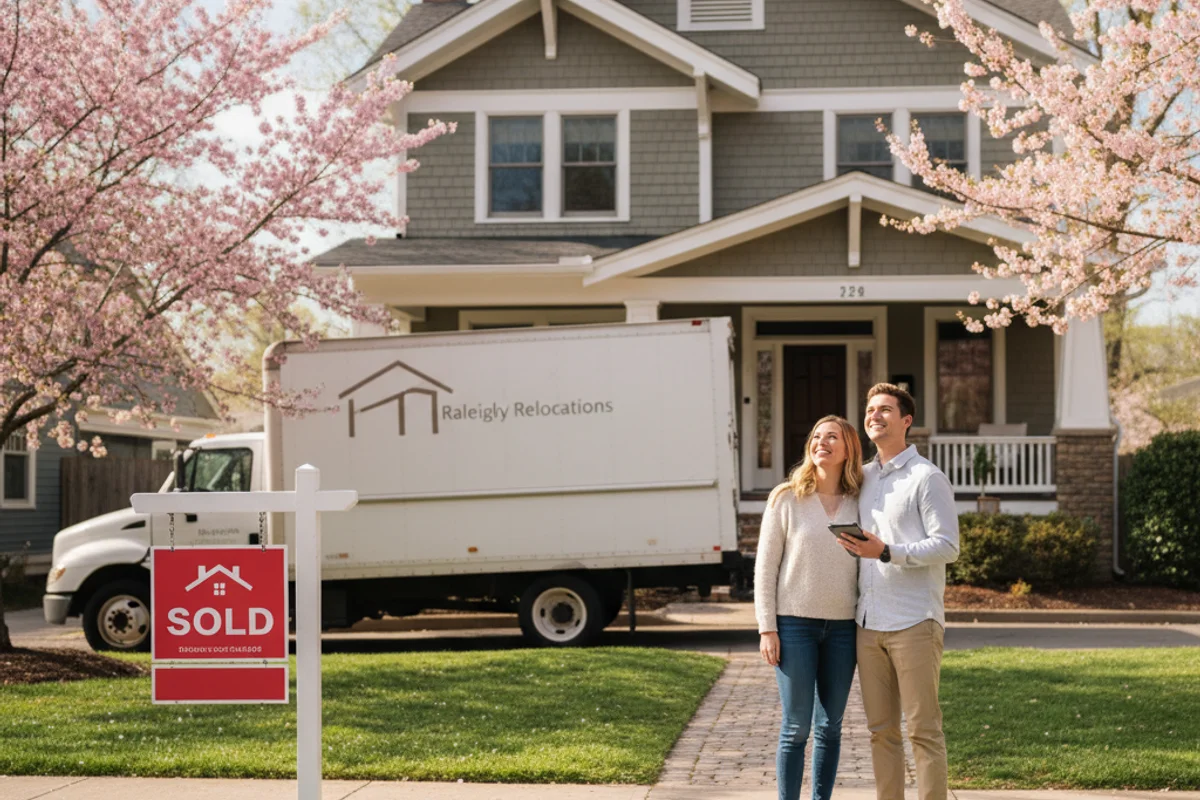
Here’s what most Raleigh sellers get wrong: they assume listing will net them $50,000 or $60,000 more than a cash offer. The real math tells a different story. When you account for commission, closing costs, repairs, and what it costs to carry your home for an extra two months, that gap shrinks dramatically. In many cases, you’re choosing between options that differ by $15,000 or less, not the massive spread you expected. Understanding your cash offer versus listing with a realtor in Raleigh decision starts with honest numbers, not assumptions.
The Triangle market has stayed remarkably stable over the past year, with the median home price holding steady at $420,000 and average days on market at 43 days. That stability helps, but it also means sellers need to be realistic about costs. Let’s run the actual numbers for your situation.
”Listing Always Gets More Money”, Is That True in Raleigh?
On paper, yes. In your bank account? That depends entirely on what you’re paying to get there.
Here’s the side-by-side breakdown for a typical Raleigh home at the current median price of $420,000:
| Cost Category | Traditional Listing | Cash Offer |
|---|---|---|
| Sale/Offer Price | $420,000 | $357,000 (85% of value) |
| Agent Commission (6%) | -$25,200 | $0 |
| Closing Costs (3%) | -$12,600 | $0 |
| Repairs/Credits | -$8,400 | $0 |
| Staging/Prep | -$2,500 | $0 |
| Carrying Costs (2 months) | -$5,000 | $0 |
| Net Proceeds | $366,300 | $357,000 |
| Timeline to Close | 75-90 days | 7-14 days |
The difference? About $9,300. Not nothing, but probably less than you expected.
And this assumes everything goes smoothly with your listing. No price reductions. No deals falling apart. No extended time on market. In neighborhoods like North Raleigh’s Bedford or parts of Brier Creek, homes move quickly and the listing advantage grows. In areas requiring more updates, like parts of Southeast Raleigh or older sections of Garner, that gap often disappears entirely.
The National Association of Realtors reports that roughly 17% of contracts fall through nationwide, and North Carolina’s rate tracks closely with that average. When you factor in the risk of starting over after 60 days of waiting, the cash option starts looking more competitive.
Get Your Free Cash Offer Today
No fees. No repairs. Close in as little as 7 days.
Related Video
Breaking Down the 6% Commission and What Else You Pay
Let’s be clear about what happens to your $420,000 sale price before you see a dime.
The standard agent commission in Raleigh runs between 5-6%, typically split between the listing agent and buyer’s agent. On a $420,000 home, that’s $21,000 to $25,200 walking out the door at closing. You might negotiate a lower rate, but in Raleigh’s moderate inventory environment, agents have less incentive to discount their services.
Then come closing costs. Sellers in North Carolina typically cover 2-3% of the sale price in various fees: title insurance, attorney fees (required in NC), prorated property taxes, HOA fees, and transfer taxes. According to Bankrate’s analysis of closing costs, North Carolina sellers should budget approximately $3,000-$3,500 per $100,000 of sale price.
For your $420,000 home, expect $12,600-$14,700 in closing costs.
Add those together and you’re at $37,800 before addressing any other expenses. You haven’t fixed the HVAC, painted the bedrooms, or spent a single Saturday showing your home yet.
North Carolina law requires sellers to complete the Residential Property and Owners’ Association Disclosure Statement, and buyers typically have a due diligence period to inspect the property. This is when repair negotiations happen, and they always happen.
How Repair Requests Eat Into Your Raleigh Sale Proceeds
Here’s where the listing math gets messier.
Raleigh’s humid subtropical climate isn’t kind to homes. Crawl spaces develop moisture issues. HVAC systems work overtime in July and August. Roofs take a beating from afternoon thunderstorms and the occasional ice storm. When buyers inspect homes in neighborhoods like Mordecai or Oakwood, they find issues.
The average seller in the Triangle area spends $6,000-$12,000 addressing inspection items or providing credits at closing. That’s not worst-case scenario money. That’s typical.
Maybe the home inspector finds roof shingles lifting on the south-facing slope. The buyer wants a $4,500 credit. The crawl space shows evidence of moisture intrusion. Another $2,800 for remediation. The water heater is 11 years old and near the end of its expected life. Add $1,200 for replacement.
You’re now at $8,500 in concessions, and we haven’t touched cosmetic updates that might help your home compete with newly renovated listings in Five Points or Cameron Village.
Some sellers choose to make repairs before listing. That’s $8,400 out of pocket before you even accept an offer, with no guarantee those specific updates will move buyers. When you sell a house fast in Raleigh through cash buyers, inspection contingencies don’t exist. The offer you receive is the amount you get at closing, minus any existing liens, back taxes, or mortgage payoff on the property.
Find Out What Your Home Is Worth
Get a no-obligation cash offer in 24 hours.
The Carrying Cost Math: What Every Extra Month Costs in Raleigh
Time costs money, even when your house is sitting empty.
The current average of 43 days on market sounds reasonable until you add in the preparation phase and closing timeline. You’ll spend 1-2 weeks getting the house ready to list: repairs, cleaning, staging, photos. Then 43 days on market. Then 30-45 days to close after accepting an offer. You’re looking at a 75-90 day total timeline from deciding to sell to getting your check.
What does that cost you?
Let’s calculate monthly carrying costs for that $420,000 Raleigh home:
- Mortgage payment (if not paid off): $2,200
- Property taxes: $350
- Insurance: $150
- Utilities: $200
- Lawn maintenance: $100
Total monthly carrying costs: $3,000
Over three months, that’s $9,000 leaving your account while you wait for the traditional sale to close. Even if your mortgage is paid off, you’re still covering $800-$900 monthly in taxes, insurance, and upkeep.
This matters more if you’ve already moved. If you’re paying rent or a mortgage on your new place while maintaining your Raleigh property, you’re double-paying for housing. That’s when the quick home sale in North Carolina starts making financial sense beyond just convenience.
Neighborhoods with the quickest turnover, like parts of North Hills or downtown condos, might beat the 43-day average. Properties in outlying areas like Knightdale or Wendell often sit longer. If your home needs work or has challenging features (busy road, no garage, dated layout), add 2-4 weeks to that timeline.
Cash home buyers in NC typically close in 7-14 days. You can be done before a traditionally listed home even gets its first offer.
Why Cash Offers Are More Competitive in North Carolina Than You Think
Cash makes up 21% of all home sales in Raleigh right now. That’s higher than the national average and reflects some specific Triangle market dynamics worth understanding.
First, Research Triangle Park continues attracting companies and workers from expensive coastal markets. Some of these buyers are selling California or New York properties and have substantial cash to deploy. They’re competing with you if you list.
Second, Raleigh’s combination of strong rental yields and steady appreciation has drawn institutional investors. They’re buying both distressed and turnkey properties, and they close fast.
Third, the retiree population moving to Durham, Chapel Hill, and Raleigh from the Northeast often downsizes from expensive markets with significant equity. Many buy with cash to simplify the transition.
This means cash buyers aren’t just investors looking for deeply discounted properties. The cash buyer pool includes regular families, retirees, and investors paying competitive prices for the right homes.
When you get your cash offer from a reputable company, you’re often receiving 80-90% of current market value. That’s the starting point before subtracting the 9-11% in costs you’d pay through traditional listing. The gap closes fast.
Cash offers also eliminate financing contingencies, which matter more than most sellers realize. Even pre-approved buyers can lose financing if they change jobs, take on new debt, or if the appraisal comes in low. According to recent data, financing issues cause roughly 9% of all purchase contracts to fail. With cash, that risk drops to zero.
The North Carolina real estate market has remained stable, but mortgage rates still hover well above their 2020-2021 lows. That means buyer financing remains more fragile than it was during the pandemic boom. Cash removes that variable entirely.
If you’re comparing options in nearby markets, you might review how the numbers break down for sellers looking at a cash offer versus listing with a realtor in Durham or those in Charlotte, where market dynamics vary slightly from Raleigh.
Making Your Decision: Cash or List in Raleigh?
Let’s make this practical. Here are the scenarios where each option makes clear sense.
You should list with a realtor if:
You have a move-in ready home in a desirable Raleigh neighborhood like ITB (Inside the Beltline) areas, North Hills, or Brier Creek. These homes attract multiple offers and sell at or above asking price. The traditional sale costs are worth paying when competition drives your price up.
You have time to wait 75-90 days without financial stress. You’re not carrying two mortgages, facing foreclosure, or dealing with an urgent job relocation. The listing timeline doesn’t create hardship.
Your home has been updated within the past 5-7 years. You won’t face significant repair requests because the roof, HVAC, appliances, and mechanicals are in good shape. The inspection process won’t erode your proceeds.
You’re willing to manage showings, staging, and the emotional aspects of keeping your home “show-ready” for 6-8 weeks. You can leave for showings, maintain the yard, and handle the logistics.
You should accept a cash offer if:
Your home needs significant repairs. When you’re looking at $15,000+ in deferred maintenance or major systems approaching end-of-life, the costs of bringing the house to market-ready condition eliminate the listing advantage. The numbers favor selling as-is.
You need to close fast. Job relocations, inherited properties, divorce situations, or financial distress all create urgency that the traditional timeline can’t accommodate. Getting cash in 10-14 days solves problems that waiting 90 days compounds.
You’re managing the sale from out of state. If you’ve already moved to your next city or inherited a Raleigh property from a distance, the logistics of listing become genuinely difficult. Cash sales require minimal involvement and no property access after the initial walkthrough.
You want certainty over maximum proceeds. Some sellers simply value knowing exactly what they’ll net and when they’ll close. The cash offer provides that certainty, while listings involve variables you can’t control.
The home has challenging features that will limit your buyer pool. Properties on busy roads, with unusual layouts, or in less desirable school zones often sit longer and require price reductions. Cash buyers don’t care about these factors.
Let’s look at three real Raleigh scenarios:
Scenario One: The North Raleigh Move-Up Sarah owned a well-maintained home in Bedford at Falls River. Updated kitchen, new HVAC in 2023, excellent condition. She listed at $445,000 and received three offers in eight days. After commission and closing costs, she netted $396,000. The listing process worked exactly as designed because her home checked every box.
Scenario Two: The Southeast Raleigh Investor Property James inherited his mother’s home near Barwell Road. The house needed a new roof ($12,000), HVAC replacement ($8,500), and significant cosmetic updates throughout. He received a cash offer at $215,000 for a home that might list at $265,000 after $30,000 in repairs. He netted $215,000 in 12 days versus netting $220,000 after 4-5 months and doing the work himself. He took the cash offer.
Scenario Three: The Relocating Tech Worker Amanda accepted a job in Seattle with a start date five weeks out. Her Brier Creek townhome was in good shape but she couldn’t manage a 90-day sale timeline from across the country. She received a cash offer at $338,000 on a home worth about $395,000. After accounting for the commission ($23,700), closing costs ($11,850), and three months of carrying costs she’d avoid ($7,800), she netted nearly the same amount and eliminated the long-distance logistics nightmare.
You can also explore options if you’re in nearby markets. We work with sellers throughout the Triangle and beyond, including Winston-Salem, Greensboro, and Fayetteville.
The honest answer is that neither option is universally better. They serve different situations. What matters is running your specific numbers based on your home’s condition, your timeline, and your priorities.
Start by getting a professional estimate of what your home would sell for through traditional listing. Then get a cash offer from Raleigh cash home buyers. Subtract all the costs we’ve discussed from the listing price. Compare the net proceeds side by side. Factor in your timeline needs and stress tolerance.
Most sellers find that if the cash offer nets them within $15,000-$20,000 of what they’d clear through listing, and they value the speed and certainty, cash makes sense. If the gap is $30,000 or more and they have the time and house condition to support it, listing wins.
The Triangle market’s stability actually makes this decision easier than in volatile markets. You’re not trying to time a peak or avoid a crash. You’re simply choosing the path that serves your specific situation best.
One factor specific to Raleigh worth mentioning: the city’s continuing growth means that well-located properties generally hold value well. The expansion of RTP companies, the presence of three major universities, and steady in-migration create sustained housing demand. That underlying strength means you’re not making this decision in a declining market where urgency might shift the calculation.
Just remember that the sticker price of your home and what you actually deposit in your bank account can differ by 15-20% when you list traditionally. Once you see that clearly, the cash offer numbers stop looking like lowball offers and start looking like legitimate alternatives.
Run your numbers. Consider your timeline. Make the choice that gets you where you need to go with the least stress and best financial outcome for your specific situation. Both paths work. The right one depends entirely on your circumstances.
NestCash works with Raleigh homeowners dealing with divorce, foreclosure, inherited properties, and homes that need to sell as-is every single day.
Ready to Sell? Let's Talk.
Get your cash offer now. No obligation, no hassle.

Jackie is the COO and a Correspondent at NestCash, combining leadership with real estate reporting and market insight. She covers key trends across 12 states, helping ensure NestCash delivers clear, reliable guidance nationwide.