Sell House With Code Violations In Austin: Fair Cash Offers Guaranteed
Need to sell a house with code violations in Austin? Skip costly repairs and close in 7-14 days. Austin cash buyers purchase as-is at fair prices. Get your offer today.

Head of Marketing, NestCash··11 min read
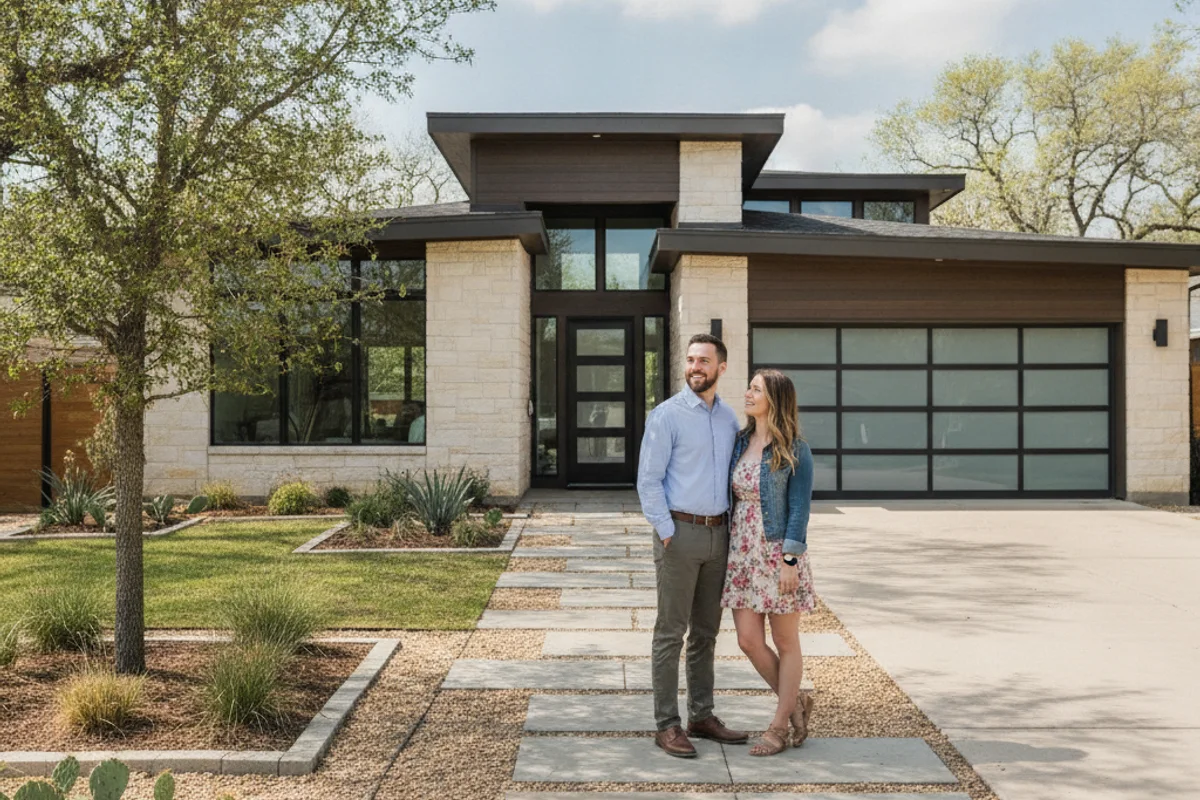
You got a letter from the City of Austin. There’s a code violation on your property, a deadline to fix it, and a repair estimate that makes your stomach drop. If you’re trying to figure out how to sell your house with code violations in Austin without burning through your savings first, you’re not alone. Thousands of Austin homeowners deal with this exact situation every year, and most of them don’t realize they have options that don’t involve writing a big check to a contractor before they can even list the place.
Here’s what you actually need to know.
Why Austin’s Code Violation Problem Is More Common Than You Think
Austin has been growing at a pace that few cities in the country can match. That growth has brought tech workers, remote employees relocating from California and New York, and a construction boom that hasn’t always kept up with demand. The result is a large stock of older homes in neighborhoods like East Austin, South Congress, and the older corridors around Rundberg Lane that were built or modified without proper permits, or that have simply aged into disrepair over the decades.
The City of Austin’s Development Services Department actively enforces code compliance, and violations can range from unpermitted room additions and fence height issues to more serious problems like faulty electrical panels, failing septic systems, or structural concerns that affect habitability. If you’ve received a notice of violation, the city typically gives you a window of 30 to 90 days to correct the issue, depending on severity. Ignoring it doesn’t make it go away. It means escalating fines, potential liens recorded against your title, and in serious cases, the city can take enforcement action that complicates any future sale.
That’s a real problem when you need to sell. Traditional buyers using mortgage financing are often blocked by lenders who won’t fund a loan on a property with open code violations. FHA and VA loans are especially strict about this. That limits your buyer pool dramatically and can push a standard 57-day average listing in Austin even longer, sometimes adding weeks or months while you wait for a buyer who can actually close.
The good news is that Austin cash home buyers don’t have that constraint. Cash buyers purchase properties outright, without lender involvement, which means code violations don’t automatically kill the deal. They price the cost of remediation into their offer and move forward without needing a bank’s approval.
Get Your Free Cash Offer Today
No fees. No repairs. Close in as little as 7 days.
Related Video
The 3-Step Process: Selling for Cash in Austin With Violations
Let’s break this down so you know exactly what to expect from start to finish.
Step one: Get your offer. You share basic details about your property, including the known violations. A reputable cash buyer will do their own research using Austin property records through the Travis County Appraisal District and assess the realistic cost of bringing the home into compliance. That estimate gets baked into their offer upfront. There are no surprises, no last-minute renegotiating after an inspection reveals something the buyer claims they didn’t know about. What you see is what you get.
Step two: Review and accept. Unlike traditional buyers who can string you along for two or three weeks during an extended inspection and financing contingency period, cash buyers typically commit quickly. You’ll have a written offer in hand within 24 to 48 hours in most cases. You review it, ask questions, negotiate if you want to, and decide whether it works for your situation. There’s no pressure to accept, and getting an offer costs you nothing.
Step three: Close on your timeline. Cash sales in Texas typically close in 7 to 14 days. That compares favorably to the 30 to 60 days you’d be waiting with a conventional sale, and even longer if your listing sits on the market without offers. If the city has given you a compliance deadline, a fast closing can help you exit the property before the fines start stacking up and eating into whatever equity you have left.
One important note that a lot of sellers overlook: Texas still requires you to complete a Seller’s Disclosure Notice through the Texas Real Estate Commission. Known code violations need to be disclosed, and that obligation doesn’t disappear just because you’re selling to a cash buyer. The good news is that cash buyers expect this, they’re not rattled by disclosed violations, and they won’t use it as a reason to blow up the deal the day before closing. That’s true whether you sell a house in Texas through a traditional agent or directly to a cash buyer. You can read more about what Texas requires from sellers at Nolo’s guide to Texas seller disclosure obligations.
What Austin’s Market Means for Sellers With Violations Right Now
Austin’s median home price sits at around $530,000, and the market has stabilized after the extreme volatility of 2021 and 2022 when homes were flying off the shelf in 48 hours with a dozen competing offers. Today, inventory is moderate, buyer demand is steady but not frenzied, and homes are spending an average of 57 days on market before going under contract. That’s a reasonable market for move-in-ready homes. For a property with disclosed code violations, that 57-day average is probably optimistic.
Retail buyers, especially first-time buyers and those using FHA or VA financing, are already nervous about taking on any property that needs work. A disclosed violation can shrink your buyer pool almost overnight, leaving you with investors and flippers as your realistic audience. Those buyers will negotiate aggressively on price and often still need a longer due diligence period to assess the full scope of remediation work. You can end up waiting 90 days or more and still net less than you would have with a clean cash offer on day one.
Cash sales currently make up about 16% of Austin transactions, according to recent market data from Redfin. That’s a meaningful slice of the market, and it reflects a simple reality: a lot of Austin homeowners are choosing to skip the traditional listing process for exactly the reasons we’re talking about here.
Seasonal patterns add another wrinkle. Austin’s real estate market tends to slow in late summer and during the holiday period between Thanksgiving and January, then picks back up in the spring. If you’re trying to move a home with violations during a slower stretch of the year, the cash route becomes even more attractive compared to sitting on the market for months while the city’s compliance clock keeps ticking.
Austin’s economy remains strong, anchored by the University of Texas, Dell Technologies, Tesla’s Gigafactory on the eastern edge of the city, and a growing roster of tech companies that have relocated their headquarters here. That economic base keeps demand for housing solid, which is why cash buyers remain active and competitive in this market even when the broader listing market slows down.
Find Out What Your Home Is Worth
Get a no-obligation cash offer in 24 hours.
Cash vs. Agent: What Austin Sellers Actually Net After Fees
This is the math that most people don’t run until it’s too late, and it almost always surprises them.
Say your Austin home has a market value of $400,000 in good condition. You have code violations that a contractor estimates would cost $25,000 to fix before you could list it competitively. Here’s what the two paths actually look like when you get specific:
Traditional listing after completing repairs:
- Repair costs upfront, paid before you list: $25,000
- Agent commissions at 5-6% of sale price: approximately $23,000
- Closing costs, staging, and carrying costs during a 57-day average listing period, including mortgage payments, property taxes, insurance, and utilities: roughly $10,000 to $14,000
- Net proceeds after everything: somewhere in the range of $338,000 to $342,000, and that’s assuming the home actually sells at or near asking price without further price reductions
Cash sale as-is, no repairs:
- Cash offer reflecting the violation discount baked in upfront: roughly $355,000 to $375,000 depending on the specific violations and the buyer’s rehab estimates
- No agent commissions, no repair costs, minimal closing costs, and you close in under two weeks
- Net proceeds: often $350,000 or better, with zero time, stress, or upfront cash invested
The gap is a lot smaller than most sellers expect when they first hear “cash offer.” And that calculation doesn’t even account for the risk that a traditional sale falls through after you’ve already paid for the repairs. Texas doesn’t require a home inspection for a sale to proceed, but every retail buyer will order one, and a failed inspection on a home with visible issues can blow up a deal you thought was solid three weeks in.
If you’re also dealing with a foreclosure notice alongside your code violations, time is critical. Read more about how to avoid foreclosure and sell your house fast in Austin before the situation compounds further.
5 Things Austin Sellers Get Wrong About Code Violations and Cash Buyers
1. Thinking cash buyers only want perfect homes. That’s completely backwards. Cash buyers specifically target properties that the retail market can’t easily absorb. Violations, deferred maintenance, fire damage, foundation issues, even homes with large unpermitted additions: these are exactly what experienced cash buyers deal with every single day. The messier the situation, the more value a cash buyer brings to the table.
2. Waiting for the violation to “resolve itself.” Code violations don’t fade away on their own. They accumulate fines, which can reach hundreds of dollars per day for serious violations, and those unpaid fines can turn into liens recorded against your title. A liened title is significantly harder to sell and can delay closing even with a cash buyer until the lien is satisfied or negotiated. The longer you wait, the messier and more expensive the cleanup becomes.
3. Assuming the cash offer will be insultingly low. A legitimate cash buyer will walk you through their offer, explain the comparable sales they used to arrive at their number, and give you time to think it over. You’re not obligated to accept anything. Getting an offer costs you nothing, and knowing your number gives you a concrete baseline to compare against the traditional listing math we just ran through above.
4. Not fully understanding Texas disclosure law. Under Texas Property Code and TREC guidelines, you’re required to disclose known material defects, and that explicitly includes code violations. Skipping this step or omitting known issues isn’t a clever workaround. It’s a legal liability that can follow you after the closing table if the buyer later discovers something you knew about and didn’t disclose.
5. Underestimating the real cost of time. If you’re in a tight spot financially or dealing with a pending city enforcement action, every additional month you spend trying to list and sell traditionally is another month of mortgage payments, property taxes, insurance premiums, utility bills, and potential accumulating fines. Cash buyers solve the timing problem in a way that no traditional listing process can match.
We also help homeowners across Texas navigate these situations. If you or someone you know is dealing with code issues or distressed properties in Dallas or Houston, the same cash buyer approach applies statewide. You can also read about cash home buyers in Dallas to get a fuller picture of how the process works across different Texas markets, and check out resources from HUD on avoiding foreclosure if financial pressure is also part of your situation.
Your Next Step
You don’t have to choose between spending tens of thousands on repairs and walking away from your equity. The ability to sell your house with code violations in Austin is real, it’s common, and it doesn’t have to be as complicated or as costly as you might be imagining.
The smartest first move is simply to find out what your home is worth as-is, right now, violations included. That number costs you nothing to get, and it gives you real, concrete information to make a real decision. Whether your property is in Pflugerville, East Austin, South Congress, or anywhere else in the Austin metro area, there are experienced buyers who want it in its current condition and can close quickly.
When you’re ready to find out where you stand, get your cash offer and see exactly what your home is worth today. No repairs required, no agent commissions, no waiting on a buyer who might back out three weeks in after the inspection. Just a clear number and a closing date you control.
NestCash works with Austin homeowners dealing with divorce, foreclosure, inherited properties, and homes that need to sell as-is every single day.
Ready to Sell? Let's Talk.
Get your cash offer now. No obligation, no hassle.

Jackson is the Head of Marketing at NestCash, where he leads growth strategy and real estate education. He focuses on housing trends across 12 states, translating complex market shifts into clear, actionable guidance.