Sell My House Fast in Phoenix for Cash: Close in 7 Days
Need to sell your house fast for cash in Phoenix? Close in 7-14 days, skip repairs, and avoid agent fees. Get your no-obligation cash offer today.

Senior Contributor, NestCash··13 min read
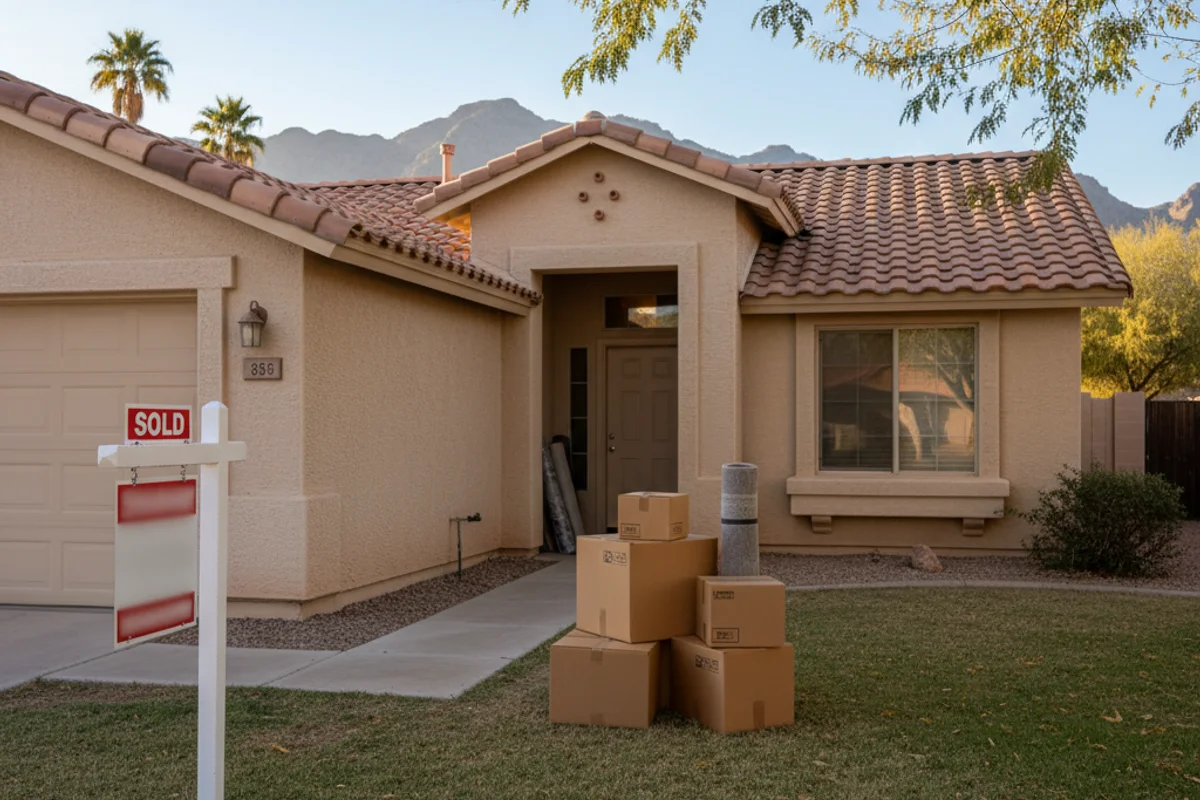
The transfer letter arrived Tuesday. Your employer needs you in Dallas by the end of April. That gives you roughly 30 days to sell your Phoenix house, coordinate movers, find temporary housing for your family, and somehow not lose your mind in the process. If you need to sell your house fast for cash in Phoenix, you’re dealing with a timeline that makes traditional listings impractical at best and impossible at worst.
The good news is that Phoenix has an active cash buyer market. With 28% of local home sales happening without buyer financing, you’re entering a market where speed is actually achievable. The challenge is understanding what the process actually looks like and whether it makes financial sense for your specific situation.
Let’s break down exactly how a fast cash sale works in the Phoenix market, what you can realistically expect, and how to evaluate whether this is your best option given your timeline and financial goals.
When You Need to Sell Your Phoenix Home in 30 Days or Less
Some situations don’t allow for the luxury of a three-month listing. In Phoenix, we see these scenarios regularly.
Job relocations are incredibly common here. Phoenix has become a magnet for corporate expansions and relocations, with major employers like Intel, Honeywell, and Amazon bringing thousands of new workers annually. When those workers arrive, others get transferred out. Most corporate relocation packages don’t pay double mortgages indefinitely.
Inherited properties create time pressure of a different kind. If you inherited your grandmother’s house in Maryvale or Central Phoenix and you live out of state, you’re paying utilities, property taxes, insurance, and HOA fees (if applicable) on a house you’re not using. Every month of delay costs you $400 to $800 in carrying costs alone.
Financial distress adds urgency that can’t be ignored. Facing foreclosure means you’re working against court timelines and auction dates. Missing three consecutive mortgage payments triggers the formal foreclosure process in Arizona. If you’re in pre-foreclosure and want to avoid foreclosure in Phoenix, you’re typically looking at 90-120 days before the trustee sale. Waiting for a traditional sale that takes 75-90 days total leaves almost no margin for error.
Divorce situations often involve court orders with specific deadlines. When a decree stipulates that the marital home must be sold and proceeds divided by a certain date, you can’t request a continuance because your house isn’t getting showings.
These aren’t theoretical scenarios. These are the situations that bring Phoenix homeowners to cash home buyers in Phoenix every single week.
Get Your Free Cash Offer Today
No fees. No repairs. Close in as little as 7 days.
Related Video
The Phoenix Traditional Listing Timeline (and Why It Takes Too Long)
Phoenix’s traditional market is reasonably healthy right now. The median home price sits at $425,000 and properties average 42 days on the market. That sounds manageable until you map out what actually happens during those 42 days and beyond.
Before your home even hits the MLS, you’re looking at preparation time. Your agent will recommend repairs, fresh paint, landscaping cleanup (important in Phoenix where desert landscaping can look neglected quickly), and professional staging. In Arizona’s climate, you’ll also need to ensure your HVAC system is functioning properly because summer showings in a house without working AC are non-starters. This prep phase typically takes two to three weeks and costs $3,000 to $8,000 depending on your home’s condition.
Once listed, the average 42 days on the market begins. That’s the median, meaning half of Phoenix homes take longer. Properties in neighborhoods like South Phoenix or West Phoenix may sit longer than homes in high-demand areas like Arcadia or Ahwatukee. During this time, you’re maintaining the property in showing condition, coordinating access for showings, and continuing to pay your mortgage, utilities, insurance, and HOA fees if applicable.
When you receive an offer, the real timeline begins. Arizona purchase contracts typically allow 10 days for inspection. Your buyer’s inspector will examine everything from the roof to the foundation, and desert homes have specific concerns like stucco cracking, flat roof issues, and termite activity (wood-destroying insects are common in Phoenix).
The inspection almost always generates a repair request. Buyers in traditional sales are using financing, which means they’re motivated to protect their investment. Average repair negotiations add another $4,500 to $7,500 to your costs or reduce your sale price by that amount. This negotiation phase adds another week to your timeline.
After repairs are agreed upon and completed, you’re waiting for the buyer’s financing. Mortgage underwriting takes 25 to 35 days in current market conditions. During this time, the deal can still fall apart. If the appraiser values your home below the contract price, you’re back to renegotiating or the deal dies completely.
Add it all up and you’re looking at 75 to 90 days from the decision to sell until cash in hand. If you’re facing a 30-day deadline, this timeline simply doesn’t work.
Arizona law requires sellers to complete the Seller’s Property Disclosure Statement, a detailed affidavit documenting property condition and known defects. This requirement applies to both traditional and cash sales, but in traditional sales, any disclosed issues often become negotiation points that extend your timeline further.
How Cash Home Buyers Close Fast in Arizona
The speed of cash sales comes from eliminating everything that slows down traditional transactions. Understanding the actual mechanics helps you evaluate whether specific buyers are legitimate.
Cash buyers don’t need mortgage approval because they’re not using financing. This eliminates 25 to 35 days from your timeline immediately. It also eliminates the risk that financing falls through at the last minute, which happens in approximately 8% of traditional Phoenix sales according to local market data.
Cash buyers typically purchase homes as-is. You’re not making repairs, which eliminates both the time required for contractor work and the negotiation phase after inspection. For Phoenix homes, this is particularly valuable. Many Valley properties were built during the 1970s and 1980s building boom and may have outdated electrical panels, original HVAC systems past their lifespan, or pool equipment needing replacement. Repairs on these items can easily run $8,000 to $15,000, and finding contractors with availability takes weeks in Phoenix’s busy market.
The inspection contingency is usually waived or greatly simplified in cash sales. While reputable buyers will still evaluate the property (they need to understand what they’re buying), they’re not conducting the kind of detailed inspection that traditional buyers require. You’re not sweating over whether the inspector will find problems that derail the deal.
Arizona cash sales still require the Seller’s Property Disclosure Statement under ARS 33-422, but completing this form takes a few hours at most. You’ll disclose known issues honestly, but unlike traditional sales, disclosed problems don’t typically lead to renegotiation because the buyer is already planning to address repairs themselves.
The closing timeline in a Phoenix cash sale runs 7 to 14 days typically. Some buyers can close in as few as five days if you need to move faster. The process involves title work, document preparation, and coordinating with an escrow company, but without financing contingencies, these steps proceed on a predictable schedule you control.
The difference between 75-90 days and 7-14 days is substantial. For every month you’re not paying your Phoenix mortgage, insurance, property taxes, and utilities, you’re saving approximately $2,000 to $3,500 depending on your home value and loan terms. That savings partially offsets the difference between cash offers and traditional sale prices.
Pricing Your Phoenix Home for a Quick Sale
The question everyone asks is straightforward: how much less will I get from a cash buyer compared to listing traditionally? The answer requires understanding what that “traditional” sale actually nets you after all costs.
Most legitimate cash buyers in Phoenix offer between 70% and 85% of after-repair value. If your home would sell for $425,000 in perfect condition but needs $30,000 in repairs, the after-repair value is $425,000, and a cash offer might land around $300,000 to $340,000. That sounds like you’re leaving money on the table until you run the actual numbers.
In a traditional sale at $425,000, you pay 5-6% in agent commissions. That’s $21,250 to $25,500 to your listing agent and buyer’s agent combined. You handle the $30,000 in repairs that inspection revealed. You pay approximately $2,200 in seller-paid closing costs (title insurance, escrow fees, transfer taxes). You pay three to four months of carrying costs while the property is listed, inspected, repaired, and closed, which runs roughly $8,500 to $11,000.
Add those costs together and you’re at $62,000 to $68,700 in expenses. Your net proceeds from that $425,000 sale are approximately $356,000 to $363,000.
Compare that to a cash offer of $340,000. You pay roughly $8,500 in closing costs (cash buyers don’t pay agent commissions, saving you that expense). You have no repair costs. You have minimal carrying costs because you’re closing in two weeks. Your net proceeds are approximately $331,500.
The difference between $356,000 (best case traditional) and $331,500 (cash sale) is $24,500. That’s real money, but it’s nowhere near the $85,000 difference between list price and cash offer that sellers initially perceive. For many Phoenix homeowners facing urgent timelines, $24,500 is an acceptable cost to close in 10 days instead of 90.
The calculation changes based on your specific property and situation. Homes in desirable Phoenix neighborhoods like Arcadia or the Biltmore area that need minimal work may net more through traditional sales. Homes in South Phoenix or Maryvale that need significant repairs often net similar amounts either way because traditional buyers in those price points typically request seller-paid repairs or price reductions.
Phoenix’s market is currently stable with moderate inventory according to Maricopa County real estate data. This means you’re not in a red-hot seller’s market where bidding wars are common, but you’re also not in a buyer’s market where homes sit for months. The stable market reduces the premium you’d receive from traditional listings, making cash offers more competitive relative to net proceeds.

Find Out What Your Home Is Worth
Get a no-obligation cash offer in 24 hours.
What to Expect at a Fast Phoenix Cash Closing
Understanding what actually happens at closing helps eliminate anxiety about the process. Arizona closings are straightforward compared to many states.
Arizona is an escrow state, which means a neutral third-party escrow company handles all documents and funds. You won’t be sitting across the table from the buyer in an awkward negotiation. The escrow officer coordinates everything behind the scenes.
Before closing day, you’ll receive a settlement statement showing exactly how funds will be distributed. This document itemizes the purchase price, your payoff amount to the existing mortgage holder, closing costs, prorated property taxes, and any other adjustments. Review this carefully. Legitimate buyers provide this statement at least 24 hours before closing so you can review it without pressure.
Arizona doesn’t require attorneys for residential real estate transactions, though you can hire one if you want legal representation. Most straightforward cash sales don’t require attorney involvement, which saves you $800 to $1,500 in legal fees. If your situation involves complications like estate sales, divorce decrees, or title issues, consulting a real estate attorney makes sense.
Title insurance is required and protects the buyer against title defects. The seller typically pays for the owner’s title policy in Maricopa County (where Phoenix is located), though this is negotiable. This cost runs approximately $1,000 to $1,500 depending on sale price.
On closing day, you’ll sign documents transferring ownership. The deed, settlement statement, and various disclosures require your signature. The escrow officer will notarize documents as needed. The actual signing takes 20 to 30 minutes.
Funds are typically disbursed within 24 hours after all documents are signed and recorded. Arizona counties now allow electronic recording, which speeds up the process considerably. You’ll receive a wire transfer or cashier’s check for your proceeds, depending on what you arranged with the escrow company.
One Phoenix-specific consideration is water and utility transfers. The city of Phoenix requires a final water reading and payment before transfer. If your property is served by other providers like Glendale Water or private water companies common in some neighborhoods, you’ll need to coordinate final readings. Your escrow officer should remind you about this, but it’s your responsibility to ensure utilities are handled properly.
Property tax proration is calculated based on Arizona’s fiscal year (July 1 to June 30). If you’re closing mid-year, you’ll receive a credit or pay a prorated amount depending on whether taxes have been paid for the current period.
Your Quick-Sale Checklist for Phoenix Homeowners
Fourth, research cash buyers carefully. Look for companies with verifiable local presence, positive reviews, and transparent processes. If you’re considering Phoenix cash home buyers, verify they have a physical office address, not just a website and phone number. Check their standing with the Better Business Bureau and read recent reviews on Google and Facebook.
Fifth, get your cash offer from multiple buyers. Just like you’d interview multiple agents before listing traditionally, get offers from at least two or three cash buyers. Compare not just the dollar amounts but also the terms, closing timeline, contingencies (if any), and how straightforward the buyers are in communication.
We also work with homeowners throughout the Phoenix metro area, including nearby Glendale, Mesa, Maricopa, and Casa Grande. The process works the same regardless of which Valley community your property is located in.
The Phoenix Reality Check
Phoenix’s real estate market rewards homeowners who make clear-headed decisions based on actual numbers rather than emotional attachment to theoretical maximum prices. If you genuinely have time for a traditional sale, no urgent financial pressure, and a property that will show well, listing traditionally probably nets you more money.
But if you’re working against a deadline, facing financial pressure, dealing with a property that needs substantial work, or simply want the certainty of a quick close with no contingencies, sell a house in Arizona cash buyers provide a legitimate solution that makes financial sense.
The key is honesty with yourself about your timeline, your property’s condition, and what you actually need. Not what sounds good in theory, but what works in practice given your real constraints.
For Phoenix homeowners specifically, consider seasonal factors. Summer listings (June through August) often take longer because fewer buyers want to house-hunt in 110-degree heat. Fall and winter are Phoenix’s peak real estate seasons. If your timeline puts you in summer, cash sales become relatively more attractive because traditional sales slow down.
Phoenix’s continued population growth means long-term demand remains strong. The metro area gained approximately 50,000 new residents in 2024, and migration patterns show continued in-migration from California, Seattle, and other high-cost markets. This demographic trend supports home values, but it doesn’t help you if you need to close in 21 days.
The decision to sell a house fast for cash in Phoenix isn’t about finding the highest possible price. It’s about finding the solution that best serves your specific situation. For many Valley homeowners facing urgent timelines, that solution is a legitimate cash buyer who closes quickly, requires no repairs, and provides certainty in an uncertain process.
If that describes your situation, the next step is simple. Request a no-obligation cash offer and compare it to what you’d realistically net from a traditional sale after all costs and delays. Then make your decision based on facts rather than assumptions.
NestCash works with Phoenix homeowners dealing with divorce, foreclosure, inherited properties, and homes that need to sell as-is every single day.
Ready to Sell? Let's Talk.
Get your cash offer now. No obligation, no hassle.

Lisa is a Senior Contributor at NestCash, writing expert content on real estate, homeownership, and market trends. She covers 12 states, with a focus on making real estate information practical, clear, and useful.