Cash Offer Vs Listing With Realtor In Detroit: No Repairs Required
Compare cash offers vs listing with a realtor in Detroit. See real net proceeds for $125K homes, timeline differences, and when each option makes sense.

Head of Marketing, NestCash··9 min read
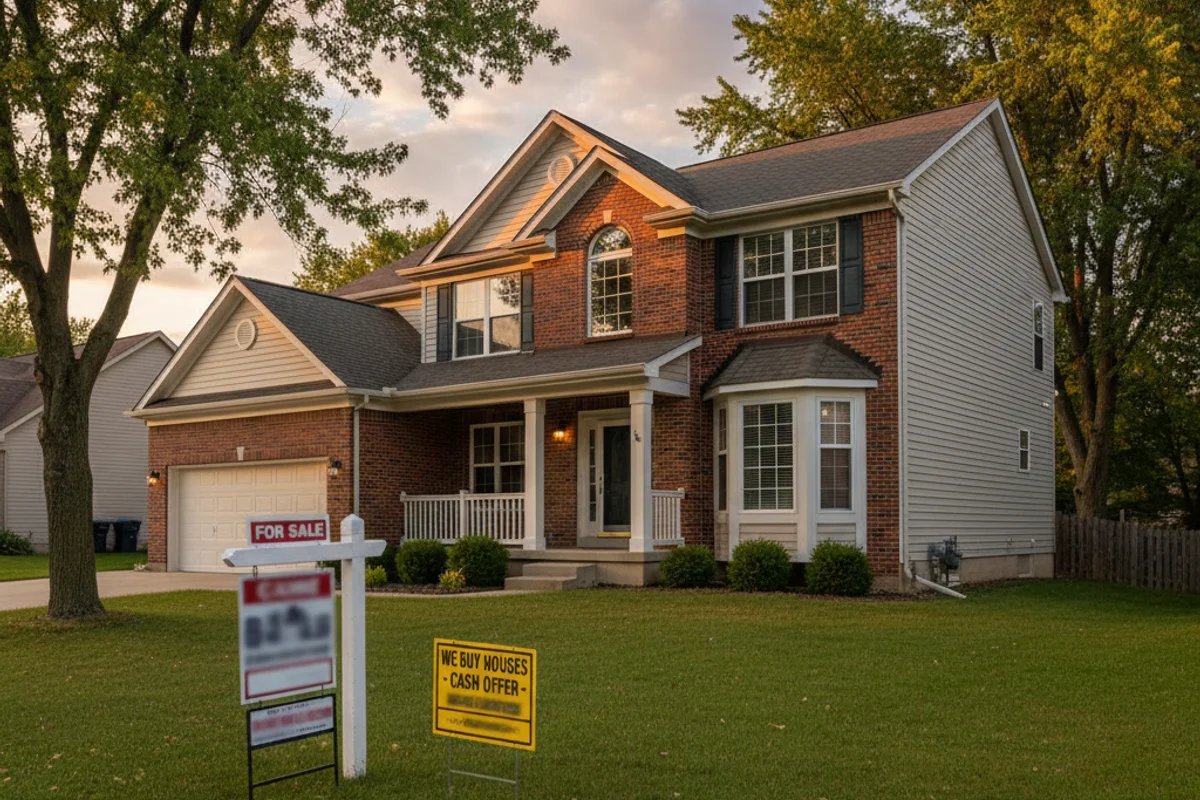
What’s the actual difference between a cash offer and listing with an agent? When you’re weighing a cash offer versus listing with a realtor in Detroit, the answer isn’t as obvious as most sellers think. The headline number might be higher with a realtor, but that’s not what you deposit at the bank. What matters is what you actually net after all costs, how long you’ll wait, and what happens if something goes wrong during the sale.
Detroit’s real estate market sits at an interesting crossroads right now. With a median home price of $125,000 and homes averaging 55 days on market, the city offers enough activity to attract traditional buyers while maintaining a strong cash buyer presence. Nearly 28% of Detroit sales happen with cash, well above the national average. That tells you something important: many Detroit sellers are choosing speed and certainty over chasing the highest possible price.
Let’s walk through both processes step by step, then compare what you’d actually net from each option using real Detroit numbers.
Cash Offer Process in Detroit: What Happens Step by Step
The cash sale process moves faster than most Detroit sellers expect. You contact Detroit cash home buyers, provide basic information about your property, and typically receive an offer within 24-48 hours. No one walks through with clipboards and calculators. Most cash buyers in Michigan make offers based on recent comparable sales, your property’s location, and your timeline.
Once you accept a cash offer, the buyer orders a title search to confirm clear ownership. This takes about a week. While that’s happening, you do absolutely nothing to the property. No repairs. No painting. No staging. You don’t even need to remove all your belongings in most cases.
The closing happens at a title company. You sign paperwork, hand over keys, and receive your money, usually via wire transfer or cashier’s check. The entire process from initial contact to cash in hand typically takes 7-14 days.
Here’s what a cash sale looks like for a typical Detroit home:
| Cash Sale Breakdown | Amount |
|---|---|
| Offer price (85% of $125,000 market value) | $106,250 |
| Agent commission | $0 |
| Seller closing costs | $0 |
| Repairs/updates | $0 |
| Staging costs | $0 |
| Home warranty | $0 |
| Inspection-related repairs | $0 |
| Net proceeds | $106,250 |
| Timeline | 7-14 days |
The buyer handles all closing costs. You’re not paying for title insurance, transfer taxes, or attorney fees. When cash home buyers in Michigan make an offer, that number is what you walk away with.

Get Your Free Cash Offer Today
No fees. No repairs. Close in as little as 7 days.
Related Video
Traditional Listing Process in Detroit: What Happens Step by Step
Listing with a realtor starts with finding an agent who knows your Detroit neighborhood. Whether you’re in Palmer Woods, Rosedale Park, or East English Village makes a real difference in pricing strategy and buyer pool. Your agent will prepare a comparative market analysis and recommend a listing price.
Next comes preparing your home for market. Your agent will likely suggest repairs, fresh paint, landscaping cleanup, and possibly staging. In Detroit’s moderate inventory environment, first impressions matter. Homes that show well sell faster and for more money than identical homes in rough condition.
According to Michigan disclosure requirements, you must complete a Seller Disclosure Statement outlining known defects. This document protects buyers and helps avoid legal issues after closing.
Your agent lists the property, schedules showings, and fields offers. Detroit’s average 55 days on market means you’ll likely spend about two months keeping your home show-ready, coordinating with your realtor, and waiting for the right buyer.
When an offer comes in, it’s usually contingent on financing and inspection. The buyer’s lender orders an appraisal. If the appraisal comes in low, you might need to reduce your price or the deal falls apart. The inspection almost always generates a repair request list. You’ll negotiate which repairs you’ll handle and which you won’t.
Closing costs in Michigan typically run 2-3% of the sale price for sellers. Add the standard 5-6% realtor commission, and you’re looking at 7-9% off the top before considering repairs or concessions.
Here’s what a traditional listing looks like for that same $125,000 Detroit home:
| Traditional Listing Breakdown | Amount |
|---|---|
| Sale price | $125,000 |
| Agent commission (6%) | -$7,500 |
| Seller closing costs (3%) | -$3,750 |
| Pre-listing repairs/updates | -$2,500 |
| Inspection repair credits | -$1,200 |
| Home warranty for buyer | -$500 |
| Staging/photography | -$400 |
| Carrying costs during 55 days (utilities, taxes, insurance) | -$800 |
| Net proceeds | $108,350 |
| Timeline | 55-90 days |
That’s assuming everything goes smoothly. If the first buyer’s financing falls through or they walk after inspection, you start the process over.
Timeline Comparison: Days to Close in Michigan
Time has real costs most Detroit sellers don’t calculate upfront. Every month your home sits on the market, you’re paying the mortgage, property taxes, insurance, and utilities. For a $125,000 home in Detroit, carrying costs typically run $500-800 per month.
Cash sales close in 7-14 days. Traditional sales average 55 days just to get under contract in Detroit’s current market, then another 30-45 days for the buyer’s financing and closing process according to typical Michigan transaction timelines. You’re looking at 85-100 days total.
That’s a three-month difference. During those extra months, several things can happen. The buyer’s financing can fall through (happens in about 8-10% of financed deals based on National Association of Realtors data). Market conditions can shift. Your circumstances might change.
Detroit’s seasons matter too. Listing in November means dealing with showing your home through Michigan winter. Properties show worse with gray skies and snow. Spring and summer bring more buyers, but also more competition from other listings.
Cash offers eliminate timeline uncertainty. You pick the closing date. Need two weeks to find your next place? Done. Need to close in five days because you’re relocating for work? Also possible.

Find Out What Your Home Is Worth
Get a no-obligation cash offer in 24 hours.
Net Proceeds Comparison for a Typical Detroit Home
Let’s put the numbers side by side. You own a 1,200 square foot home in Detroit worth $125,000 in average condition. You’re not interested in making repairs or dealing with a lengthy sale process, but you want to make an informed decision.
Traditional listing nets you: $108,350 after all costs, assuming no deal falls through and no additional concessions. Timeline: 85-100 days.
Cash offer nets you: $106,250 with zero costs, zero repairs, zero showings. Timeline: 7-14 days.
The difference is $2,100. That’s about 1.7% more for listing with a realtor.
Now factor in the three-month timeline difference. If you’re making mortgage payments, that $2,100 gap shrinks or disappears entirely. If you’re an out-of-state owner paying for utilities and lawn service on a vacant property, the cash option actually nets you more.
The math shifts further if repairs come in higher than expected. Finding foundation issues during inspection or dealing with Detroit’s older housing stock problems like old wiring or plumbing can add thousands to your repair bill. One major issue can flip the equation entirely.
Here’s where each option clearly wins:
Cash offers make sense when:
- You need to sell a house fast in Detroit due to job relocation or financial pressure
- Your property needs significant repairs you can’t or won’t make
- You’re managing an inherited property from out of state
- You’re behind on payments and need to avoid foreclosure
- The property has title complications or estate issues
- You value certainty over maximizing every possible dollar
Traditional listings make sense when:
- Your home is in excellent, move-in ready condition
- You have 3-6 months to wait for the right buyer
- You can handle repairs and improvement costs upfront
- You’re in a highly desirable Detroit neighborhood like Indian Village or Sherwood Forest
- Market conditions strongly favor sellers
- You have no carrying costs because you’ve already moved
When Detroit Sellers Regret Choosing the Wrong Option
Sarah owned a three-bedroom bungalow in Brightmoor. She listed with an agent for $95,000. The home needed roof work and updated electrical, but her agent suggested pricing high and seeing what happens. After 90 days and two failed deals, both buyers walking after inspection, she accepted a cash offer for $78,000. She would have netted more taking the initial cash offer of $81,000 instead of chasing the listing route.
Marcus inherited his aunt’s home near Palmer Park. He accepted a cash offer for $142,000 within a week. Later, his neighbor mentioned a similar home sold for $168,000 after being listed. Marcus left potential money on the table, but he lives in California and avoiding months of managing a Detroit property from across the country made sense for his situation.
Jennifer listed her Rosedale Park home for $185,000. It showed beautifully and sold in three weeks for full price. After commission, closing costs, and pre-listing updates, she netted $169,000. A cash buyer had offered $160,000 before she listed. She made an extra $9,000 by listing, but her home was in great condition in a strong neighborhood. The traditional route was the right call.
The regret pattern is clear: sellers who choose the wrong path for their specific situation and property condition.
Getting Both Offers Before You Decide in Detroit
You don’t need to guess. Get a cash offer first. It costs nothing and commits you to nothing. Most Detroit sellers can get your cash offer within 48 hours.
Then talk to 2-3 local realtors. Get their pricing opinion and estimated timeline. Ask specifically what repairs or improvements they recommend before listing.
Run your own math:
- Take the realtor’s estimated sale price
- Subtract 6% for commission
- Subtract 3% for closing costs
- Subtract estimated repair costs
- Subtract carrying costs for the expected timeline
- Compare that number to your cash offer
The gap is usually smaller than you expect. Sometimes the cash offer is actually higher after all costs.
Consider your timeline pressure. If you need to move for work, dealing with foreclosure, or managing a property in Detroit while living elsewhere, speed has value beyond the dollar amount.
Detroit’s market is stable right now, but that can shift. Having a firm cash offer in hand removes uncertainty. You know exactly what you’ll net and exactly when you’ll close.
If you’re also considering other Michigan markets, we help homeowners sell a house in Michigan throughout the state, including nearby Ann Arbor and other communities across the Midwest like Akron and Allentown.
The best decision is the informed one. Get real numbers from both paths, compare them honestly, and choose based on your situation, not assumptions about which option “should” be better. Detroit sellers with properties in good condition and no timeline pressure often benefit from listing. Those dealing with repairs, time constraints, or difficult circumstances usually net more from cash offers when all costs are factored in.
Run your numbers. Make your choice. Either path works. The wrong move is choosing blindly without comparing both options first.
Detroit homeowners may also want to read about selling your house as is in Detroit.
Learn more about comparing sale options in Ann Arbor to explore your options.
Detroit Homeowners dealing with divorce or foreclosure often find that NestCash is the fastest way to move forward without court delays or bank timelines getting in the way.
We also help homeowners in Detroit dealing with selling as-is and inherited property situations.

Ready to Sell? Let's Talk.
Get your cash offer now. No obligation, no hassle.

Jackson is the Head of Marketing at NestCash, where he leads growth strategy and real estate education. He focuses on housing trends across 12 states, translating complex market shifts into clear, actionable guidance.