Sell Your House As Is In Memphis: Tennessee Legal Requirements
Selling your house as is in Memphis? Learn Tennessee disclosure laws, avoid legal pitfalls, and get a cash offer in 24 hours. 27% of Memphis sales are cash.

Founder, NestCash··12 min read
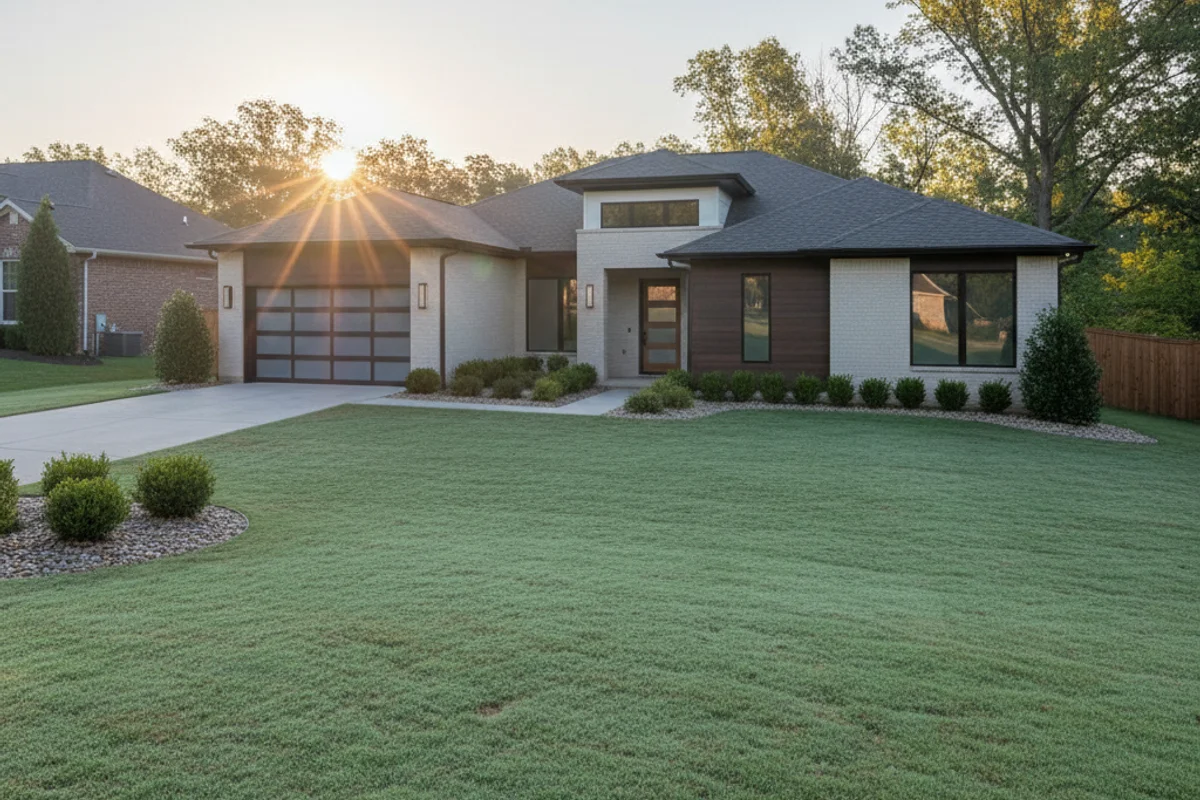
Can you sell a house as is in Tennessee without disclosing defects? The short answer is no. Tennessee disclosure requirements apply to all sales, including as-is transactions. The confusion comes from what “as is” actually means under state law. When you sell your house as is in Memphis, you’re telling buyers you won’t make repairs, but you’re not released from your legal obligation to disclose known problems. Here’s what Tennessee law requires and how it impacts your sale.
The good news is that understanding these rules protects you from future liability while still allowing you to sell a house fast in Memphis without spending money on repairs. Let’s break down exactly what you must disclose, what happens if you don’t, and how cash buyers make this process simpler.
Tennessee As-Is Sale Laws: What Sellers Must Disclose
Tennessee requires sellers to complete the Residential Property Condition Disclosure form. This applies whether you’re listing with a realtor or working with cash home buyers in Tennessee.
The disclosure covers these specific areas:
Structural systems: Foundation cracks, roof leaks, wall or ceiling problems, water intrusion issues, and structural defects you’re aware of.
Mechanical systems: Known problems with HVAC, plumbing, electrical systems, wells, septic systems, and built-in appliances.
Environmental hazards: Lead paint in homes built before 1978 (federal requirement), radon, asbestos, mold, underground storage tanks, and contaminated soil or water.
Other material facts: Boundary disputes, HOA violations, pending legal actions affecting the property, flood zone status, and prior insurance claims for major damage.
The key phrase is “known defects.” You’re not required to hire inspectors to find problems before selling. You just need to disclose issues you already know about. If your basement floods every spring, you must disclose it. If you’ve never been in the crawl space and don’t know there’s termite damage, you’re not required to disclose what you genuinely don’t know.
Here’s the thing about Memphis specifically. Homes in areas like Cooper-Young, Midtown, and Berclair often date back 70 to 100 years. These older properties commonly have updated electrical systems that weren’t done to current code, plumbing that’s been patched multiple times, and foundations that have settled. You don’t need to disclose every small quirk of an old house, but you do need to mention significant issues like active foundation settling, recurring plumbing backups, or electrical panels that trip frequently.
The disclosure form includes an option to mark “no representation” on specific items if you truly don’t know the answer. This is better than guessing or leaving blanks. When working with Memphis cash home buyers, they’ll often accept properties where sellers mark “no representation” on multiple items because they’re prepared for unknowns.
According to Tennessee Real Estate Commission rules, sellers must provide the disclosure form before signing a purchase agreement or at the time of making an offer. This timing matters because it gives buyers information to make decisions before they’re contractually committed.
For a complete guide, read our resource on selling your house as is in Memphis.
Get Your Free Cash Offer Today
No fees. No repairs. Close in as little as 7 days.
What Happens If You Don’t Disclose Defects in Tennessee?
Failing to disclose known defects can lead to serious consequences after closing. Tennessee courts have consistently ruled that “as is” clauses don’t protect sellers who commit fraud by omission.
Legal liability: Buyers can sue for damages if they discover you knowingly withheld information about material defects. Material defects are issues that would have affected the buyer’s decision to purchase or the price they’d pay. A leaking roof is material. A scratched countertop isn’t.
Financial consequences: You could be required to pay for repairs, refund part of the purchase price, or in extreme cases, rescind the entire sale. Legal fees add up quickly even if you win the case.
Criminal fraud charges: Intentionally deceiving buyers about property condition can result in fraud charges under Tennessee law. This is rare and usually requires proven intent to defraud, but it’s possible in egregious cases.
The statute of limitations for these claims in Tennessee is typically one year from discovery of the defect. Buyers have a limited window, but that’s long enough to cause significant problems if you weren’t truthful.
Here’s what actually happens in most cases. Traditional buyers with FHA or VA financing typically order professional inspections. When inspectors find problems you didn’t disclose, buyers often back out or demand major price reductions. You’ll lose weeks of market time and potentially face lower offers once word spreads that your property has undisclosed issues.
Cash buyers approach this differently. They expect problems in as-is properties and price offers accordingly. When you’re honest about your property’s condition up front, Memphis cash home buyers can give you accurate offers without surprises. The transaction moves forward smoothly because everyone knows what they’re dealing with.
The Shelby County real estate market has seen several high-profile disclosure lawsuits over the past five years. One case involved a Cordova home where the seller failed to disclose recurring foundation issues. The buyer sued after the first heavy rain caused significant water intrusion. The seller ended up paying $47,000 in repairs plus legal fees.
Which Repairs Are Worth Making Before Selling in Memphis?
The math on repairs changes completely when you’re considering an as-is sale instead of a traditional listing. Let’s look at actual Memphis numbers.
Repairs that don’t pay off in as-is sales:
Foundation work costs $8,000 to $35,000 in Memphis depending on severity. You’ll rarely recover more than 40% of this investment because cash buyers already account for foundation issues in their offers. Spending $20,000 to fix foundation problems might increase your offer by $8,000 at most.
Roof replacement runs $7,500 to $15,000 for typical Memphis homes. Again, cash buyers price in roof work. Replacing a worn roof before selling as-is doesn’t make financial sense.
HVAC system replacement costs $5,000 to $8,000. Cash buyers expect to handle mechanical systems themselves. A new HVAC won’t significantly increase an as-is offer.
Kitchen and bathroom remodels cost $15,000 to $60,000 depending on scope. These never pay off in as-is transactions because you’re targeting investors who’ll do their own renovations.
The only repairs worth considering:
Minor cosmetic fixes under $500 total might be worth it if you’re listing traditionally. Fresh paint, basic cleaning, and small repairs can help showings. But if you’re pursuing a quick home sale in Tennessee through cash buyers, even these don’t matter.
Immediate safety hazards like exposed electrical wiring or missing railings might be worth addressing only if they prevent access for property tours. Cash buyers will still make offers sight unseen in many cases.
Here’s the reality. Memphis homes currently take an average of 45 days to sell through traditional listings according to Memphis Area Association of Realtors data. During that time, you’re making mortgage payments, paying utilities, covering insurance, and maintaining the property. These carrying costs add up to roughly $1,200 to $2,500 per month for a home near the $215,000 median price point.
Spending $25,000 on repairs, then waiting 45 days to sell, then waiting another 30-45 days for buyer financing to close means you’re out $25,000 in repairs plus $2,400 to $5,000 in carrying costs. That’s $27,400 to $30,000 total.
A cash offer might come in $20,000 lower than the theoretical retail price after repairs, but you save the repair costs, the carrying costs, and realtor commissions (typically 6% or about $12,900 on a $215,000 sale). The cash offer often nets you more money in less time with zero hassle.
Find Out What Your Home Is Worth
Get a no-obligation cash offer in 24 hours.
How Lender Requirements Affect As-Is Sales in Memphis
Traditional buyers using FHA, VA, or conventional financing face specific requirements that often kill as-is deals. Understanding these barriers explains why cash offers work better for problem properties.
FHA financing requirements: FHA loans require properties to meet Minimum Property Standards before closing. This means working HVAC systems, structurally sound roofs without more than three layers, no peeling paint on pre-1978 homes (lead paint concern), functioning plumbing and electrical systems, and no structural damage or safety hazards.
If your Memphis home doesn’t meet these standards, FHA buyers can’t close until you make repairs. You’re required to fix issues before the sale completes. This defeats the entire purpose of selling as-is.
VA financing requirements: VA loans have similar habitability standards. The VA appraiser will note deficiencies that must be corrected before closing. Wood-destroying insect damage, non-functional systems, and safety issues must be addressed.
Conventional financing: While conventional loans are more flexible than FHA or VA, most lenders still require properties to be in reasonable condition. Major issues flagged during appraisal often become required repairs or the lender won’t fund the loan.
Memphis neighborhoods like Frayser, Whitehaven, and parts of Raleigh have older housing stock where FHA and VA requirements become deal killers. A 1960s home with original electrical, an aging roof, and foundation settling won’t qualify for government-backed financing without significant seller repairs.
The appraisal process creates another problem. Lenders require appraisals that support the purchase price. If your home needs $40,000 in repairs and the buyer offers $180,000, the appraiser might value it at $160,000 in current condition. The buyer’s lender will only loan based on the $160,000 appraised value, creating a $20,000 gap that kills the deal.
This is why 27% of Memphis sales are cash transactions. That’s notably higher than the national average. Investors, flippers, and buy-and-hold landlords dominate Memphis’s as-is market because traditional financing doesn’t work for problem properties.
Cash vs. Financed Buyers for As-Is Homes in Memphis
Let’s compare what happens with each buyer type when you sell a house in Tennessee in as-is condition.
Financed buyers:
They need repairs completed to satisfy lender requirements. Most will request inspection contingencies that let them back out based on inspection findings. Closing takes 30-45 days minimum if financing approves. There’s a 15-20% chance deals fall through due to financing issues, appraisal problems, or inspection concerns. You’ll likely receive multiple repair requests after inspection.
Financed buyers targeting Memphis homes under $215,000 often use FHA loans, especially first-time buyers. These transactions have the highest failure rate for as-is properties.
Cash buyers:
They purchase in current condition without requiring any repairs. There are no appraisal requirements for loan approval because there’s no loan. Closing happens in 10-14 days on average. Deals rarely fall through once you accept an offer. There are no inspection contingencies allowing buyers to renegotiate.
Professional cash home buyers in Tennessee operations evaluate properties based on after-repair value minus renovation costs minus profit margin. The formula is straightforward. They’re not emotional buyers trying to find their dream home. They’re making business decisions based on numbers.
Here’s an example using a home in the Vollintine-Evergreen neighborhood. The property has foundation issues, needs a new roof, and has outdated electrical. Similar homes in good condition sell for $185,000.
The math gets even better if you’re behind on payments or facing foreclosure. Every month you delay is another month of late fees, potential credit damage, and foreclosure risk. Similar strategies have helped homeowners in Chattanooga and Clarksville avoid foreclosure through quick cash sales.
Selling Your Memphis Home As Is: Getting Started
You’ve decided selling as-is makes sense for your situation. Here’s exactly what to do next.
Step 1: Gather property information. Pull together any documents you have like past inspection reports, repair receipts, insurance claims history, property surveys, and mortgage statements. These aren’t required but they help cash buyers make accurate offers quickly.
Step 2: Be honest about condition. Make a list of every significant issue you’re aware of. Foundation cracks, roof age and condition, plumbing problems, electrical issues, water damage, mold, HVAC functionality, and structural concerns. Professional buyers appreciate transparency and reward it with better offers.
Step 3: Get your cash offer. Contact reputable cash buyers who can evaluate your property and provide written offers. Legitimate buyers will visit the property before making firm offers. Be wary of anyone offering sight-unseen prices without basic property details.
Step 4: Compare your options. Get multiple offers if time allows. Understand what each buyer includes and excludes. Ask about closing timelines, whether you can choose your closing date, who pays closing costs, and whether there are any fees or commissions.
Step 5: Review contracts carefully. Read everything before signing. Tennessee as-is sales typically use standard real estate contracts with an “as-is” addendum. Make sure you understand what you’re agreeing to. Consider having a real estate attorney review contracts if anything’s unclear.
Step 6: Complete disclosure forms. Fill out Tennessee’s Residential Property Condition Disclosure honestly and completely. This protects you legally and builds trust with buyers. Cash buyers expect problems and won’t typically back out based on disclosures.
Step 7: Choose your closing date. One major advantage of cash sales is flexibility. Need to close in seven days? Most cash buyers can accommodate it. Need 30 days to arrange moving? That works too. You control the timeline.
Step 8: Prepare for closing. Gather necessary documents including your photo ID, property deed, mortgage payoff information, HOA documents if applicable, and utility account numbers. The title company handling closing will provide a detailed checklist.
Step 9: Close and get paid. Closing typically takes 30-60 minutes at a title company office in Memphis. You’ll sign transfer documents, and funds are wired directly to your account or provided as a cashier’s check the same day.
The entire process from initial contact to cash in hand typically takes two to three weeks with professional cash buyers. Some situations close even faster when urgency exists.
Memphis sellers should note that Shelby County property records are accessible through the Shelby County Register of Deeds if you need copies of your deed or past transaction information.
We work throughout Tennessee including Chattanooga, Nashville, Knoxville, and Clarksville. The process remains consistent across the state while accounting for local market conditions.
Understanding the difference between cash offers and traditional listings helps you make informed decisions. The numbers often surprise sellers who assume listing must be better. For detailed cost comparisons, situations in Knoxville and Clarksville show exactly how the math breaks down in Tennessee markets.
Your specific situation determines the best approach. Job relocation, inherited property, divorce, financial difficulty or foreclosure risk, rental property burnout, or simply not wanting to deal with repairs all make as-is sales attractive. Memphis’s stable market with moderate inventory means you have options.
The key is understanding Tennessee disclosure requirements, knowing your property’s true condition, and working with buyers who can close quickly and reliably. When you’re ready to move forward, honest communication and proper documentation make the process smooth from start to finish.
Ready to Sell? Let's Talk.
Get your cash offer now. No obligation, no hassle.

John is the Founder of NestCash and a leading voice in real estate investing and housing market strategy. With experience across 12 states, he helps buyers, sellers, and investors make smarter decisions using real-world insight and market data.