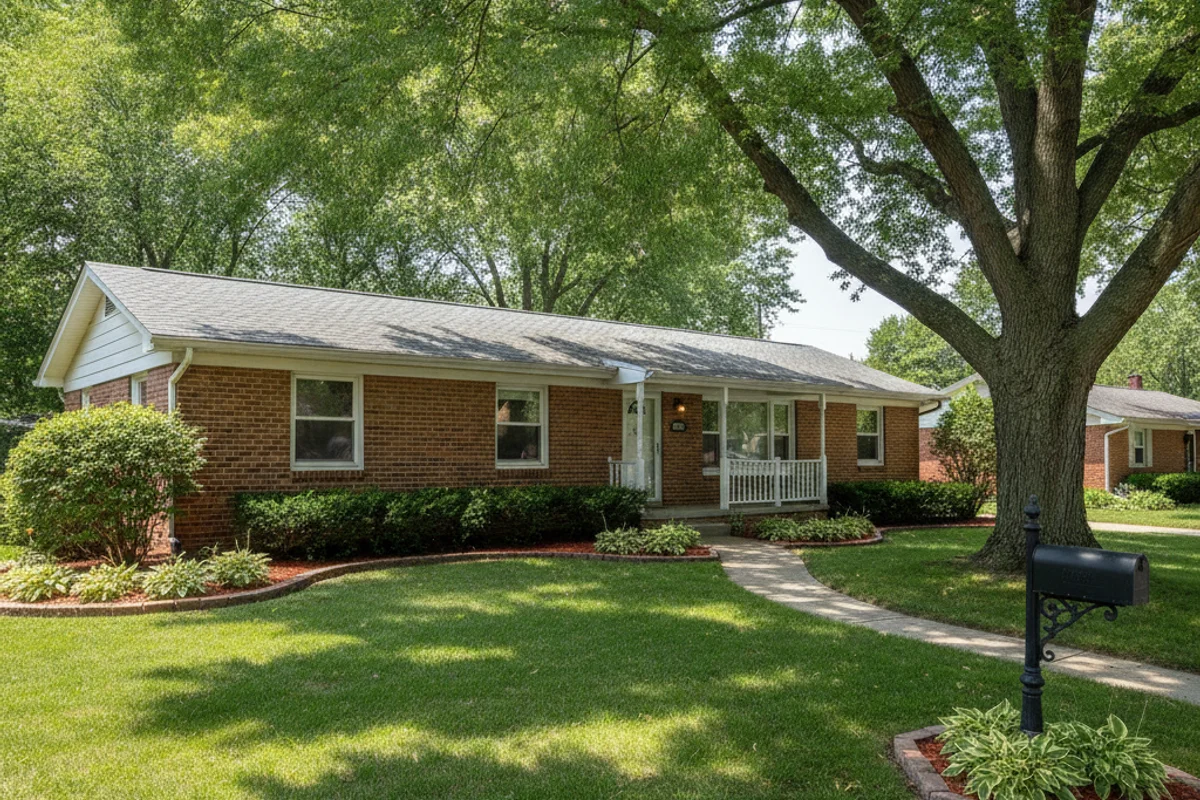
Sell Inherited House In Peoria: Any Condition, Cash Offer
Navigate probate, taxes, and maintenance costs when you sell your inherited house in Peoria. Get a fair cash offer in 24 hours and close on your timeline.

Founder, NestCash··13 min read

Inheriting property brings complicated emotions and even more complicated logistics. If you need to sell your inherited house in Peoria, you’re probably managing grief, family dynamics, and unfamiliar legal processes all at once. The good news is you have options that don’t require months of stress or thousands in upfront costs.
Peoria’s housing market currently sits at a median price of $139,000 with homes averaging 40 days on market. For inherited properties, especially those needing work or located in older neighborhoods like West Bluff or Averyville, that timeline can stretch considerably longer. About 30% of Peoria home sales are cash transactions, which makes selling an inherited property for cash a well-established path forward.
Let’s walk through everything you need to know about handling inherited property in Peoria, from probate court to closing day.
What to Do When You Inherit a House in Peoria
Your first steps matter. Taking the right actions early prevents complications later.
Start by securing the property immediately. Change the locks if multiple people had access. Contact the insurance company to update the policy with your name and ensure coverage continues uninterrupted. An empty house signals opportunity to vandals and thieves, particularly in neighborhoods like South Peoria or near Bradley University when students are away.
Next, determine the home’s condition and value. Walk through every room and document what you find. Take photos of the furnace, water heater, roof condition, and any visible damage. Get a professional assessment if you’re uncertain about major systems. In Peoria’s climate, winter damage to pipes, roofs, and foundations is common, especially in homes built before 1980.
Contact the utility companies to transfer service into your name or the estate’s name. Even if you plan to sell quickly, you’ll need water, electricity, and heat to prevent pipes from freezing during Peoria’s harsh winters. A burst pipe can cause $10,000 in damage within hours.
Locate the deed, mortgage documents, and property tax records. The Peoria County Recorder’s Office at 324 Main Street can help you obtain copies if you can’t find originals. You’ll need these documents for probate court and eventually for closing.
Finally, decide whether you’re keeping or selling. This decision affects every step that follows. If you’re leaning toward selling, contact Peoria cash home buyers to understand your options before investing time and money into repairs or extended maintenance.

Get Your Free Cash Offer Today
No fees. No repairs. Close in as little as 7 days.
Related Video
Understanding Illinois Probate and Inherited Property
Illinois probate law governs how inherited property transfers from deceased owners to heirs. The process varies based on estate size and complexity.
The state offers simplified probate procedures for estates valued under $100,000. If the inherited Peoria home is the primary asset and other estate elements are minimal, you might qualify for a small estate affidavit. This process takes two to three months and costs significantly less than formal probate.
Formal probate through Peoria County Circuit Court typically takes six to twelve months. The executor files a petition, notifies creditors, inventories assets, pays debts, and finally distributes property to heirs. During this time, you’re responsible for maintaining the property even though you can’t legally sell it without court approval.
Here’s what many heirs don’t realize: you can market and even accept offers during probate. The sale simply can’t close until the court issues an order approving the transaction. This means you can line up a buyer and have everything ready to close the moment probate completes. Working with cash home buyers in Illinois who understand this process eliminates buyers who might back out during the waiting period.
Illinois law allows selling inherited property in three scenarios. First, the will might grant the executor specific authority to sell real estate without additional court approval. Second, the court can issue an order authorizing the sale during probate. Third, once probate closes and the deed transfers to heirs, they can sell freely.
The Illinois Probate Act outlines these procedures in detail. Consider consulting a probate attorney for estates involving multiple heirs, contested wills, or significant debt. For straightforward inheritances, many families navigate the process without legal representation.
If you’re an out-of-state heir managing a Peoria property remotely, probate becomes even more challenging. You’ll need to coordinate with local contractors, monitor the property, and make multiple trips for court appearances. Selling quickly to a cash buyer often makes more financial and practical sense than managing a long-distance property for months.
For a complete guide, read our resource on selling your house in Peoria.
The Hidden Costs of Keeping an Inherited Peoria Home
Holding onto inherited property costs more than most heirs anticipate. These expenses start immediately and continue until you sell.
Property taxes in Peoria average about $3,500 annually for a median-priced home, paid quarterly. You’re responsible for these taxes from the date of inheritance, regardless of probate status. The Peoria County Treasurer’s Office can provide specific tax amounts for your inherited property.
Homeowners insurance runs $150 to $250 monthly for a vacant property. Yes, vacant property insurance costs more than standard coverage because empty homes face higher risks. Insurers know that frozen pipes, vandalism, and undetected problems are more common when no one lives in the house daily.
Utilities add another $200 to $400 monthly. You need heat in winter to prevent pipe damage. Water service must stay active if you’re maintaining the property. Electricity powers sump pumps in basements, critical in areas like Glen Oak or Prospect Heights where spring flooding happens regularly.
Maintenance and lawn care matter too. An overgrown lawn signals abandonment and invites code violations. Peoria’s municipal code requires property owners to maintain yards regardless of occupancy. Professional lawn service runs $80 to $150 monthly during growing season. Snow removal adds another expense in winter.
Here’s a realistic six-month cost breakdown for an inherited Peoria home:
- Property taxes: $1,750
- Insurance: $1,200
- Utilities: $1,800
- Lawn care and snow removal: $800
- Minor maintenance and repairs: $500
- Total: $6,050
That’s more than $1,000 monthly just to keep the lights on in an empty house. If the property needs a new roof ($8,000), HVAC repairs ($3,500), or foundation work ($6,000), costs multiply quickly.
Mortgage obligations complicate things further. If the deceased still owed money on the house, those payments continue. Most mortgages include a due-on-sale clause that technically allows lenders to demand full payment when ownership transfers. In practice, lenders usually work with heirs, but you’ll need to communicate with them immediately.
For heirs living in Chicago, Naperville, or out of state, add travel costs to this list. Multiple trips to Peoria for property checks, contractor meetings, and court appearances add hundreds in gas or airfare.
Every month you hold the property, these costs accumulate. If Peoria’s 40-day average market time stretches to 90 or 120 days for a dated property needing work, you’re spending $3,000 to $4,000 just waiting for a buyer.

Find Out What Your Home Is Worth
Get a no-obligation cash offer in 24 hours.
Should You Renovate an Inherited Peoria House Before Selling?
Renovating Before Sale:
- Upfront costs: $15,000 to $50,000 depending on scope
- Timeline: 2 to 4 months for renovations, plus 40+ days to sell
- Contractor management: Multiple bids, scheduling, quality oversight
- Holding costs during renovation: $3,000 to $6,000
- Potential return: 60% to 80% of renovation cost in most markets
- Risk: Contractors may uncover additional problems, costs escalate
Selling As-Is for Cash:
- Upfront costs: $0
- Timeline: 7 to 14 days from offer to closing
- Management required: None
- Holding costs: Minimal to none
- Return: Lower sale price but zero renovation investment
- Risk: None
Consider this approach: get multiple offers before deciding. Contact a traditional agent for a market analysis showing expected sale price and timeline. Then get your cash offer from a professional buyer. Compare the actual numbers, not hypothetical ones. You might find the cash offer nets you more money after accounting for repairs, holding costs, and commissions.
Tax Implications of Selling Inherited Property in Illinois
Understanding tax consequences helps you keep more money from the sale. The news here is generally good for heirs.
Federal tax law provides a stepped-up cost basis for inherited property. This means your tax basis becomes the home’s fair market value on the date of death, not what the deceased originally paid. If your parent bought the Peoria house for $45,000 in 1985 and it’s worth $135,000 when you inherit it, your basis is $135,000.
This provision dramatically reduces or eliminates capital gains tax for most heirs. If you sell shortly after inheriting for $135,000, you have zero gain and owe zero tax. If the market improves and you sell for $145,000, you only pay capital gains on the $10,000 difference.
Long-term capital gains rates apply to inherited property regardless of how long you own it. You don’t need to hold it for a year to qualify for favorable rates. Current federal rates are 0%, 15%, or 20% depending on your overall income, significantly lower than ordinary income tax rates.
Illinois doesn’t impose a separate inheritance tax. The state eliminated its estate tax for deaths occurring after 2010 for estates under $4 million. For most Peoria properties, this means no state-level death taxes.
However, selling rental property or a home you’ve rented out after inheriting triggers different rules. If you converted the inherited house to a rental, depreciation recapture and additional taxes may apply. The IRS guidance on inherited property explains these scenarios in detail.
Property taxes require attention too. You’re responsible for paying any delinquent taxes the deceased owed. Before closing, title companies will verify all taxes are current. Budget for this if you discover unpaid back taxes during your initial research.
One often-overlooked consideration: timing the sale within the tax year. If you inherit late in the year and can close before December 31st, you’ll handle all tax reporting in a single year. Spreading the inheritance and sale across two tax years complicates filing without providing significant benefit.
For multiple heirs splitting proceeds, each person reports their share of any gain on their individual return. The estate or person handling the sale should provide documentation showing each heir’s portion.
Consult a CPA or tax professional familiar with inheritance if your situation involves significant appreciation, multiple properties, or concurrent sales of other assets. For straightforward inherited property sales in Peoria, the tax burden is typically minimal or zero.
How to Sell Your Inherited Peoria Home Fast for Cash
When you’re ready to move forward, the cash sale process is refreshingly simple compared to traditional listing.
Start by contacting companies that specialize in selling a house fast in Peoria. Legitimate cash buyers will ask basic questions about the property: address, approximate age, size, and general condition. You don’t need exact square footage or a detailed repair list. They’re buying the property as-is, which means current condition doesn’t disqualify the home.
Within 24 to 48 hours, you’ll receive a no-obligation cash offer. This offer reflects a fair price based on comparable sales, needed repairs, and current market conditions. Unlike traditional offers, cash offers don’t include financing contingencies, inspection contingencies, or appraisal requirements. The offer is the offer.
You choose the closing date. Need to close in seven days? Not a problem. Need 45 days to finish probate? That works too. This flexibility is invaluable when coordinating with court schedules, multiple heirs, or your own life circumstances.
The cash buyer handles nearly everything. They order the title search, arrange closing with an attorney or title company, and coordinate all paperwork. You’ll sign documents at closing and receive your proceeds via wire transfer or cashier’s check the same day.
You don’t pay real estate commissions, typically 5% to 6% of sale price. On a $139,000 Peoria home, that’s $7,000 to $8,400 saved. You don’t pay for repairs, cleaning, or staging. You don’t pay for inspections, appraisals, or termite reports. The buyer covers these costs.
What about closing costs? Cash buyers typically cover most or all closing costs, though this varies by company. Ask specifically about title insurance, transfer taxes, and recording fees when reviewing your offer. Reputable buyers clearly outline what you’ll net at closing with no surprise deductions.
This process works particularly well for properties in challenging condition or difficult locations. A house in South Peoria needing foundation work, a property in West Bluff with old wiring and plumbing, or a home near Sterling that’s been vacant for months all qualify. Cash buyers aren’t emotionally attached to granite countertops or hardwood floors. They’re investors who understand properties and neighborhoods.
For out-of-state heirs, the distance advantage is enormous. You might never need to visit the property again. The cash buyer can handle final walk-throughs, coordinate with any remaining utility companies, and manage closing remotely. You’ll sign documents electronically or at a local title company in your home state.
Multiple heirs benefit from the simplified process too. Instead of months of decisions about listing price, showing schedules, and which offer to accept, everyone agrees once on the cash offer. Proceeds are distributed according to the will or trust, and everyone moves forward. This approach prevents the family tension that often accompanies prolonged traditional sales.
The process looks like this from start to finish:
- You contact a cash buyer and provide property details
- They evaluate the home and present an offer (1-2 days)
- You review the offer with no pressure or obligation
- If you accept, they open escrow and order title work
- You sign closing documents on your chosen date
- You receive funds immediately at closing
Compare this to traditional selling, which involves decluttering, repairs, staging, photography, listing, showings, negotiating offers, buyer inspections, renegotiating after inspection, appraisals, buyer financing approval, and finally closing 30 to 45 days after acceptance. Each step creates opportunities for deals to fall apart.
Home inspections reveal problems that lead to reduced offers or buyer withdrawal. Appraisals come in low, forcing renegotiation or requiring buyers to bring additional cash. Buyer financing falls through days before closing. These scenarios are common in traditional sales and almost never happen in cash transactions.
We work throughout Illinois, helping homeowners in Chicago, Naperville, Joliet, and smaller communities like Decatur and Elgin. Peoria’s market is familiar territory, from the historic homes in the Warehouse District to mid-century ranches in North Peoria.
Looking at comparisons between cash offers and traditional listings, the numbers often surprise sellers. While a cash offer vs listing with realtor in Chicago shows different market dynamics than smaller cities, the principle remains the same. After commissions, repairs, holding costs, and time investment, the net difference between cash and traditional sales is often just 5% to 8%, and you receive cash proceeds months earlier.
For inherited properties specifically, cash sales solve the biggest pain points. You eliminate ongoing expenses immediately. You avoid family disagreements about repairs and pricing. You sidestep complications with out-of-state coordination. You close before properties deteriorate further during vacancy.
The hardest part of selling inherited property isn’t the transaction mechanics. It’s the emotional weight of closing a chapter of family history. Maybe you grew up in that house on Moss Avenue. Maybe your grandmother lived there for 50 years. These feelings are valid and real. A professional buyer understands this isn’t just a transaction for you. Take the time you need to remove items with sentimental value before closing. Most cash buyers offer flexible timelines to accommodate this emotional process.
Selling an inherited house in Peoria doesn’t have to compound the stress of losing someone important. The right approach, whether a quick home sale in Illinois through cash buyers or a traditional listing, depends on your specific situation. For most heirs managing property they never planned to own, especially those dealing with deferred maintenance, out-of-state logistics, or multiple family members, the cash sale path offers the clearest route from burden to resolution.
You have enough to handle right now. Selling your inherited Peoria home should be the simple part.
For more details, see our guide on selling your house in Decatur.
We also help homeowners in Peoria dealing with divorce, foreclosure, and selling as-is situations.

Ready to Sell? Let's Talk.
Get your cash offer now. No obligation, no hassle.

John is the Founder of NestCash and a leading voice in real estate investing and housing market strategy. With experience across 12 states, he helps buyers, sellers, and investors make smarter decisions using real-world insight and market data.