Sell a Rental Property With Tenants in Chattanooga
Need to sell your house with tenants in Chattanooga? Get a cash offer in 24 hours and close on your timeline. No repairs, no showings, no hassle.

Founder, NestCash··12 min read
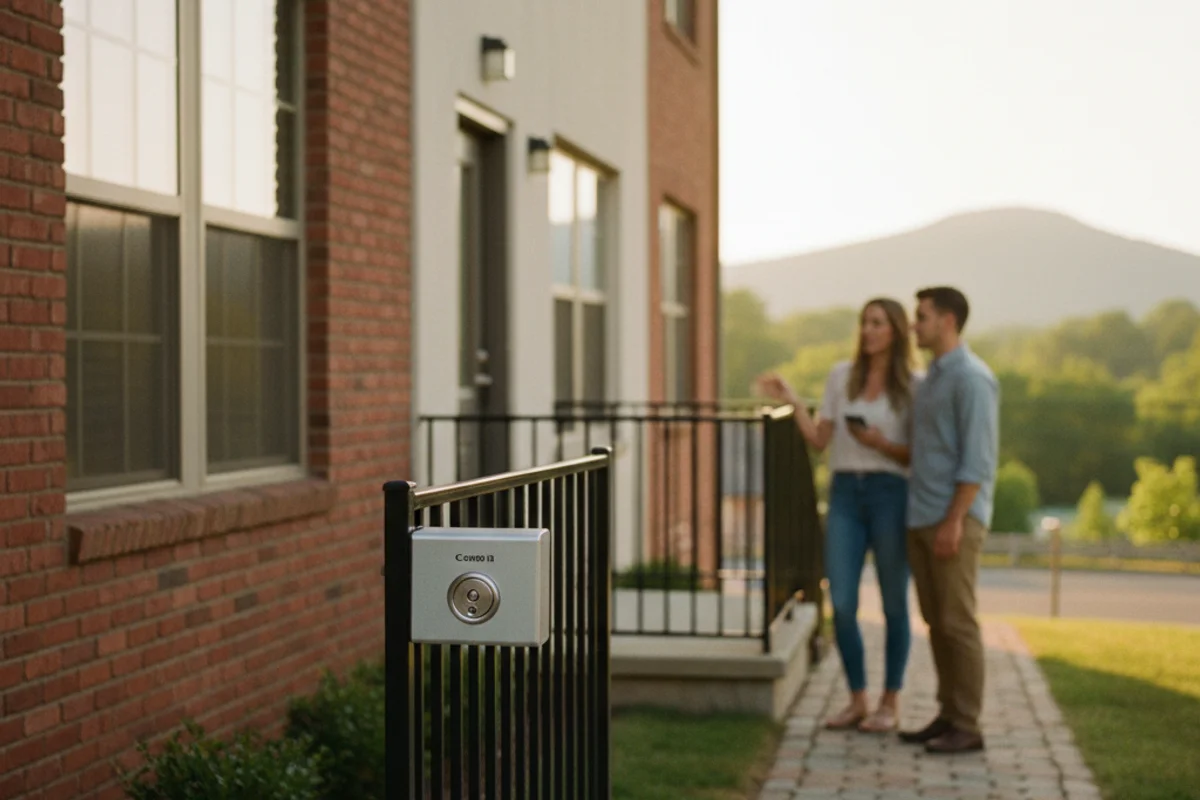
You’re dealing with maintenance calls at 11 PM. Your tenant hasn’t paid rent in two months. The HVAC system just died, and you’re looking at a $6,000 replacement. If you need to sell your house with tenants in Chattanooga, you’re not alone. Hundreds of landlords exit the rental market each year when the numbers stop working.
The good news? You don’t need to wait for the lease to end or evict anyone to sell. Cash buyers and investors purchase occupied properties every day in neighborhoods like North Shore, Red Bank, and East Brainerd. Let’s break down exactly how to turn that rental headache into cash.
Why Chattanooga Landlords Are Selling Rental Properties in 2026
Chattanooga’s rental market looks stable on paper, but the reality for landlords tells a different story. Property taxes in Hamilton County have climbed 18% over the past three years. Insurance premiums are up 25% since 2023. Meanwhile, rent growth has flattened to just 2-3% annually.
Here’s what the math actually looks like. A $250,000 rental property in East Ridge might generate $1,800 monthly rent. After mortgage, taxes, insurance, and maintenance reserves, you’re netting maybe $300-400 per month. That’s a 1.5-2% cash-on-cash return before factoring in vacancy, turnover costs, or major repairs.
Many landlords purchased properties five to ten years ago expecting appreciation and steady cash flow. Those who bought in neighborhoods like Highland Park or Avondale have seen solid equity growth. But the operational burden has increased dramatically. Tennessee’s landlord-tenant laws favor tenant protections, making evictions lengthy and expensive.
The professional property management route doesn’t solve the problem. Local management companies charge 8-10% of gross rents plus leasing fees. That $300 monthly profit just became break-even or negative.
Add in one unexpected expense like a roof replacement ($8,000-12,000), foundation repair ($5,000-15,000), or legal fees for an eviction ($2,000-4,000), and you’re wiping out years of modest profits. Smart landlords are running the numbers and realizing their equity could work harder elsewhere.
If you’re evaluating whether to sell a house in Tennessee this year, you’re making a business decision based on ROI, not emotion.
Get Your Free Cash Offer Today
No fees. No repairs. Close in as little as 7 days.
Related Video
Can You Sell a Chattanooga Rental Property with Tenants Still Living There?
Yes. You can absolutely sell your rental property with tenants in place in Chattanooga. In fact, 27% of Chattanooga home sales are cash transactions, and many of those are occupied rental properties.
You have three basic scenarios when you sell your house with tenants in Chattanooga:
Scenario 1: Sell to an investor who keeps the tenants. This is the fastest path. Investors buying rental properties want income from day one. If your tenant pays on time and the lease terms are reasonable, this actually increases your property’s value to the right buyer. You transfer the lease, security deposit, and tenant relationship to the new owner.
Scenario 2: Sell to a traditional buyer who wants the property vacant. This requires either waiting for the lease to expire or negotiating an early termination with your tenant. You might offer “cash for keys” (typically one month’s rent) to incentivize the tenant to leave early. This adds time and cost but opens your buyer pool.
Scenario 3: Sell to a cash buyer who handles everything. Companies specializing in quick home sales in Tennessee buy in any condition and any occupancy status. They handle tenant communication, lease transfers, or move-out coordination. You get paid and walk away.
The legalities are straightforward. Tennessee law under Tennessee Code Annotated § 66-28-403 requires you to honor existing leases. The lease doesn’t terminate when you sell. It transfers to the new owner with all terms intact. Your tenant has the right to remain through their lease term regardless of the sale.
You must provide reasonable notice (typically 24 hours) before showings. This is standard practice outlined in most Tennessee lease agreements. If you’re selling a property with a month-to-month tenant, you need to provide 30 days written notice to terminate the tenancy.
Section 8 tenants have the same rights. The Housing Choice Voucher transfers to the new owner if they choose to continue participating in the program. Many investors specifically seek Section 8 properties for the reliable, government-backed rent payments.
Tennessee Tenant Rights When a Landlord Sells the Property
Your tenants maintain significant protections during the sale process under Tennessee law. Understanding these rights helps you avoid legal problems and keeps the sale moving smoothly.
Lease continuation: Fixed-term leases survive the sale. If your tenant has seven months remaining on a one-year lease, the new owner must honor those seven months at the existing rent and terms. This is non-negotiable under Tennessee landlord-tenant statutes.
Security deposit transfer: You must either transfer the security deposit to the new owner or return it to the tenant. Tennessee requires written notification to the tenant identifying the new owner and confirming deposit transfer. The Tennessee Real Estate Commission provides standard forms for this process.
Advance showing notice: Tennessee considers 24 hours advance written notice reasonable for property showings. You cannot show up unannounced with potential buyers. Text message or email notice is generally acceptable if it’s documented in your lease agreement.
Habitability during sale: You remain responsible for maintaining habitable conditions throughout the sale process. You can’t defer maintenance or repairs just because you’re selling. Broken appliances, HVAC failures, and plumbing issues still require prompt attention.
Retaliation protection: Tennessee law prohibits retaliatory action against tenants who exercise their legal rights. You cannot threaten eviction or refuse lease renewal solely because a tenant objected to excessive showings or requested proper notice.
Foreclosure protections: If you’re behind on mortgage payments and considering options to avoid foreclosure and sell a house fast in Chattanooga, tenants have additional federal protections. The Protecting Tenants at Foreclosure Act requires 90 days notice before a tenant must vacate after foreclosure.
The practical reality? Most tenant-occupied sales to investors happen smoothly. Investors understand tenant rights and factor them into their purchase decisions. Issues arise mainly when landlords try selling to traditional buyers who want immediate occupancy.
Working with Chattanooga cash home buyers eliminates most tenant friction because these buyers expect and handle occupied properties routinely.
Find Out What Your Home Is Worth
Get a no-obligation cash offer in 24 hours.
The True Cost of Being a Landlord in Chattanooga
Let’s run real numbers on a typical Chattanooga rental property. Understanding your actual costs makes the decision to sell clearer.
Take a three-bedroom house in Brainerd you purchased for $220,000 with 20% down. Your monthly expenses break down like this:
Fixed costs:
- Mortgage payment (30-year at 7%): $1,168
- Property taxes: $183 (Hamilton County average)
- Insurance: $150 (increased from $120 two years ago)
- HOA fees (if applicable): $0-100
Variable costs:
- Maintenance reserve (1% of value annually): $183
- Property management (if used): $180 (10% of $1,800 rent)
- Vacancy allowance (5% of annual rent): $75
- Turnover costs (spread monthly): $50
Your total monthly cost: approximately $1,989. If you’re getting $1,800 rent, you’re losing $189 monthly before accounting for capital expenditures like roof replacement, HVAC, or water heater failures.
Even if you self-manage and eliminate that $180 fee, you’re barely breaking even. Your time spent on tenant calls, maintenance coordination, and rent collection has zero value in this scenario.
Now factor in Chattanooga-specific challenges. The city’s older housing stock (median home age 45+ years) means higher maintenance costs. Foundation issues from Tennessee’s clay soil run $3,000-10,000. Termite treatment costs $1,200-2,500 for an active infestation, which is common in the humid Southeast climate.
The opportunity cost matters too. That $44,000 down payment and $30,000 in accumulated equity could be invested elsewhere. At a conservative 7% return in an index fund, you’d earn $5,180 annually with zero maintenance calls, no tenant drama, and complete liquidity.
Property appreciation in Chattanooga has averaged 4-6% annually over the past decade, but that’s before you subtract all those operational costs and capital expenditures. Your actual return on investment is likely under 3% when you account for everything.
Smart landlords track their true cap rate (net operating income divided by property value). If your cap rate has fallen below 5-6% in Chattanooga’s current market, you’re essentially working a part-time job for below minimum wage returns.
Cash Buyers vs. Traditional Sale for Chattanooga Rental Properties
The sale method you choose dramatically affects your timeline, net proceeds, and headache factor. Here’s how the options compare for occupied rental properties.
Traditional MLS listing with an agent:
You’ll pay 5-6% in real estate commissions on Chattanooga’s $350,000 median price (that’s $17,500-21,000). Add another $2,000-4,000 for pre-listing repairs, staging, and professional photos. The average 48 days on market extends to 60-90 days for tenant-occupied properties because traditional buyers want vacant homes.
You’ll coordinate showing schedules with your tenant, likely losing some potential buyers who won’t even view occupied properties. If your tenant isn’t cooperative about cleanliness or showing access, expect longer market time and lower offers.
Buyer financing falls through 15-20% of the time, restarting your process. Meanwhile, you’re still covering all ownership costs, dealing with tenant issues, and maintaining the property to showing condition.
Best case scenario: You close in 60-75 days and net 85-88% of sale price after all costs. The median Chattanooga home takes 48 days to sell, but that’s for vacant, show-ready properties.
Sell a house fast in Chattanooga through cash buyers:
Cash buyers purchase in current condition with tenants in place. No repairs, no staging, no endless showings. You receive an offer within 24-48 hours based on property details, rental income, and current market comps.
The offer might be 70-85% of retail value depending on property condition, tenant situation, and needed repairs. This sounds low until you subtract traditional sale costs. On a $280,000 rental property:
Traditional sale nets you approximately $245,000 (after 6% commission, 2% closing costs, and $3,000 in prep costs). A cash offer at 78% of value ($218,400) minus minimal closing costs nets you approximately $216,000.
The difference? $29,000 but you close in 7-14 days instead of 75-90 days. You eliminate three months of mortgage payments ($3,504), utilities, insurance, property taxes, and tenant risk. That narrows the gap to roughly $25,000 for an 80-day faster close and zero hassle.
For many Chattanooga landlords tired of the rental game, that math works. You’re paying for certainty, speed, and simplicity.
FSBO (For Sale By Owner):
Theoretically, you save the commission. Practically, tenant-occupied investment properties require buyer expertise most FSBOs lack. You’ll attract mainly investor buyers anyway, who will negotiate aggressively knowing you’re unrepresented. Plan on 90-120 days minimum and significant time investment handling buyer calls, negotiation, and paperwork.
Similar strategies work if you need to sell a house in Tennessee in markets like Nashville or Memphis.
How to Sell Your Chattanooga Investment Property Fast
Here’s your step-by-step process to exit quickly while protecting yourself legally and maximizing your proceeds.
Step 1: Know your numbers. Calculate what you actually need to net after the sale. Factor in your remaining mortgage balance, any equity lines, estimated capital gains taxes, and closing costs. Knowing your walk-away number helps you evaluate offers objectively.
Tennessee requires standard property disclosures under the Tennessee Residential Property Condition Disclosure Act. Complete this form honestly. Failure to disclose known defects can create liability even after sale.
Step 2: Review your lease terms. Pull out your lease agreement and note the expiration date, monthly rent amount, security deposit held, and any special provisions. Investors will ask for this information immediately. Having it organized speeds the process.
Document your tenant payment history. If they pay consistently on time, that’s valuable to investor buyers. If they’re chronically late or you’re pursuing eviction, this affects offers but doesn’t prevent the sale.
Step 3: Contact multiple cash buyers. Don’t accept the first offer without comparison shopping. Reputable companies will explain their offer calculation transparently. Be wary of lowball offers that mysteriously decrease at closing. To get your cash offer, you’ll provide basic property details, photos, and rental information.
Step 4: Notify your tenant appropriately. Once you have a signed contract, inform your tenant in writing. Explain that the property is being sold, their lease terms will continue with the new owner, and they’ll receive information about security deposit transfer. Tennessee law doesn’t require landlords to notify tenants before marketing begins, but courtesy notice reduces friction.
Provide 24-hour written notice before any showings or inspections. Most cash buyers require only one inspection and handle tenant interaction professionally.
Step 5: Prepare minimal documentation. Cash sales require far less paperwork than traditional transactions. You’ll need proof of ownership (your deed), recent mortgage statement showing payoff amount, property tax information, and the current lease agreement.
Tennessee property disclosure forms and lead-based paint disclosure (for pre-1978 properties) are standard requirements even for cash sales. Your cash buyer typically handles title work and closing coordination.
Step 6: Consider tax implications. Selling a rental property triggers capital gains tax on your profit. The IRS taxes long-term capital gains at 0%, 15%, or 20% depending on income level. You’ll also recapture depreciation you’ve claimed over the years at a 25% rate.
A 1031 exchange allows you to defer capital gains by purchasing another investment property within specific timeframes. If you’re exiting real estate entirely, you’ll pay the tax. Consult a tax professional before closing to understand your specific situation. The IRS provides guidance on rental property sales.
Step 7: Close and transfer everything. At closing, you’ll sign the deed, transfer the lease and security deposit to the new owner, and provide tenant contact information. Tennessee law requires written notice to the tenant within 60 days identifying the new property owner’s name and address for deposit return purposes.
You walk away with a check, and the new owner assumes all landlord responsibilities from closing day forward. Your tenant relationship ends, and all future issues become the new owner’s concern.
The entire process from initial contact to closing typically takes 7-21 days with cash buyers, compared to 60-90+ days through traditional sale methods. Speed matters when you’re covering monthly expenses on a property you no longer want.
Landlords throughout Tennessee are using this approach. Whether you’re in Chattanooga, Knoxville, or Clarksville, the process remains similar.
Being a Chattanooga landlord made sense when you bought the property. Market conditions, life circumstances, and financial priorities change. When the rental income no longer justifies the stress and risk, selling becomes the smart business decision. With cash buyers specializing in tenant-occupied properties, you can exit quickly without the typical complications of a traditional sale.
For more details, see our guide on selling your house in Chattanooga.
NestCash works with Chattanooga homeowners dealing with divorce, foreclosure, inherited properties, and homes that need to sell as-is every single day.
Ready to Sell? Let's Talk.
Get your cash offer now. No obligation, no hassle.

John is the Founder of NestCash and a leading voice in real estate investing and housing market strategy. With experience across 12 states, he helps buyers, sellers, and investors make smarter decisions using real-world insight and market data.