Sell House During Divorce In Savannah: Skip Repairs and Showings
Selling your house during divorce in Savannah doesn't require waiting for the final decree. Learn Georgia's equitable distribution rules and get a fair cash offer today.

Senior Writer, NestCash··13 min read
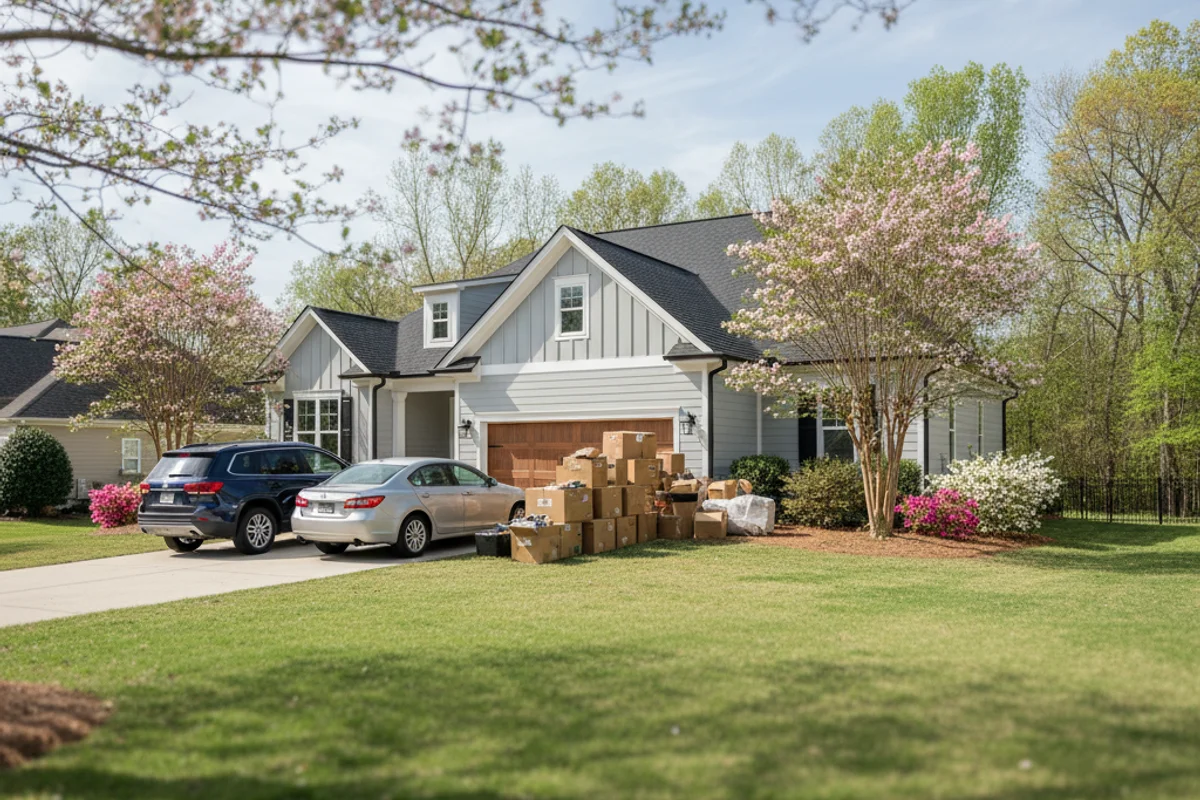
You don’t need to repair the leaky faucet, repaint the bedroom, or agree on a listing agent to sell your house during divorce in Savannah. That’s the biggest misconception divorcing homeowners face when they picture the sale process. They imagine months of coordinating schedules, arguing over contractor bids, and sitting through awkward open houses together. The reality? You can get your cash offer today and close in two weeks without fixing a single thing or hosting a single showing.
With Savannah’s median home price at $329,000 and homes sitting on the market for an average of 99 days, many couples discover that traditional listings extend the exact situation they’re trying to escape. Meanwhile, 16% of Savannah home sales are cash transactions that bypass repairs, inspections, and the emotional drain of keeping a house show-ready while your life is falling apart.
Myth vs. Reality: Selling a Savannah Home During Divorce
Let’s address the myths that keep Savannah couples stuck in houses they can no longer afford emotionally or financially.
Myth: You must wait until the divorce is final. Reality: Georgia law allows you to sell marital property during divorce proceedings as long as both spouses consent or a judge issues an order. Plenty of Ardsley Park and Gordonston couples list their homes the week they file papers. The proceeds go into escrow or a trust account until the divorce finalizes, but the house moves off your plate immediately.
Myth: Both spouses must physically be present at closing. Reality: Georgia allows remote notarization and power of attorney arrangements. If one spouse has already relocated to Atlanta or out of state, the closing can happen without anyone in the same room. Your attorney coordinates the paperwork, and the title company handles the rest.
Myth: You need a traditional listing to get fair value. Reality: Traditional listings make sense when you have time, agreement, and a house in pristine condition. Most divorcing couples have none of those. Cash offer vs listing comparisons show that after factoring in repairs, agent commissions, holding costs, and the two extra mortgage payments during a 99-day listing period, the net proceeds often land within a few thousand dollars of a cash offer. The difference? Cash closes in days, not months, and requires zero cooperation on cosmetic decisions.
The good news is you don’t have to choose between speed and fairness. Savannah cash home buyers provide written offers based on current comparable sales in your neighborhood, whether that’s Parkside, Starland District, or Windsor Forest. You see exactly what the house is worth as-is, subtract the standard buyer costs, and split the proceeds according to your separation agreement.
For a complete guide, read our resource on selling during divorce in Savannah.
Get Your Free Cash Offer Today
No fees. No repairs. Close in as little as 7 days.
The Georgia Timeline: When Can You Actually Sell?
Georgia operates under equitable distribution laws, not community property rules. That distinction matters because the court doesn’t automatically split everything 50/50. Instead, judges divide marital assets fairly based on circumstances. But here’s what most people miss: you control the timeline if you act before a judge gets involved.
The moment divorce papers are filed, Georgia law technically requires both spouses to maintain the status quo on major assets. Selling the house without consent or court approval could land you in contempt. But “consent” is the key word. If both parties agree the house should be sold, you can list it, accept an offer, and close whenever you want.
Court orders speed things up if one spouse is dragging their feet. A judge can order the sale, appoint a special master to handle the transaction, and set deadlines for listing and accepting offers. Georgia courts generally give sellers 30 to 45 days to complete traditional sales once an order is issued, though that timeline assumes a cooperative buyer and clean title.
For cash home buyers in GA, court orders become simpler to execute because there’s no financing contingency, no inspection negotiation, and no appraisal delay. The judge signs the order, you accept the cash offer, and the closing happens within two weeks. One Thunderbolt couple with a court-ordered sale closed in nine days last year because the cash buyer didn’t require any of the traditional hurdles.
Georgia’s standard property disclosure requirements still apply during divorce sales. You must disclose known defects, lead paint in pre-1978 homes, and any material facts that affect the property’s value. Both spouses are liable for disclosure violations, so communicate openly about the house’s condition even if you’re not communicating about anything else. Cash buyers typically purchase as-is, but disclosure laws protect everyone from future lawsuits.
How to Calculate Your True Equity in a Savannah Divorce Sale
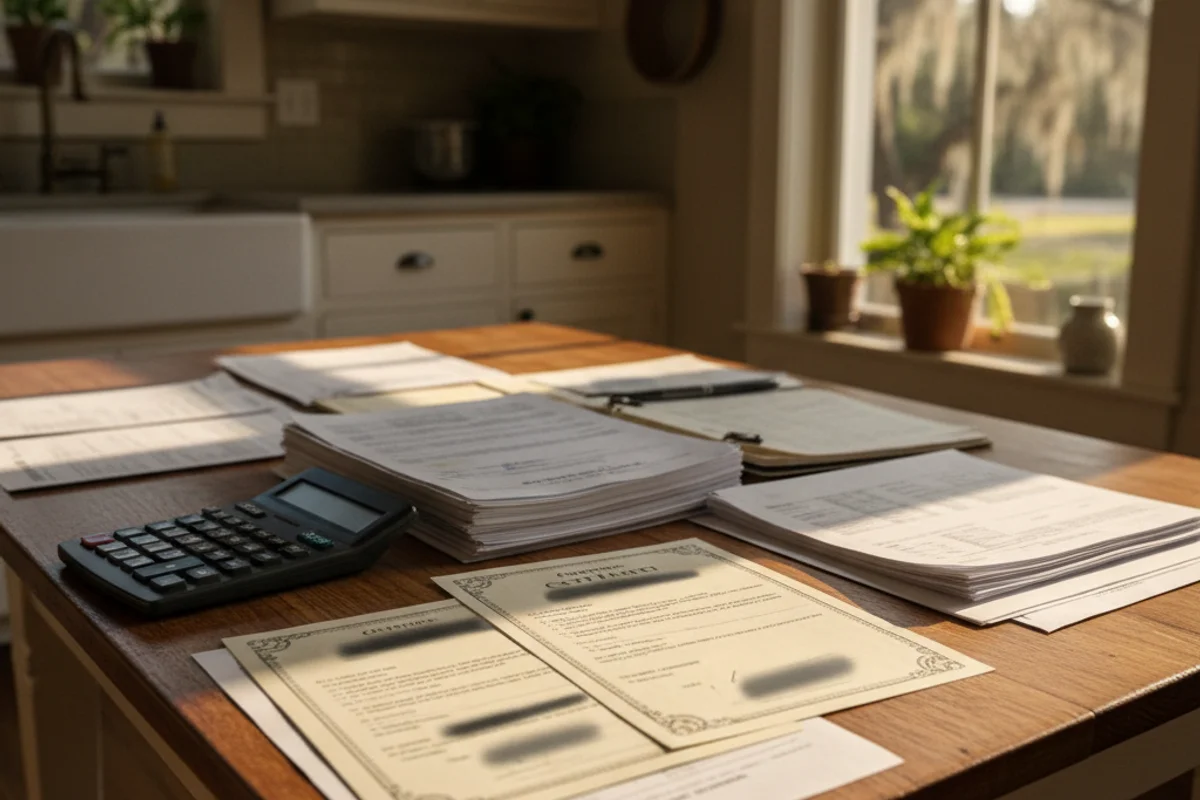
Equity calculation sounds straightforward until you dig into the details. Here’s the formula divorcing Savannah homeowners actually need.
Start with current market value. For a Parkside bungalow, that might be $340,000 based on recent comparable sales. Subtract your remaining mortgage balance. Let’s say you owe $210,000. That’s $130,000 in gross equity.
Now subtract the real costs of selling. Traditional listings in Savannah cost roughly 6% in agent commissions ($20,400 on a $340,000 sale), plus 1-2% in closing costs like title insurance, attorney fees, and transfer taxes (another $5,100). Repairs and staging to make the house market-ready might run $8,000 to $15,000 depending on condition. You’re down to around $90,000 in net proceeds.
Don’t forget holding costs. At 99 days average market time, you’re paying two to three extra months of mortgage, insurance, utilities, and lawn care while the house sits listed. That’s another $3,000 to $5,000 out of the final check. Your actual net proceeds land closer to $85,000, split between two people according to your agreement.
Cash offers work differently. A Savannah cash home buyer might offer $285,000 for the same house as-is. That’s $55,000 less than the theoretical retail value, but you pay zero commissions, zero repairs, zero holding costs, and close in two weeks. After paying off the $210,000 mortgage, you net $75,000. The difference between $85,000 and $75,000 is only $10,000, or $5,000 per person, in exchange for three months of faster resolution and zero arguments over paint colors.
Every situation differs based on your house’s condition, your timeline, and your ability to cooperate. Some Thomas Square couples with updated homes in great condition absolutely should list traditionally and wait for top dollar. Others in Victory Drive fixer-uppers with a contentious split save more money and sanity by taking the cash offer and moving on.
The math becomes clearer when you factor in attorney fees for ongoing disputes. If selling fast eliminates even ten hours of billable time at $300 per hour, you’ve saved $3,000 per person right there. Emotional bandwidth doesn’t show up on a settlement statement, but it’s worth something too.

Find Out What Your Home Is Worth
Get a no-obligation cash offer in 24 hours.
Joint Mortgage Strategies for Savannah Divorcing Couples
Option 1: Sell and split proceeds. This eliminates the joint liability completely. Both names come off the loan at closing. Both credit reports show the mortgage as paid in full. Clean break, no ongoing entanglement. This works best when neither spouse can afford the house alone or when the ongoing conflict makes shared financial obligations impossible.
Option 2: One spouse refinances and buys out the other. The spouse keeping the house applies for a new loan in their name only, pays off the old joint mortgage, and compensates the other spouse for their equity share. This only works if that spouse qualifies for refinancing based on their solo income, which can be tough with Savannah’s $329,000 median home price requiring roughly $5,900 monthly income to qualify under standard debt-to-income ratios.
Option 3: One spouse stays, the other remains on the loan. The divorce decree assigns the house to one person, who agrees to make all payments. The other spouse moves out but stays legally liable. This is risky for the person who left because their credit depends on someone they’re divorcing. Lenders see this arrangement and may hesitate to approve new mortgages for the spouse who moved out because they’re still obligated on the old one.
Option 4: Sell to a cash buyer and close within two weeks. This is Option 1 on fast-forward. Instead of waiting 99 days for a traditional buyer, you accept a cash offer, close in 7 to 14 days, and both walk away mortgage-free before the end of the month. For couples who need speed and certainty, this path offers both.
Market Timing: Is Savannah a Good Time to Sell?
Savannah’s real estate market sits in stable territory right now. That’s actually good news for divorcing couples because stability means predictable outcomes. You’re not racing to sell before values drop, and you’re not waiting for some imagined peak that may never arrive.
The $329,000 median home price reflects steady demand from military families stationed at nearby Hunter Army Airfield, SCAD students and graduates staying in the area, and retirees relocating from colder climates. Inventory levels are moderate, meaning you’re not competing with a flood of other listings, but buyers aren’t facing bidding wars either.
The 16% cash sale percentage shows a healthy investor and cash buyer presence. These buyers keep the market moving even when mortgage rates fluctuate or economic uncertainty affects traditional financed buyers. For divorce sales specifically, that cash buyer pool provides an exit ramp that doesn’t depend on someone else’s loan approval.
Seasonal patterns in Savannah follow the typical spring peak and winter slowdown, but divorces don’t wait for good weather. If you’re selling in July or November, cash buyers remain active year-round while traditional buyer traffic may slow. That timing difference matters when you’re trying to finalize a divorce before the holidays or before one spouse relocates for a new job.
Neighborhoods like Ardsley Park and Gordonston with historic homes tend to attract buyers who want character and are willing to wait for the right property. These areas support traditional listings better than investor-heavy neighborhoods. Meanwhile, properties in Windsor Forest or Southside that need work often sell faster to cash buyers who understand renovation costs and don’t need perfect condition.
The current stable market means you’re not leaving massive appreciation on the table by selling now rather than waiting six months. Values aren’t climbing 10% annually like they were during pandemic years. If waiting six months extends conflict, costs three extra mortgage payments, and requires ongoing coordination with someone you’re divorcing, the potential $5,000 appreciation gain gets eaten up by those soft costs.
Local market data from sources like Redfin’s Savannah market overview confirms the stable pricing and moderate pace. You’re selling in a functional market where realistic pricing gets results, whether you choose a traditional listing or cash offer route.
Getting from Offer to Closing in Georgia: What to Expect
Let’s walk through both paths so you know exactly what happens after you decide to sell your house in Georgia during divorce.
Traditional listing timeline: Your agent lists the house with professional photos and a lockbox. You both need to keep the house clean and be ready to leave for showings with minimal notice. After 30 to 99 days, you accept an offer contingent on inspection and financing. The buyer’s inspector finds issues you must either repair or credit. You negotiate those repairs, which requires both spouses to agree. The buyer’s lender takes three to four weeks to process the loan. You attend separate closings or coordinate schedules for a single closing. Total timeline: 60 to 120 days from listing to funded closing.
Cash sale timeline: You request a cash offer with basic property details and photos you already have on your phone. The buyer provides a written offer within 24 to 48 hours based on as-is condition. You and your spouse review it, accept or counter, and sign a simple purchase agreement. The buyer orders title work and schedules closing at a local Savannah title company. You don’t repair anything. You don’t coordinate showings. Seven to 14 days later, you sign closing documents (remotely if needed), the title company pays off your mortgage, and you receive your portion of proceeds. Total timeline: 10 to 16 days from first contact to funded closing.
Georgia law requires sellers to provide certain disclosures regardless of which path you choose. The Georgia Association of Realtors maintains standard forms that cover required disclosures. Both spouses should review and sign these documents to avoid future liability claims.
Tax implications deserve attention too. The IRS allows married couples filing jointly to exclude up to $500,000 in capital gains from selling a primary residence, or $250,000 for single filers. If you’ve lived in the house for at least two of the last five years, this exclusion applies. Timing your sale before or after divorce finalization can affect which exclusion amount you qualify for. The IRS guidance on selling a home explains these rules in detail. Your CPA or tax advisor should review your specific situation before closing.
Title issues occasionally surface during divorce sales, especially if the house was purchased before marriage or if one spouse brought it into the marriage. Georgia’s equitable distribution approach means the court looks at when property was acquired and how it was used during the marriage. Clear title requires both spouses to sign the deed if both names appear on it. If only one spouse is on the deed but the other has an equitable interest due to marriage, Georgia law may require both signatures anyway. Your closing attorney handles these details, but knowing upfront prevents surprise delays.
We also work with divorcing homeowners in nearby Athens, Atlanta, Augusta, and Macon who face similar situations and need fast, fair solutions.
Every divorce sale situation is unique. Some couples cooperate beautifully and just need speed. Others can barely communicate and need a process that minimizes contact. Some houses are pristine and market-ready. Others have deferred maintenance from years of marital stress. Your best path depends on your specific circumstances, but knowing you have options helps.
If you’re wondering whether a cash offer makes sense for your situation, the math and timeline comparisons in our cash offer vs listing analysis for Savannah break down real numbers for current market conditions. For couples going through similar situations in other Georgia markets, our analyses for Atlanta and Augusta provide additional context on how these decisions play out across different price points and market conditions.
The practical reality is this: you need your house sold, your equity divided, and your mortgage liability eliminated so you can both move forward. Whether that happens in 14 days or 90 days, through a cash buyer or traditional listing, the goal is the same. Choose the path that minimizes conflict, maximizes your net proceeds after all real costs, and gets you to the next chapter of your life as quickly as possible.
Most importantly, consult a Georgia family law attorney before making any final decisions. Real estate transactions during divorce involve legal complexities that vary based on your specific decree language, custody arrangements, and financial circumstances. An attorney ensures you’re protected and compliant with all court orders. The Georgia State Bar can help you find qualified family law attorneys in the Savannah area who understand how property division intersects with real estate transactions.
Your next step is simple. Get your property information together, decide whether you want to pursue a traditional listing or explore a cash offer, and start the conversation with your spouse or attorney. The sooner you begin, the sooner you’re both free from the mortgage payment, the maintenance headaches, and the daily reminder of what used to be.
We also help homeowners in Savannah dealing with foreclosure, selling as-is, and inherited property situations.

Ready to Sell? Let's Talk.
Get your cash offer now. No obligation, no hassle.

James is a Senior Writer at NestCash, specializing in housing market coverage and consumer-focused real estate guidance. Reporting across 12 states, he helps readers make informed decisions with clear, trustworthy insights.