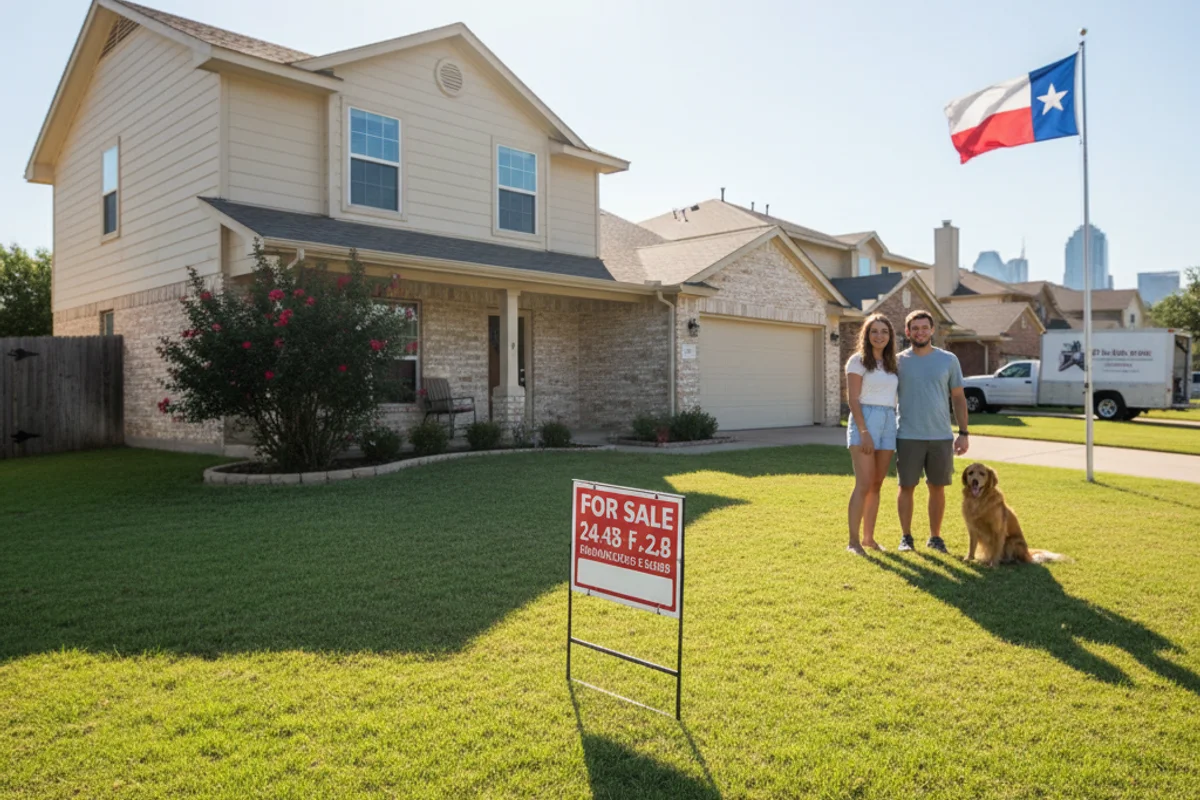
Sell House During Divorce In Dallas: Get Your Offer in 24 Hours
Texas law lets you sell your house during divorce in Dallas before the decree is final. Get a cash offer in 24 hours, close in 7-14 days, split proceeds cleanly.

Senior Contributor, NestCash··11 min read

You do not have to wait until your divorce is final to sell your house during divorce in Dallas. That is the first myth worth addressing, because plenty of couples delay unnecessarily while continuing to make payments on a mortgage neither wants. Texas law allows the sale of marital property during divorce proceedings, and the faster you can sell a house in Texas, the faster you both move forward.
Here’s the thing about Dallas divorces. The legal process takes time, but your house doesn’t have to wait. With the Dallas median home price at $348,000 and homes spending an average of 36 days on the market, understanding your real timeline matters more than ever. This guide walks you through the actual legal requirements, equity calculations, and practical steps to sell quickly and split proceeds fairly.
Myth vs. Reality: Selling a Dallas Home During Divorce
Myth: You must wait for the divorce decree before listing your home.
Reality: Texas family courts routinely approve home sales during divorce proceedings. You need either mutual agreement documented in writing or a court order authorizing the sale. Most judges approve sales when both parties consent, because selling eliminates a major source of ongoing conflict and financial entanglement.
Myth: Both spouses must attend every closing meeting.
Reality: One spouse can grant power of attorney to the other for the closing, or you can sign documents separately. Dallas cash home buyers often coordinate signing schedules to keep spouses apart entirely, which reduces stress during an already difficult process.
Myth: You’ll lose too much money selling to cash buyers.
Reality: The math tells a different story. Traditional sales in Dallas involve 6% agent commissions ($20,880 on a $348,000 home), plus repairs, staging, and carrying costs during the 36-day average market time. Cash sales eliminate most of these costs and close in 7-14 days. For divorcing couples, that time savings translates to fewer mortgage payments, reduced conflict, and faster financial independence.
Myth: Only one spouse can initiate the sale.
Reality: If the home is community property (which most marital homes in Texas are), both spouses have equal ownership rights. You can’t force a sale without court intervention, but you can present compelling financial reasons why selling makes sense for both parties.
For a complete guide, read our resource on selling during divorce in Dallas.

Get Your Free Cash Offer Today
No fees. No repairs. Close in as little as 7 days.
Related Video
The Texas Timeline: When Can You Actually Sell?
Texas community property law creates a unique situation for divorcing homeowners. Any property acquired during the marriage belongs equally to both spouses, regardless of whose name appears on the deed. This means your Highland Park bungalow or your Lake Highlands ranch belongs to both of you, even if only one name is on the title.
You can sell at any point during these divorce stages:
Before filing: If you both agree, selling before filing divorce papers is perfectly legal. Many couples in Lakewood and Oak Lawn choose this route to simplify their divorce paperwork.
During proceedings: This is the most common scenario. You’ll need either a signed agreement between spouses or a court order. Your attorney can file a motion requesting permission to sell, and judges typically grant these requests when the sale serves both parties’ interests.
After decree but before finalization: The divorce decree may specify a sale timeline. If it orders the home sold within 90 days, for example, that deadline is legally binding.
Texas law requires a Seller’s Disclosure Notice for residential property sales. Both spouses should sign this disclosure, even if the property is titled in one name only. The disclosure protects you from future liability claims about property condition.
The practical Dallas timeline looks like this: traditional sales take 30-60 days from accepted offer to closing, not counting the 36 days your home sits on the market. That’s roughly three months of continued mortgage payments, property taxes, and utilities. Cash buyers compress this to 7-14 days total, which matters enormously when you’re splitting bills and trying to minimize contact with an ex-spouse.
How to Calculate Your True Equity in a Dallas Divorce Sale
Equity calculations get messy during divorce because emotions cloud the math. Here’s the formula that actually matters:
Current market value minus outstanding mortgage balance minus selling costs equals net proceeds.
Let’s use real Dallas numbers. Your home in Bishop Arts is worth $348,000 (the Dallas median). You owe $235,000 on the mortgage. Here’s what you’d actually net:
Traditional sale:
- Sale price: $348,000
- Agent commission (6%): -$20,880
- Closing costs (2-3%): -$8,700
- Repairs and staging: -$5,000
- Mortgage payoff: -$235,000
- Property taxes during sale (2 months): -$1,160
- Net proceeds: $77,260
- Each spouse receives: $38,630
Cash sale:
- Sale price: $330,000 (typically 5-7% below retail)
- Commission: $0
- Closing costs: $0
- Repairs: $0
- Mortgage payoff: -$235,000
- Net proceeds: $95,000
- Each spouse receives: $47,500
Wait, the lower cash offer actually puts more money in your pocket? Yes. The numbers work because you eliminate commissions, repairs, and months of carrying costs. You also close in two weeks instead of three months.
Community property law in Texas means marital assets get divided in a manner the court deems “just and right.” Courts consider factors like which spouse made the down payment from separate funds, who paid the mortgage during separation, and who maintained the property. The IRS allows up to $500,000 in capital gains exclusion for married couples filing jointly, or $250,000 for individuals, which matters if your Dallas home appreciated significantly.
Document everything. Keep records of who paid the mortgage during separation, who covered repairs, and who moved out when. These details affect equity division if the sale gets contentious.

Find Out What Your Home Is Worth
Get a no-obligation cash offer in 24 hours.
Joint Mortgage Strategies for Dallas Divorcing Couples
This is where divorcing homeowners get blindsided. Your divorce decree might say your ex is responsible for the mortgage, but the bank doesn’t care what your decree says. If both names are on the loan, you’re both legally liable until the mortgage is paid off or refinanced.
Here are your options when both spouses are on the mortgage:
Sell the home and pay off the mortgage: This eliminates joint liability completely. Both parties walk away clean with their share of equity. No ongoing financial connection.
One spouse refinances in their name only: The spouse keeping the home applies for a new loan based solely on their income and credit. The other spouse is released from the mortgage obligation. This requires qualifying income, good credit, and enough equity to avoid PMI.
One spouse assumes the existing loan: Some loans allow assumption, where one spouse takes over the existing mortgage. Less common than refinancing, but worth checking with your lender.
Continue joint ownership temporarily: Some couples agree to maintain joint ownership until market conditions improve or children graduate. This keeps both parties on the mortgage and requires detailed agreements about payment responsibilities and future sale terms.
Quitclaim deed without refinancing: One spouse signs over their ownership interest but remains on the loan. This is the worst option because you lose ownership rights but keep the debt obligation. Avoid this unless refinancing genuinely isn’t possible and you have ironclad payment agreements.
The problem with options two through five is simple: they keep you financially connected to your ex-spouse. If your ex-spouse misses payments while their name is still on the loan, your credit suffers even if the divorce decree says they’re responsible. The mortgage company will pursue both of you for the debt.
Dallas’s 27% cash sale percentage reflects how many homeowners want clean breaks. Working with cash home buyers in Texas eliminates the refinancing obstacle entirely. The buyer pays cash, the mortgage gets satisfied at closing, and both parties walk away with no ongoing financial entanglement.
For couples facing potential foreclosure during divorce, selling quickly becomes even more critical. The article Avoid Foreclosure, Sell Your House Fast in Dallas explains how foreclosure damages both spouses’ credit equally if both names are on the mortgage.
Market Timing: Is Dallas a Good Time to Sell?
Dallas’s current market sits in stable territory with moderate inventory. The $348,000 median price reflects steady demand, and the 36-day average time on market shows homes are selling at a reasonable pace. Not a feeding frenzy, but not a dead market either.
For divorcing couples, market timing often matters less than personal timing. Here’s why speed trumps waiting for the “perfect” market:
Carrying costs add up fast. At $348,000, your monthly costs likely include a $1,800 mortgage payment (assuming 20% down and 7% interest), $580 in property taxes, $200 in insurance, and $150 in utilities. That’s $2,730 per month you’re both paying while the house sits empty or while one spouse lives there creating resentment.
Dallas neighborhood dynamics matter. Preston Hollow and University Park maintain premium prices and sell faster than average. Oak Cliff and Pleasant Grove offer more affordable entry points but may require pricing adjustments. Uptown condos face different market pressures than suburban single-family homes in Plano or Richardson.
Seasonal patterns exist but aren’t dramatic. Spring (March through May) traditionally brings more buyers, especially families who want to move between school years. Summer sees steady activity. Fall slows slightly, and winter (especially December) is quietest. But divorcing couples rarely have the luxury of waiting six months for ideal selling season.
Divorce timelines don’t wait for market rebounds. If you need to sell within 90 days per court order, market conditions become irrelevant. You sell when you must sell, which is why understanding your real net proceeds matters more than hoping for maximum price.
We also work with homeowners in Fort Worth and Houston, where similar market dynamics play out. The consistent theme across Texas: couples who sell quickly using cash buyers often net more money after accounting for carrying costs, even when accepting slightly below retail prices.
Getting from Offer to Closing in Texas: What to Expect
The traditional Dallas sale process involves multiple steps where things can go wrong. You list the home, wait for showings, negotiate offers, enter a 30-60 day option period while buyers secure financing, complete inspections, negotiate repairs, wait for the appraisal, hope the buyer’s loan doesn’t fall through, and finally close.
Each step creates opportunities for conflict between divorcing spouses. Who pays for requested repairs? Who handles showing appointments? What happens if the buyer’s financing falls apart after 45 days?
The cash sale process removes most of these friction points:
Day 1-2: You get your cash offer based on your home’s condition and comparable sales in your Dallas neighborhood. No showings, no strangers touring your bedroom, no listing photos.
Day 3-4: You review the offer and ask questions. Legitimate cash buyers explain their numbers clearly and don’t pressure you to decide immediately.
Day 5: You accept the offer. Both spouses sign the purchase agreement. If you need court approval, your attorney files the appropriate motion.
Day 6-12: The title company researches the title, ensures liens and mortgages are identified, and prepares closing documents. You’ll still complete the Texas Seller’s Disclosure, but you won’t make repairs or stage the home.
Day 13-14: Closing happens. The buyer brings cash (typically a wire transfer), the title company pays off your mortgage, satisfies any liens, and distributes the remaining proceeds according to your agreement. Both spouses receive their share, often via separate checks or wire transfers.
Texas disclosure requirements apply to all sales, including cash sales. You must disclose known material defects. The difference is that cash buyers purchase properties as-is, so disclosed defects don’t tank the deal like they might with a traditional buyer.
If you’re considering alternatives to cash offers, the comparison article Cash Home Buyers In Dallas: Get Cash Fast Today breaks down the real numbers between listing traditionally and selling for cash in the Dallas market.
Court approval adds time if required. Your attorney files a motion, schedules a hearing, and obtains a signed order authorizing the sale. This typically adds 2-4 weeks to the timeline. Many couples avoid this by reaching mutual written agreement before listing, which doesn’t require court approval.
The legal process for dividing assets during divorce follows Texas community property principles, which you can learn more about through resources on dividing property in divorce. These rules affect not just your home, but all marital assets acquired during your marriage.
For divorcing homeowners in other Texas cities facing similar challenges, we’ve helped couples sell a house fast in Dallas and throughout the state. Whether you’re also dealing with a home that needs to sell as-is, facing foreclosure, or handling an inherited property, cash buyers handle all of these situations. The process works the same whether you’re in Dallas’s Turtle Creek neighborhood or a suburb outside the city limits.
The bottom line: selling your house during divorce in Dallas gives both parties financial freedom and eliminates ongoing conflict over payments, maintenance, and shared property. Whether you choose a traditional sale or work with cash buyers depends on your timeline, your equity position, and how quickly you need this chapter of your life resolved. Both paths work, but understanding the true costs and realistic timelines of each option lets you make the decision that actually serves your interests.

Ready to Sell? Let's Talk.
Get your cash offer now. No obligation, no hassle.

Lisa is a Senior Contributor at NestCash, writing expert content on real estate, homeownership, and market trends. She covers 12 states, with a focus on making real estate information practical, clear, and useful.