Quick Home Sale In Chicago: Sell Fast, Keep More Cash
Get a quick home sale in Chicago without sacrificing equity. Learn how cash buyers price homes, real closing timelines, and when fast sales protect your investment.

Senior Contributor, NestCash··13 min read
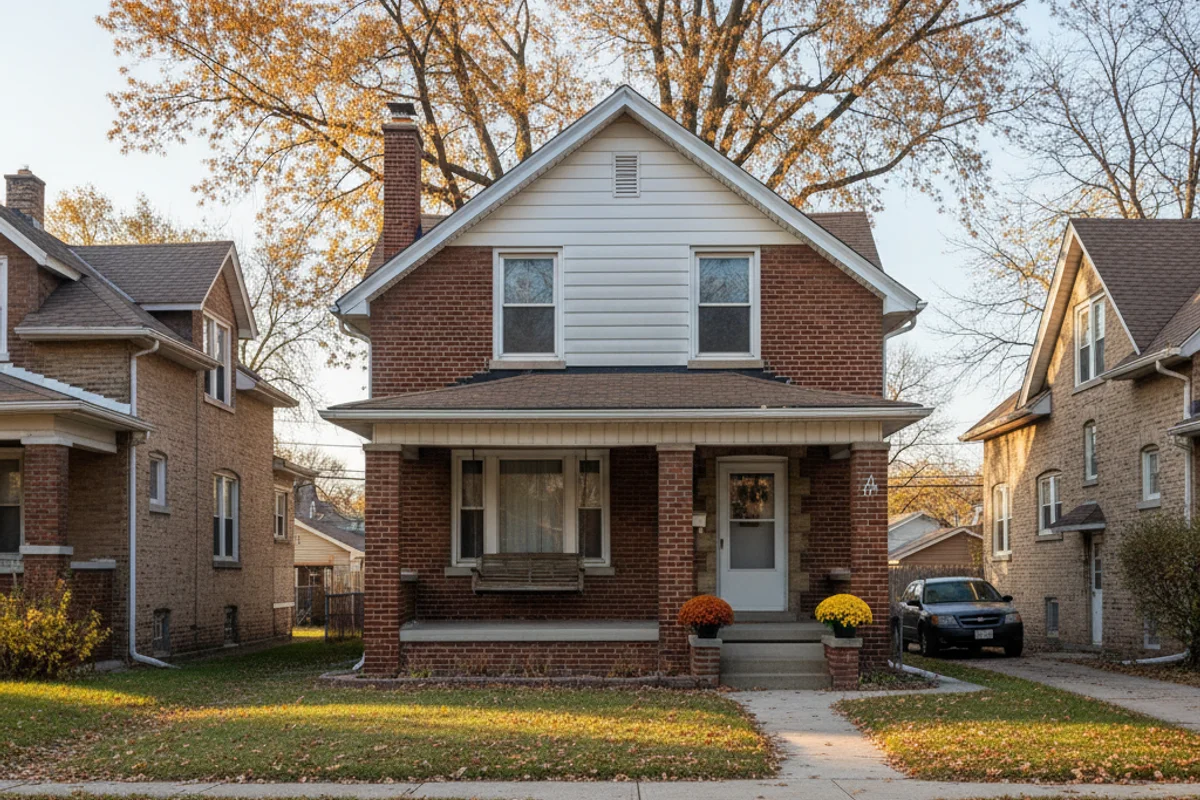
Here’s what most Chicago homeowners believe: selling fast means getting ripped off. That accepting a quick cash offer automatically leaves thousands on the table. That the only way to get full value is to list with an agent, wait months, and hope for the best. If you need a quick home sale in Chicago, you’ve probably heard some version of this wisdom from friends, family, or online forums.
The reality is more complicated and often more favorable than you think. A well-priced fast sale frequently nets similar proceeds as a slow traditional listing once you account for carrying costs, repairs, and commissions. Sometimes it nets you more, especially when market conditions shift or your property needs work.
Let’s examine what actually happens with Chicago cash home buyers, how the numbers work, and when choosing speed over waiting protects rather than sacrifices your equity.
”Selling Fast Means Getting Less”, True or False in Chicago?
This statement is both true and false, depending entirely on how you calculate value.
Yes, cash offers typically come in below full retail market price. A cash buyer purchasing your Logan Square bungalow might offer $260,000 when Zillow estimates it at $325,000. On the surface, that looks like a $65,000 loss.
But here’s what that surface comparison misses. Traditional sales in Chicago currently take an average of 42 days to find a buyer, then another 30-45 days to close. During those 72-87 days, you’re paying the mortgage, property taxes (which aren’t cheap in Cook County), insurance, and utilities. For a $325,000 home, monthly carrying costs typically run $2,400-$3,200.
Three months of carrying costs: $7,200-$9,600. Agent commission at 5-6%: $16,250-$19,500. Seller concessions for repairs after inspection (common in Chicago’s older housing stock): $3,000-$8,000. Staging and minor updates to make the home show-ready: $2,000-$5,000.
Total traditional sale costs: $28,450-$42,100.
Now subtract those costs from your theoretical $325,000 sale price. You net $282,900-$296,550.
That $260,000 cash offer just became a lot more competitive. Especially if the cash buyer covers all closing costs and you pick your move-out date.
The comparison gets even more favorable in certain situations. If your home needs a new roof ($12,000-$18,000 in Chicago), updated electrical ($6,000-$15,000 for a typical bungalow), or foundation work (easily $15,000-$30,000), traditional buyers will either demand those repairs or reduce their offer after inspection. Cash buyers factor those issues into their initial offer and buy as-is.
Here’s the thing about Chicago’s median home price of $325,000. It represents move-in ready homes in decent neighborhoods. If your property sits below that standard, the gap between cash and traditional narrows significantly. Sometimes it disappears entirely.
Get Your Free Cash Offer Today
No fees. No repairs. Close in as little as 7 days.
How Chicago Cash Buyers Actually Price Homes
Reputable cash buyers use a formula, not arbitrary lowball tactics. Understanding this formula helps you evaluate whether an offer is fair.
Most cash home buyers in Illinois start with your home’s after-repair value (ARV). That’s what your property would sell for on the open market if it were in excellent condition. They obtain this by looking at recent comparable sales in your specific Chicago neighborhood.
From that ARV, they subtract:
Repair costs. They’ll estimate everything your home needs, from cosmetic updates to major systems. In Chicago’s older housing stock, this can range from $15,000 for minor updates to $80,000+ for homes needing comprehensive renovation.
Holding costs. The time they’ll own the property before reselling it. This includes property taxes (substantial in Cook County), insurance, utilities, and financing costs if they’re using leverage.
Transaction costs. When they eventually sell, they’ll pay agent commissions, closing costs, and potentially staging expenses.
Profit margin. Cash buyers are running businesses. They need to make money on the transaction. Typical margins run 10-20% depending on the property and risk level.
What remains is their maximum offer price. Legitimate buyers in Chicago typically land between 70-85% of ARV, with the percentage varying based on condition, location, and current market dynamics.
A Logan Square three-flat in need of updates might get an offer at 75% of ARV. A well-maintained Bridgeport bungalow needing only cosmetic work might see offers at 82-85% of ARV. A South Side property requiring extensive renovation might receive offers closer to 65-70% of ARV.
The key word there is “legitimate.” Companies focused on long-term business reputation price properties fairly within this framework. You can verify this by comparing their offer to your home’s likely ARV minus the costs listed above.
When you receive an offer that seems low, ask for the breakdown. Professional buyers will explain exactly how they arrived at their number. If they can’t or won’t provide details, that tells you something important about their operation.
According to Illinois property disclosure law, sellers must complete a Residential Real Property Disclosure Report regardless of sale type. Cash buyers expect this, but unlike traditional buyers, they won’t renegotiate based on what you disclose. That’s built into their offer from the start.
When a Fast Chicago Sale Protects Your Equity
Job relocation with a deadline. Chicago’s corporate sector, particularly in River North and the Loop, sees significant employee movement. If you’ve accepted a position in another city and need to start in 30-45 days, carrying two mortgages or paying to break a lease elsewhere gets expensive fast. A quick cash sale eliminates dual housing costs and the pressure to accept a lowball offer from a traditional buyer who senses your urgency.
Inherited property with multiple heirs. Chicago has substantial generational housing stock. When siblings inherit their parents’ Pilsen home or South Shore bungalow, ongoing costs drain the estate while everyone waits for a traditional sale. Property taxes, insurance, utilities, and maintenance continue. Selling to a cash buyer in Chicago splits the proceeds quickly and ends the financial bleeding.
Divorce settlements. Illinois divorce law often requires selling the marital home and dividing proceeds. The emotional toll of maintaining that property together while waiting months for a traditional sale creates stress that’s difficult to quantify. Fast cash sales provide clean breaks and financial certainty when both parties need to move forward.
Preventing foreclosure. If you’re behind on payments, every month counts. Traditional sales take 70-90 days minimum. That’s two to three more mortgage payments you probably can’t make, late fees accumulating, and credit damage deepening. Cash buyers can close before the foreclosure auction, protecting whatever equity remains and limiting the long-term impact on your credit.
Major repairs you can’t afford. That furnace dying in January isn’t optional in Chicago winters. If your HVAC system fails, your roof develops serious leaks, or your foundation shows troubling cracks, you face a dilemma. Finance repairs you can’t afford, or list the home as-is and watch traditional buyers flee or submit insulting offers after inspection. Cash buyers eliminate this problem entirely, as discussed in selling your house as-is in Chicago scenarios.
Market timing concerns. Chicago’s real estate market remains stable now, with moderate inventory levels and consistent demand. But if you’re watching economic indicators suggesting a downturn, or if your specific neighborhood shows signs of declining values, waiting three months to close a traditional sale exposes you to market risk. Cash sales lock in your proceeds immediately.
Rental property headaches. Chicago landlords dealing with problem tenants, costly violations, or properties they simply don’t want to manage anymore benefit enormously from cash sales. You avoid the eviction process (which can take months in Cook County), transfer the tenant situation to the buyer, and eliminate ongoing management stress.
Find Out What Your Home Is Worth
Get a no-obligation cash offer in 24 hours.
The Illinois Closing Process: Why Cash Is Faster
Understanding why cash sales close faster requires looking at what slows down traditional sales in Illinois.
Traditional financed sales in Chicago involve multiple parties and potential failure points. The buyer needs mortgage approval, which typically takes 30-45 days even when preapproved. During that time, the lender orders an appraisal. If the appraisal comes in below the agreed price (increasingly common in rapidly changing neighborhoods), the buyer needs to renegotiate or come up with more cash.
The lender requires a home inspection and often specific repairs before they’ll fund the loan. You negotiate those repairs or credits. Then you wait for the buyer to secure their final loan approval, which can be delayed by employment verification, credit issues, or changing lending standards.
Title work typically takes 2-3 weeks in Cook County. Attorney review periods add more time. The buyer’s attorney and your attorney exchange documents, negotiate terms, and schedule the closing around everyone’s availability.
Any of these steps can delay or completely derail the transaction. Roughly 10-15% of financed home sales fall through before closing, according to national data.
Cash sales eliminate most of these variables. No mortgage means no appraisal contingency, no financing contingency, no lender requirements, and no loan approval waiting period. The buyer has funds available now.
Title work still happens, but it’s the same 2-3 week process occurring while you prepare to move rather than adding time at the end. Many cash buyers use expedited title services when needed.
Attorney review remains, but it’s simplified when there’s no lender involved. You’re negotiating directly with the buyer rather than satisfying a bank’s requirements.
Most cash transactions in Chicago close in 7-14 days. Some close in as little as 5 days when both parties are motivated and title work comes back clean.
You control the timeline. Need 30 days to find your next place? Most cash buyers accommodate that. Ready to leave in a week? They can work with that too.
The certainty matters as much as the speed. When a cash buyer makes an offer, the probability of closing approaches 95-98% (barring only major title defects). Compare that to the 85-90% closing rate for financed buyers.
This certainty allows you to plan your next move, make commitments, and move forward with your life without wondering whether this buyer’s financing will actually come through.
Real Chicago Seller Experiences with Fast Cash Sales
Understanding how this plays out in practice helps illustrate when cash sales make sense for Chicago homeowners.
Consider the Austin neighborhood. Properties there often need updating and may have deferred maintenance. A homeowner inherited her father’s Austin bungalow after he passed. The property needed electrical work, a new roof, and cosmetic updates throughout. She lived in Portland and couldn’t manage a Chicago renovation from 2,000 miles away.
Traditional buyer offers came in around $135,000 but demanded $25,000 in repairs before closing. After paying a contractor, coordinating work from out of state, and hoping the repairs satisfied the buyer’s lender, she’d net approximately $105,000 (minus commissions and her costs managing the project).
A cash buyer offered $118,000 as-is. She netted $116,500 after minimal closing costs, closed in 10 days, and avoided months of long-distance property management headaches. The slightly higher nominal price of traditional offers became irrelevant when she factored in repair costs, carrying costs, and the value of her time.
Or take the Englewood scenario. A homeowner facing job loss couldn’t keep up with mortgage payments on his $180,000 loan while the property’s market value had declined to approximately $145,000. He was underwater and facing foreclosure.
A traditional sale was impossible. No buyer would pay enough to cover his loan balance. Waiting for a short sale meant 6-12 months of credit damage, foreclosure proceedings, and uncertain outcomes.
A cash buyer negotiated directly with his lender for a short sale, handled all the paperwork, and closed in three weeks. The seller walked away with no deficiency judgment and limited credit impact compared to foreclosure.
In Lincoln Park, a divorcing couple needed to split their home’s equity and move on. The property would likely have sold for $625,000 on the open market after 45-60 days. But neither party wanted to keep making payments, and the emotional cost of coordinating showings and maintenance together was substantial.
They accepted a $565,000 cash offer, split $555,000 after minimal closing costs (the buyer covered most fees), and both moved into their new places within three weeks. The $60,000 lower gross price bought them emotional closure and financial certainty worth far more than the nominal difference.
These aren’t cherry-picked success stories. They represent common situations where cash sales solve problems that traditional sales can’t address, or can’t address quickly enough to matter.
Get a Fast Chicago Cash Offer: What to Do Next
If your situation aligns with the scenarios above, getting a cash offer costs you nothing and provides valuable information for decision-making.
Start by requesting offers from 2-3 reputable buyers who operate in Illinois home sales markets. Companies with established track records, verifiable local sales, and transparent processes should be your focus. Check reviews, verify they’re registered to do business in Illinois, and confirm they’ve actually closed deals in Chicago recently.
When you get your cash offer, ask these specific questions:
What’s the exact offer price and what does it include? Are there any fees or costs deducted from this amount? What repairs or conditions affect the price, and can they show you their repair estimates? What’s their proposed timeline from acceptance to closing? Can they provide proof of funds? Can you choose your closing date? Do they cover all closing costs including title fees and transfer taxes?
Compare multiple offers side by side. Prices will vary based on each company’s business model, risk tolerance, and current inventory needs. A $15,000-$20,000 spread between offers is normal for properties in the $300,000 range.
While you’re gathering cash offers, you can simultaneously list with an agent if you want to compare traditional options. There’s no law requiring you to choose one path immediately. Some homeowners list their property while also entertaining cash offers, giving them the option to go either direction based on which produces better results.
Just be transparent with both the agent and cash buyers about your approach. Most professionals respect homeowners who are comparison shopping and making informed decisions.
For detailed comparisons of what you might net from each approach, review cash offer versus listing with a realtor in Chicago scenarios specific to our market.
The Chicago real estate market offers multiple paths to selling your home. Cash buyers serve specific situations where speed, certainty, and as-is purchases provide value that traditional sales can’t match. Traditional listings work beautifully when you have time, your property is in good condition, and you’re willing to navigate the complexity of financed buyers.
Neither path is universally “better.” The right choice depends entirely on your specific circumstances, timeline, property condition, and financial goals.
Understanding how cash buyers actually price homes, what the realistic timeline looks like, and when fast sales protect rather than diminish your equity puts you in position to make that decision from a place of knowledge rather than stress or assumption.
The myth that selling fast always means getting less falls apart when you do the math on your specific situation. Sometimes it means getting more. Sometimes it means getting approximately the same amount but 60 days faster and with zero stress. And sometimes it means solving problems that traditional sales simply can’t address.
Chicago’s 23% cash sale percentage reflects thousands of homeowners who ran these numbers and chose speed. Whether that’s the right choice for you depends on factors only you can evaluate. But now you have the framework to make that evaluation based on reality rather than misconceptions.
We work throughout the Chicago area and also serve nearby communities including Joliet, Naperville, and Rockford for homeowners across Illinois who need quick, certain home sales.
The carrying costs on your property continue whether you’re ready to sell or still deciding. Whatever path you choose, understanding your actual options and real numbers puts you in control of the outcome rather than hoping the market cooperates with your timeline.
NestCash works with Chicago homeowners dealing with divorce, foreclosure, inherited properties, and homes that need to sell as-is every single day.
Ready to Sell? Let's Talk.
Get your cash offer now. No obligation, no hassle.

Lisa is a Senior Contributor at NestCash, writing expert content on real estate, homeownership, and market trends. She covers 12 states, with a focus on making real estate information practical, clear, and useful.