Quick Home Sale In Atlanta: Get Your Offer in 24 Hours
Discover the real costs of waiting to sell your Atlanta home. Compare traditional vs. cash sales, monthly carrying costs, and how to get a cash offer in 24 hours.

COO & Correspondent, NestCash··12 min read
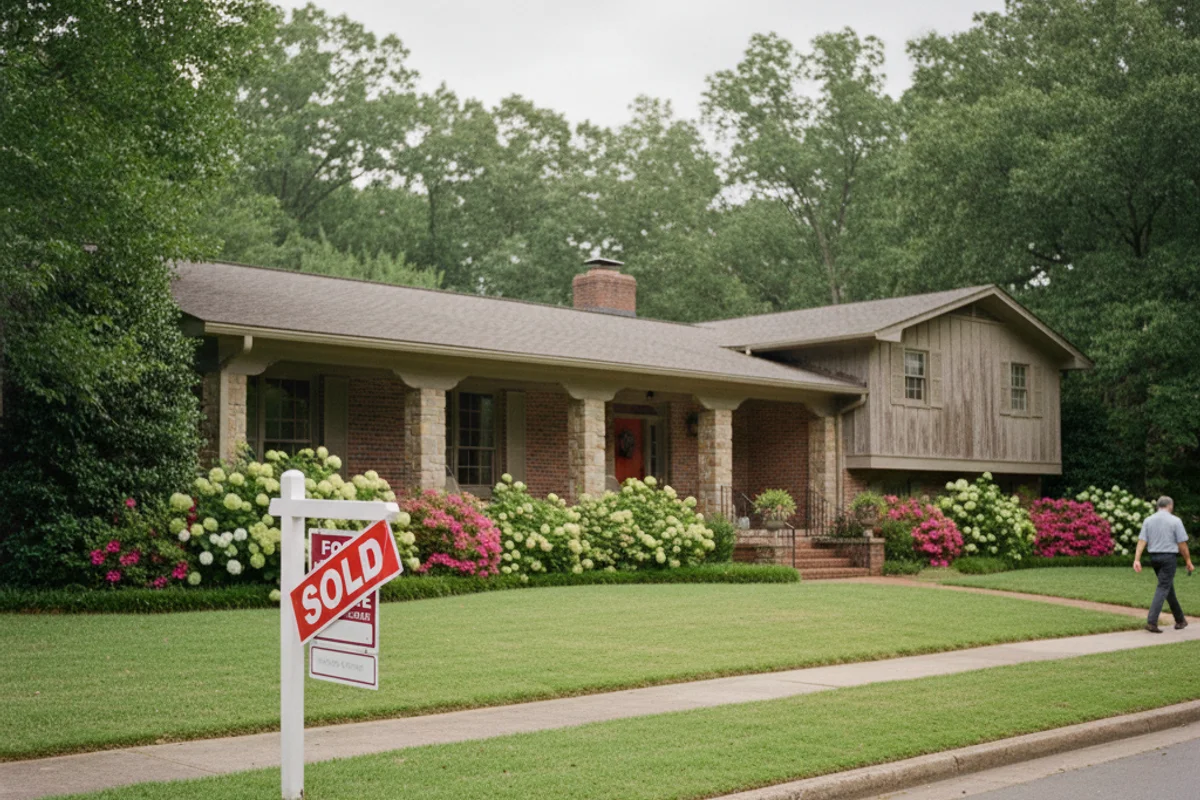
Between your mortgage payment, property taxes, insurance, and utilities, holding onto your Atlanta home costs you approximately $2,800 to $3,500 each month. That’s real money leaving your account while you wait for the right buyer to come along, qualify for financing, and make it through closing. If you need a quick home sale in Atlanta, understanding these carrying costs changes how you evaluate your options.
The Atlanta housing market moves at an average pace of 37 days on market right now, but that’s just the listing period. Add another 30 to 45 days for a traditional closing with financing, and you’re looking at 67 to 82 days total. That’s two to three months of carrying costs before you see a check. For many homeowners facing job relocation, divorce, inherited property, or financial pressure, that timeline just doesn’t work.
Here’s what most Atlanta sellers don’t calculate until it’s too late: the difference between listing price and what you actually net after all expenses. A cash sale might close at a lower price point, but when you eliminate agent commissions, repair costs, carrying costs, and deal uncertainty, the numbers tell a different story. Let’s break down exactly what speed costs and what it saves you.
What Every Extra Month Costs Atlanta Home Sellers
Your monthly carrying costs add up faster than you think. On Atlanta’s median home price of $385,000, here’s what you’re typically paying each month the property sits unsold.
If you’re carrying a mortgage, that payment alone runs $2,000 to $2,500 monthly depending on your interest rate and down payment. Property taxes in Fulton County average around $450 per month based on the current millage rate. Homeowners insurance adds another $150 to $200. Utilities for an occupied or vacant home run $200 to $300.
That brings your total monthly carrying cost to roughly $2,800 to $3,500. Every 30 days your house stays on the market, that amount disappears from your eventual net proceeds.
Now multiply that by the average timeline. If your home takes the typical 37 days to get an offer, that’s one full month of carrying costs at $3,000. Then you wait 35 to 45 days for the buyer’s financing to clear, inspections to complete, and closing to happen. That’s another $3,000 to $4,500 in carrying costs.
Before you ever get to the closing table, you’ve spent $6,000 to $7,500 just keeping the lights on. And that assumes everything goes smoothly. If the first buyer’s financing falls through, which happens in about 8% of financed transactions according to HUD research on mortgage lending, you start the clock over again.
Vacant properties cost even more. You’ll need to maintain the lawn, keep the HVAC running to prevent mold in Atlanta’s humidity, and potentially pay for security monitoring. Add another $200 to $400 monthly for these expenses.
The good news is that cash buyers eliminate most of this timeline. When you sell your Atlanta home quickly to a cash buyer, you choose your closing date. Most transactions close in 7 to 14 days, which means one month of carrying costs instead of three.
Get Your Free Cash Offer Today
No fees. No repairs. Close in as little as 7 days.
Related Video
Fast Sale vs. Traditional Listing: Net Proceeds in Atlanta
Let’s run the actual numbers on a typical Atlanta home to see what you’d net from each approach. We’ll use a property valued at $385,000, the current median price.
Traditional listing scenario:
Your listing agent suggests pricing at $389,900 to leave negotiating room. After 37 days, you accept an offer at $382,000. Here’s where the money goes before you see a check.
Agent commission at 5.5% takes $21,010 off the top. The buyer’s inspection reveals roof repairs needed ($7,500), HVAC maintenance ($1,200), and minor electrical updates ($800). You negotiate a $5,000 credit because you don’t want to lose the deal. Seller-paid closing costs and transfer taxes run another $4,500.
Carrying costs for the 37-day listing period plus 40-day closing equals 77 days, or roughly 2.5 months at $3,000 monthly. That’s $7,500. Pre-listing improvements your agent recommended cost you $3,500 for paint, landscaping, and staging consultation.
Total deductions: $47,010
Your net proceeds: $334,990
Cash sale scenario:
Atlanta cash home buyers offer $305,000 for the same property in as-is condition. There’s no commission because you’re selling directly. Zero repair costs because they buy as-is. You choose a 10-day closing, so carrying costs are just $1,000. No pre-listing improvements needed.
Total deductions: $1,000
Your net proceeds: $304,000
The gap is $30,990, or about 9% less than the traditional sale. But here’s what that number doesn’t show: certainty. The traditional sale depends on the buyer’s financing approval, a clean appraisal, successful inspections, and no title issues. Cash sales remove all those contingencies.
For sellers in Buckhead, Midtown, or Virginia Highland with updated properties in great condition, the traditional route often makes sense. You’ll likely get multiple offers and fewer inspection issues. But if you’re selling a fixer in College Park, an inherited property in East Atlanta, or a dated ranch in Decatur, the cash math looks very different. Inspection negotiations on older homes regularly chip away $10,000 to $20,000 from the contract price.
Similar comparisons play out in other markets. Sellers looking at a cash offer vs listing with a realtor in Athens see the same pattern: the gap between cash and traditional narrows significantly once you account for all costs.
How Georgia Property Taxes Add Up During a Slow Listing
Georgia property taxes get paid whether your house sells or not. In Fulton County, where much of Atlanta sits, the millage rate creates an annual tax bill of roughly 1.4% of assessed value. On a $385,000 home, that’s $5,390 annually, or about $449 per month.
If your sale takes four months instead of two, that’s an extra $898 in property taxes you’re covering. DeKalb County homeowners pay similar rates. Cobb County runs slightly lower, but you’re still looking at $350 to $400 monthly.
Here’s what makes this painful: you pay these taxes while getting zero benefit from the property. You’re not living there if you’ve already moved. You’re not renting it out. You’re just covering the government’s bill while waiting for a buyer.
The clock starts ticking the moment you decide to sell, not when you list. Many sellers spend weeks getting their property ready before it even hits the market. If you paint, repair, stage, and wait for the “perfect” listing day, you might burn through six weeks before the listing goes live. That’s $2,700 in property taxes alone.
According to the Fulton County Tax Assessor, property taxes are prorated at closing based on the closing date. You’re responsible for the portion of the year you owned the property. Every extra day you own it costs you roughly $14.75 in property taxes.
Cash sales compress this timeline dramatically. When you get your cash offer, you can move from decision to closing in under two weeks. That saves you roughly $400 in property taxes compared to a three-month traditional sale process.

Find Out What Your Home Is Worth
Get a no-obligation cash offer in 24 hours.
The Hidden Costs of Preparing an Atlanta Home for Market
Real estate agents will tell you that proper preparation sells homes faster and for more money. They’re right, but they rarely give you the full cost breakdown upfront.
Atlanta’s competitive neighborhoods like Inman Park, Candler Park, and Grant Park demand presentation. Your agent will likely recommend fresh paint throughout, which costs $3,000 to $5,000 for a typical three-bedroom home. Landscaping improvements to boost curb appeal run $800 to $1,500. Deep cleaning and carpet cleaning add another $400 to $600.
If your home hasn’t been updated in 15 years, expect bigger numbers. Kitchen countertop replacements start at $2,500. Bathroom updates to make the space feel modern cost $1,500 to $3,000 per bath. Flooring repairs or replacement in high-traffic areas run $2,000 to $4,000.
Professional staging is increasingly expected in Atlanta’s higher-end neighborhoods. A full staging package costs $2,000 to $4,000 for a three-month listing period. Even partial staging of the main living areas runs $1,200 to $2,000.
Here’s the part sellers forget: you’re spending this money upfront with no guarantee of return. If the market shifts, if interest rates jump, if a better property lists down the street at a lower price, your investment doesn’t come back to you.
Cash home buyers in Georgia eliminate all these costs. They’re buying the property as an investment, which means they’re already planning to renovate. Your outdated kitchen isn’t a liability. Your 1980s bathrooms don’t hurt the offer. The worn carpet doesn’t require replacement.
You save the money and the time. No coordinating with contractors. No living in construction dust. No project management stress. You skip straight to closing.
Why Cash Buyers Close Faster Than Financed Buyers
The difference between cash and financed buyers isn’t just the money source. It’s the entire closing process structure.
When a financed buyer makes an offer, they’re making a conditional promise. They promise to buy your home if their lender approves them, if the appraisal comes in at value, if the inspection doesn’t reveal major issues, and if their own property sale closes on time. Each of these conditions adds time and risk.
The lending process alone takes 30 to 45 days in Georgia. The lender orders the appraisal, which takes 7 to 10 days to schedule and complete. If the appraisal comes in low, you renegotiate or the deal dies. The lender reviews the buyer’s financials, employment, and credit multiple times before final approval. Any change in the buyer’s financial situation can kill the deal even days before closing.
According to Georgia disclosure requirements under state law, sellers must provide specific disclosures about the property condition. Financed buyers rely heavily on these disclosures and follow-up inspections, which frequently lead to repair negotiations that extend timelines.
Cash buyers remove all of this. They don’t need lender approval because they’re not borrowing money. They don’t need an appraisal because no bank is requiring one for loan approval. Many cash buyers waive the inspection contingency entirely or conduct a quick walk-through just to verify property condition for their own planning.
The title work and closing paperwork take the same amount of time regardless of payment method. That’s typically 7 to 10 days. But without the financing contingency period, you can close as soon as title clears.
This is why 30% of Atlanta home sales are cash transactions. In uncertain markets or with time-sensitive sellers, cash removes risk. Buyers who can pay cash know they have an advantage and they use it.
This same dynamic plays out nationwide. Homeowners trying to get a quick home sale in Athens find that cash buyers are often their only realistic option when time is measured in weeks, not months.
Starting Your Fast Atlanta Home Sale Today
If the numbers above make sense for your situation, here’s exactly how to start the process.
First, decide if speed matters more than maximum price. If you’re relocating for work, facing foreclosure, going through a divorce, or dealing with an inherited property you can’t maintain, speed probably wins. If you have six months and a property in excellent condition, traditional listing might net you more.
Second, get multiple cash offers. Not all cash buyers offer the same terms. Some investors focus on quick flips and offer lower prices. Others hold properties long-term and can pay more. Some charge fees or processing costs. Others cover all closing costs.
Request offers from at least three buyers to compare. Look at the offer price, closing timeline, included costs, and buyer reputation. Check reviews and Better Business Bureau ratings. Ask for references from recent Atlanta sellers.
Third, understand what “as-is” really means. You don’t need to make repairs, but you do need to disclose known issues. Georgia law requires honest disclosure even in as-is sales. The difference is that cash buyers don’t typically use your disclosures to renegotiate. They’ve already factored property condition into their offer.
Fourth, choose your closing date. This is one of the biggest advantages of cash sales. You pick the date that works for your schedule. Need to close in 7 days because your new job starts? Done. Need 30 days to arrange your move? That works too. You control the timeline.
The process from offer to closing typically follows these steps:
You submit basic property information online or by phone. The buyer reviews the details and often makes an initial offer within 24 hours. If you’re interested, they schedule a quick property walk-through to verify condition. They provide a written offer, usually within 24 to 48 hours of the walk-through. You review and negotiate if needed. Once you accept, they open escrow and order title work. You sign closing documents on your chosen date and receive payment.
Many Atlanta sellers also explore opportunities in nearby Georgia markets. We work with homeowners throughout the region, including those looking to sell a house in Georgia in suburbs and surrounding cities like Athens and Augusta.
The key is starting now rather than waiting for the “perfect” time. Every week you wait costs you $700 to $875 in carrying costs. Every month costs $2,800 to $3,500. After three months, you’ve spent more than $10,000 just holding the property.
Atlanta’s moderate inventory levels and stable market conditions mean you have options. The question isn’t whether you can sell quickly. It’s whether the speed premium makes financial sense for your specific situation. For many homeowners in Grant Park dealing with deferred maintenance, in Kirkwood managing an inherited property, or in West End facing financial pressure, the answer is clear.
Calculate your actual costs including commission, repairs, carrying costs, and preparation expenses. Compare that to a cash offer net of fees. The gap is often much smaller than sellers expect, and the certainty is worth considering seriously.
The Atlanta market will shift eventually. Interest rates will change. Inventory levels will fluctuate. Buyer demand will cycle through seasons. What won’t change is your monthly carrying cost. That’s fixed, predictable, and entirely under your control through the speed of your sale decision.
Whether you choose traditional listing or a cash sale, make the choice based on complete financial information rather than assumptions about which approach nets more. Run the real numbers for your property, your timeline, and your situation. The right answer becomes obvious once you see the complete picture.
Some situations don’t leave much room for a slow sale. Foreclosure has hard deadlines. Inherited properties can sit in probate limbo for months. NestCash is built for exactly these timelines.
We also help homeowners in Atlanta dealing with divorce and selling as-is situations.

Ready to Sell? Let's Talk.
Get your cash offer now. No obligation, no hassle.

Jackie is the COO and a Correspondent at NestCash, combining leadership with real estate reporting and market insight. She covers key trends across 12 states, helping ensure NestCash delivers clear, reliable guidance nationwide.