
Cash Offer Vs Listing With Realtor Fort Worth: Real Numbers
Weighing a cash offer vs listing with a realtor in Fort Worth? See actual net proceeds, timelines, and costs for both paths with real $337K home examples.

Head of Marketing, NestCash··12 min read
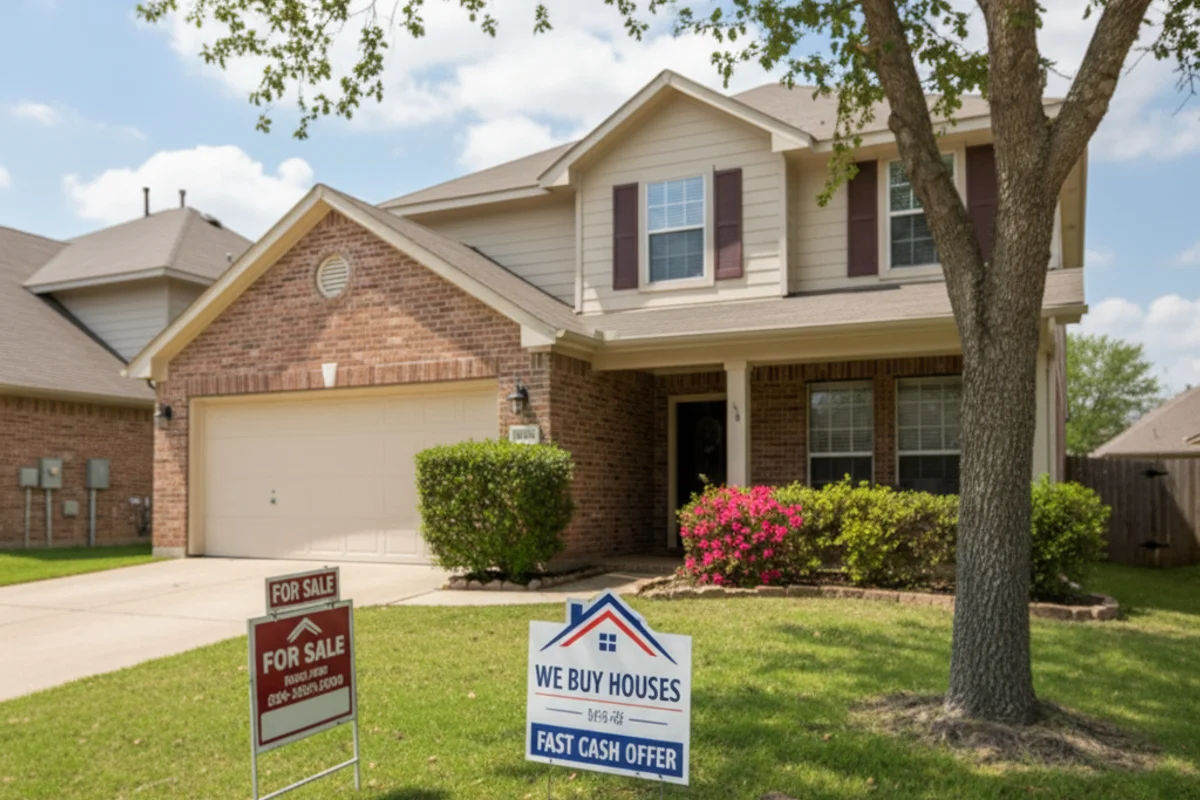
What’s the actual difference between a cash offer and listing with an agent? Let’s walk through both processes side by side and see what Fort Worth homeowners actually experience. When you’re evaluating a cash offer versus listing with a realtor in Fort Worth, the distinction isn’t just about speed. It’s about total costs, risk exposure, and what you actually net when the deal closes.
Here’s the thing most sellers don’t realize until they’re already committed to a listing. The gap between sale price and what you deposit in the bank is substantial. We’re talking $30,000-$50,000 in costs on a median Fort Worth home. Meanwhile, cash offers might come in lower on paper but deliver exactly what they promise with zero fees and zero surprises.
Let’s break down what each path looks like in Fort Worth’s current market, where homes are selling in 56 days on average and 26% of all sales close with cash.
Cash Offer Process in Fort Worth: What Happens Step by Step
You contact Fort Worth cash home buyers and provide basic information about your property. Within 24-48 hours, you receive a no-obligation offer. That’s day one and two.
If you accept, the buyer orders a title search. No appraisal needed. No inspection contingency. No financing approval waiting period. You pick a closing date that works for your schedule, typically 7-14 days out.
The title company handles paperwork. You’ll complete the Seller’s Disclosure Notice required by Texas law, but that’s straightforward. No repairs. No showings. No open houses. No staging photographers or weekend disruptions.
On closing day, you sign documents and receive payment. Wire transfer or cashier’s check. The entire process from first contact to cash in hand averages 10-12 days in Fort Worth.
| Process Step | Cash Offer | Traditional Listing |
|---|---|---|
| Property preparation | None required | Repairs, cleaning, staging |
| Marketing period | 0 days | 56 days average |
| Buyer financing contingency | None | 30-45 days |
| Inspection negotiation | None | 7-14 days, potential re-negotiation |
| Appraisal requirement | No | Yes, deal fails if home under-appraises |
| Seller closing costs | $0 | $10,110 (3% of $337,000) |
| Commission fees | $0 | $20,220 (6% of $337,000) |
| Total timeline | 7-14 days | 86-126 days |
The simplicity matters when you’re juggling a job transfer, an inherited property in a neighborhood you don’t live near, or financial pressure. Fort Worth sellers in Riverside, Berkeley, or North Hi Mount often choose this path because they need certainty more than they need maximum sale price.

Get Your Free Cash Offer Today
No fees. No repairs. Close in as little as 7 days.
Related Video
Traditional Listing Process in Fort Worth: What Happens Step by Step
You interview realtors and sign a listing agreement, typically for six months. Your agent recommends repairs and updates to maximize sale price. Most Fort Worth homes need $5,000-$10,000 in work before listing. Fresh paint, landscaping cleanup, and minor fixes that buyers flag during inspections.
Professional photos get scheduled. Your home goes on the MLS. Showings start, which means keeping your house pristine while living in it or moving out early and paying double housing costs.
After 56 days on average, you receive an offer. But that’s not the finish line. The buyer’s financing takes 30-45 days to process. Their lender orders an appraisal. If the home appraises below the contract price, you renegotiate or the deal collapses.
Inspection happens around day 10 after contract. Buyers typically request $3,000-$8,000 in repairs or credits based on the inspector’s report. You negotiate again. Some sellers make repairs. Others reduce the price.
Assuming everything goes smoothly, you close 30-60 days after accepting the offer. Total timeline from listing to closing averages 86-126 days for Fort Worth properties.
During those three to four months, you’re paying mortgage, property taxes, insurance, and utilities. On a $337,000 home with a typical mortgage, that’s roughly $2,400 per month in carrying costs.
Timeline Comparison: Days to Close in Texas
Texas law doesn’t mandate specific closing timelines, but market standards are consistent. Cash transactions close in 7-14 days because there’s no financing contingency, no appraisal requirement, and minimal inspection risk.
Traditional sales need 30-60 days after contract acceptance just for the closing process. Add the 56-day marketing period Fort Worth is currently experiencing, and you’re looking at three months minimum.
But here’s what happens when complications arise. Financing falls through on about 8% of contracted sales nationally, according to the National Association of Realtors. When that happens in Fort Worth, you start over. Back on market. Another 56 days. Another round of inspections and negotiations.
Weather impacts timeline too. Fort Worth’s summer heat exposes air conditioning issues. Buyers get cold feet when inspection reveals a $6,000 HVAC replacement need. Winter buyers sometimes discover roof issues after heavy storms. Each problem extends your timeline and cuts into your proceeds.
The time value of money matters here. Three months of carrying costs on a median Fort Worth home totals $7,200. That’s $7,200 you save by closing in two weeks instead of twelve.

Find Out What Your Home Is Worth
Get a no-obligation cash offer in 24 hours.
Net Proceeds Comparison for a Typical Fort Worth Home
Let’s run actual numbers on a $337,000 home in Fort Worth, which represents the current median price.
Traditional Listing Route:
- Sale price: $337,000
- Agent commission (6%): -$20,220
- Seller closing costs (3%): -$10,110
- Pre-listing repairs and staging: -$6,740
- Carrying costs during 56-day market time: -$4,480
- Net proceeds: $295,450
Cash Offer Route:
- Offer price: $286,450 (85% of market value)
- Fees: $0
- Repairs: $0
- Closing costs: $0
- Carrying costs: $0
- Net proceeds: $286,450
The difference is $9,000. That’s the premium you receive for managing three months of uncertainty, showings, repairs, and negotiation. For some Fort Worth sellers, $9,000 matters enormously. For others facing job relocation or avoiding foreclosure situations similar to those in Dallas, the $9,000 isn’t worth the risk.
These numbers assume everything goes perfectly with your listing. No price reductions. No deals falling through. No extended time on market. In reality, 23% of Fort Worth listings reduce their asking price at least once, according to local MLS data.
What happens when your home sits for 90 days instead of 56? Add another $5,120 in carrying costs. Drop your price by $10,000 to attract buyers. Suddenly that $9,000 advantage disappears completely, and you’re netting less than the cash offer while dealing with three additional months of stress.
When Fort Worth Sellers Regret Choosing the Wrong Option
Getting Both Offers Before You Decide in Fort Worth
Here’s what smart Fort Worth sellers do. They get your cash offer first, which costs nothing and creates zero obligation. That establishes your baseline. You know with certainty you can net $286,450 in two weeks.
Then talk to realtors. Get a professional opinion on realistic list price. Ask for a net proceeds estimate that includes all costs. Compare that number to your cash offer baseline.
If the projected listing net is $15,000-$25,000 higher and you have time to wait, listing might make sense. If the gap is only $5,000-$10,000, consider whether three months of uncertainty is worth that premium.
Look at your specific situation honestly. Are you juggling mortgage payments on two properties? Facing financial pressure? Managing an estate property from out of state like many sellers across Texas do? Those factors often make the cash path obvious regardless of the dollar difference.
You can also explore hybrid options. Some Fort Worth sellers list for 30 days at a premium price. If they don’t get offers meeting their threshold, they pivot to the standing cash offer. This gives you one shot at maximum value without committing to months on market.
Remember that cash home buyers in TX don’t charge for offers or tie you to exclusive agreements. Getting that offer in your back pocket provides leverage and peace of mind even if you ultimately list.
The Stockyards area attracts tourist buyers who sometimes pay premiums for character properties. The Southside and East Fort Worth see strong investor activity, which means cash competition. The Cultural District homes often appeal to professionals willing to pay for walkability. Your specific neighborhood impacts which route makes financial sense.
Fort Worth’s 26% cash sale rate is substantial. That’s roughly one in four transactions closing without traditional financing. Those buyers value different things than conventional mortgage buyers. They’re less concerned with cosmetic perfection and more focused on the location and bones of the property.
When you work with Fort Worth cash home buyers, you’re tapping into a market segment that traditional listings sometimes miss. Investors buying rental properties. Out-of-state buyers who can’t easily tour homes. Flippers looking for value-add opportunities.
Your home’s condition plays a huge role in this decision. Foundation issues are common in Fort Worth due to expansive clay soils. If you’ve got cracks in walls or sticking doors, listing buyers will demand credits or walk away. Cash buyers factor that into their offer price but don’t renegotiate after inspection.
Outdated systems matter too. Original electrical from the 1960s in Ridgmar homes. Galvanized plumbing in older Berkeley properties. Aging HVAC systems stressed by Texas summers. Each of these triggers inspection objections and repair negotiations that extend timelines and reduce your net proceeds.
Compare this to nearby markets for context. Dallas sees similar dynamics with slightly faster average market times. Houston has higher inventory levels, meaning longer listing periods. Austin maintains stronger seller leverage in many neighborhoods. Fort Worth represents a middle ground where both paths can work depending on your specific property and situation.
The good news is you don’t have to guess. Run your numbers. A $337,000 home in good condition in a desirable Fort Worth neighborhood like Mistletoe Heights probably nets more through listing. That same $337,000 home needing $20,000 in foundation work and a new roof almost certainly nets more through a cash sale when you factor in repairs and extended market time.
Some Fort Worth sellers need to sell their house fast in Fort Worth style due to circumstances beyond their control. Job transfers to other Texas cities create tight timelines. Inherited properties become financial drains when you’re paying utilities and taxes on a vacant house. Divorce situations require quick asset division. Medical expenses force liquidation of real estate holdings.
In these scenarios, the cash versus listing debate becomes less about maximizing every dollar and more about solving a problem efficiently. The seller who needs to relocate in 30 days for a new job can’t wait 90 days for a listing to close. The $9,000 difference becomes irrelevant when missing the work start date could cost $80,000 in annual salary.
Your decision framework should include questions beyond just the dollar difference. Can you afford to carry the property for three additional months if it doesn’t sell quickly? Do you have the emotional bandwidth to manage showings and negotiations while working full time? Are there title issues or estate complications that make quick sales more attractive? Is the property occupied by tenants who make showings difficult?
Fort Worth’s stable market trend means you’re unlikely to see dramatic price appreciation while your home sits listed. You’re also unlikely to see significant depreciation. This stability makes the math clearer. You can reasonably project where you’ll land with either option without worrying about major market swings during your selling process.
The moderate inventory level means buyers have choices but aren’t overwhelmed with options. Your well-priced, well-presented home should attract attention. Your overpriced or condition-challenged home might sit for months burning carrying costs while you wait for the right buyer willing to overlook issues.
One often-overlooked factor is the emotional toll. Keeping your house show-ready for weeks or months is exhausting. Last-minute showing requests while you’re cooking dinner. Weekends spent at coffee shops so buyers can tour. The stress of wondering whether each showing will produce an offer. Some Fort Worth sellers value the clean break a cash sale provides even when listing might net modestly more.
The quick home sale market in Texas has matured significantly. Legitimate cash buying companies provide transparent offers backed by proof of funds. You’re not dealing with fly-by-night operators. You’re working with established businesses that close hundreds of Fort Worth transactions annually.
That said, not all cash offers are equal. Some companies offer 65-70% of value and rely on seller desperation. Others offer 80-90% and build their business on volume and efficiency rather than maximum margins. Getting multiple cash offers makes sense, just like interviewing multiple realtors before listing.
Your timeline flexibility dramatically impacts this decision. If you can wait six months for the absolute maximum price, listing makes sense for most properties. If you need to close within 30 days, cash is often your only realistic option. Most Fort Worth sellers fall somewhere in between, which is why running both scenarios with actual numbers matters so much.
The carrying costs during your listing period add up faster than most sellers expect. $2,100 monthly mortgage payment. $420 property taxes. $180 insurance. $150 utilities on a vacant home. That’s $2,850 per month disappearing while you wait for the right buyer. Two extra months on market costs $5,700 in carrying expenses alone.
Foundation repairs in Fort Worth deserve special mention because they’re so common and so expensive. Minor cracks might cost $3,000-$5,000 to address. Significant foundation issues run $8,000-$15,000 or more. Traditional buyers almost always demand these repairs or equivalent credits. Cash buyers price foundation issues into their offer but close regardless.
The same applies to roof condition. Fort Worth’s hail storms and summer heat stress roofing materials. A roof with 5-7 years of life remaining might not concern a cash buyer but will trigger concerns from conventional buyers and their lenders. You’ll face demands for replacement or credits that weren’t part of your original listing strategy.
Understanding these Fort Worth-specific factors helps you make better decisions. Clay soil movement affects foundations. Heat affects roofs and HVAC systems. These aren’t abstract concerns. They’re real issues that impact real transactions and real net proceeds.
Your path forward is clearer now. Calculate your specific numbers using the framework provided. Consider your timeline needs honestly. Factor in your property’s condition and your tolerance for uncertainty. Then make the choice that serves your situation best, whether that’s the speed and certainty of cash or the potentially higher proceeds from a traditional listing.
Both paths work. Both deliver results for Fort Worth sellers every day. The key is matching the right path to your specific circumstances rather than assuming one approach always wins. Some situations clearly favor cash. Others clearly favor listing. Many fall in the middle where your priorities determine the best choice.
For more details, see our guide on selling your house as is in Fort Worth.
NestCash works with Fort Worth homeowners dealing with divorce, foreclosure, inherited properties, and homes that need to sell as-is every single day.

Ready to Sell? Let's Talk.
Get your cash offer now. No obligation, no hassle.

Jackson is the Head of Marketing at NestCash, where he leads growth strategy and real estate education. He focuses on housing trends across 12 states, translating complex market shifts into clear, actionable guidance.